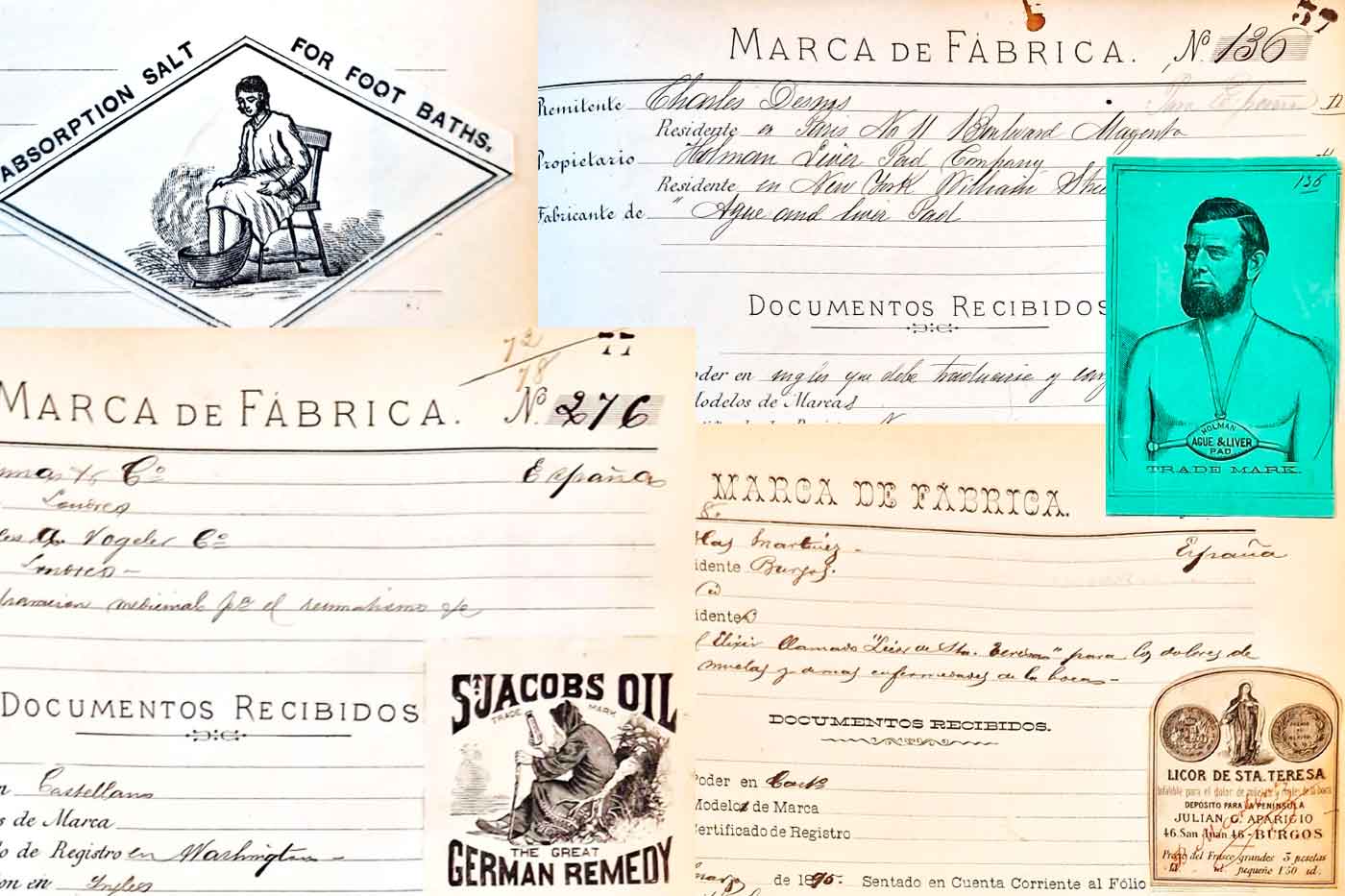

The evolution of medicinal remedies into the modern pharmaceutical industry is closely linked to the development of intellectual property, the protection of inventions, and the consolidation of regulatory systems that are now essential to public health. Throughout the 19th and 20th centuries, the concept of a medicine evolved from an advertising claim with no scientific basis into a regulated product, backed by patents, clinical evidence, and institutional oversight.
“Patent Medicines”: Brands Without Scientific Backing
During the second half of the 19th century, rapid urban growth, precarious working conditions, and poor sanitation created an environment conducive to the spread of epidemics. Against this backdrop, the public, desperate for solutions, turned to so-called “patent medicines.”
Despite their name, these products were not pharmaceutical patents in the modern sense. In reality, they were registered trademarks under which supposedly curative remedies were marketed, without undergoing any quality control or verification of efficacy. Manufacturers protected the name and the secrecy of the formula through trademark registration, which allowed them to operate indefinitely as long as they paid the corresponding fees.
Most of these formulas contained alcohol, opioids, and other ingredients of questionable safety, and they were sold over the counter—even to children, pregnant women, and the elderly. The consequences were inevitable: cases of poisoning, serious side effects, and even deaths.
In the following video, Elisa Prieto (Head of Knowledge Management at Elzaburu) summarizes how Patent Medicines came to be and why they captivated the public; their pioneering role in the widespread use of advertising; and how regulation and science put an end to these “miracles” from the apothecary.
First Steps Toward Health Care Regulation
Growing concerns about public health prompted medical associations and authorities to take action. Healthcare professionals began to reveal the true composition of these products and the risks they posed, while regulatory agencies developed regulations that required authorization procedures for the marketing of drugs.
By the 1920s, most patent medicines had disappeared, giving way to a more transparent healthcare model based on scientific research.
Consolidation of the Pharmaceutical Industry and the Patent System
The disappearance of “patent medicines” marked the beginning of a completely different era: the industrialization of medicine. For the first time, scientific research and the protection of inventions through pharmaceutical patents took center stage in production. As a result, medicines ceased to be artisanal preparations and came to be produced using standardized and controlled processes.
The ELZABURU historical archives contain significant examples of this transition:
Eno Fruit Salts
Created by James Crossley and registered in Spain in the late 19th century, they were originally developed as a multipurpose remedy. Over time, they evolved into a well-established antacid product in the GSK pharmaceutical catalog, with a global presence.
Coca-Cola: From Medicinal Tonic to Global Icon
Formulated in 1886 by pharmacist John Stith Pemberton, Coca-Cola was initially marketed as a “patent medicine” intended to relieve headaches and digestive problems. Today, with no therapeutic claims, it is one of the most recognizable beverages on the planet.
Salicylic Acid and the Birth of Aspirin
In 1884, German chemist Friedrich von Heyden obtained one of the first patents for the industrial production of salicylic acid, a derivative of willow bark with analgesic and antipyretic properties. Later, in 1890, the Bayer company registered the patent for diquinoliline in Spain, helping to establish a model for reliable and standardized medications.
Ceregumil: Tradition and Modernity
In 1907, pharmacist Bernabé Fernández developed Ceregumil, a nutritional tonic designed to improve digestion, made from grains, legumes, and honey. Registered as a trademark in 1911, the company has expanded internationally and today offers modern dietary supplements tailored to today’s needs.
In addition, the archives contain historical records from other pioneering brands, such as Listerine, Merck, Wellcome, and Glaxo, which helped shape the pharmaceutical industry in the 20th century.
Industrial Property as a Driver of Pharmaceutical Innovation
The shift from unproven advertising remedies to regulated medications was made possible by a combination of three key factors:
- Rigorous scientific research: Clinical trials have demonstrated the efficacy and safety of these medications.
- Patent protection: It ensured investment in development and competitiveness in the market.
- Robust health regulations: These established standards for quality and transparency that bolstered consumer confidence.
The social change brought about by this model led society to move beyond “miracle cures” and demand precisely what we now recognize as the fundamental pillars of pharmaceutical innovation: safe and effective medicines, protected by intellectual property rights and backed by responsible health regulations. Today, although the sector has made progress, these principles remain essential and ensure that innovation is sustainable.
Elisa Prieto, Head of Knowledge Management at Elzaburu