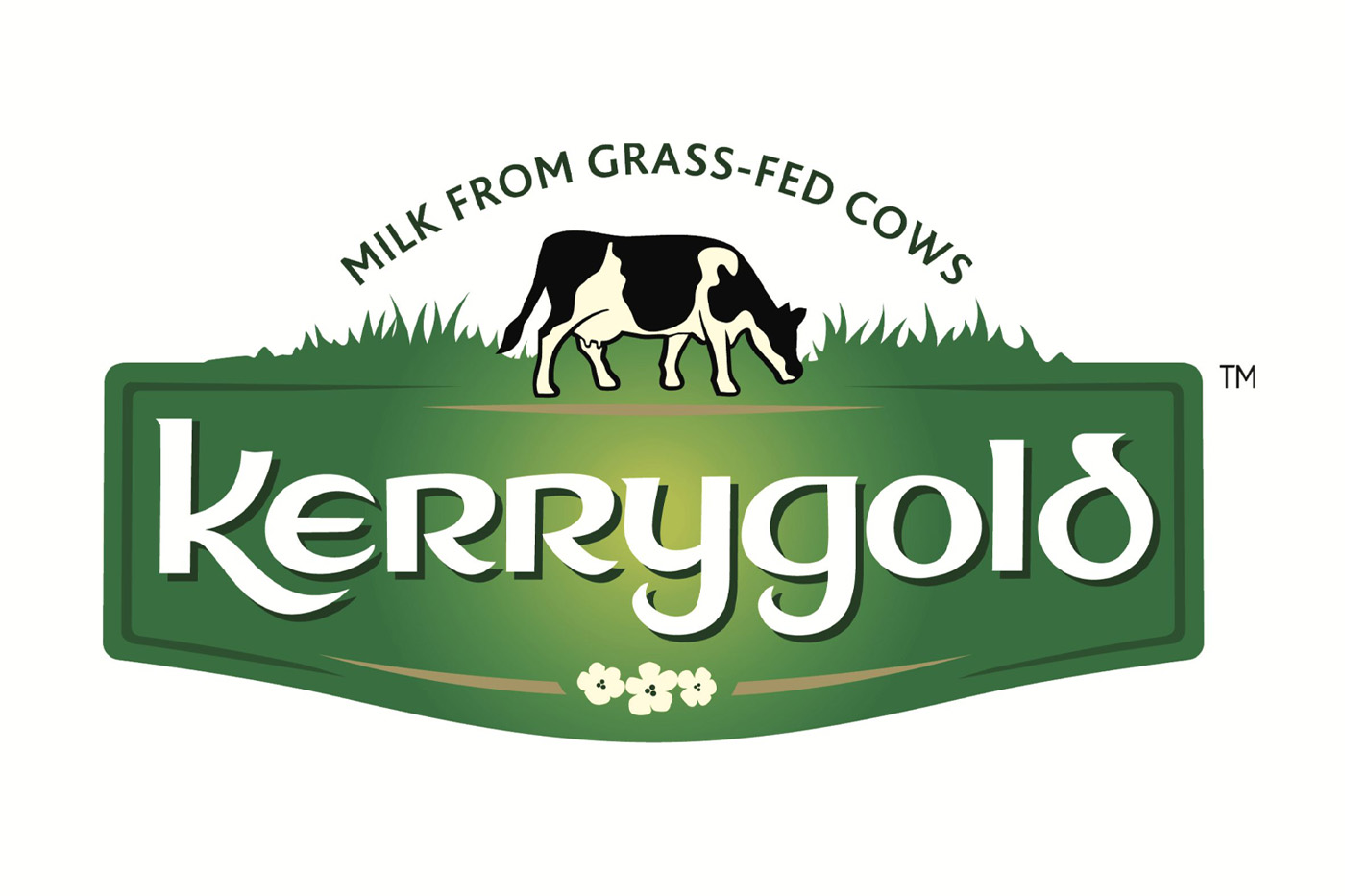

On June 28, 2011, Kerry Luxembourg Sàrl (“Kerry”) filed an application for the EU trademark KERRYMAID (word mark) for various goods in classes 29 and 30. The Irish company Ornua Co-operative Ltd. (“Ornua”) filed an opposition based on 18 prior trademarks consisting of the sign KERRYGOLD and registered in classes 1, 5, 29, 30, 32, and 33, pursuant to Articles 8(1)(b), 8(4), and 8(5) of the EU Trademark Regulation.
The Opposition Division upheld the opposition by applying Article 8.5 of the EUTM Regulation and based on the following trademark:

In December 2013, the applicant filed an appeal against the Opposition Division’s decision. However, the proceedings before EUIPO were suspended due to the infringement action filed by Ornua in Spanish courts regarding the marketing of products under the KERRYMAID trademark.
In July 2019, the Board of Appeal ruled on the appeal filed by Kerry, partially overturning the Opposition Division’s decision and upholding the opposition filed by Ornua based on Article 8.1.(b) EUTM Regulation, for all goods covered by the applied-for trademark, with the exception of“meat, fish, poultry, and game; preserved, dried, and cooked fruits and vegetables”in Class 29. The Board of Appeal concluded that the conflicting signs were similar to a moderate degree and, therefore, there was a likelihood of confusion with respect to the goods in Classes 30 and 29 that were identical or similar to the goods covered by the earlier trademark. Furthermore, the Board noted that the peaceful coexistence of the conflicting signs in Ireland and the United Kingdom did not allow for the conclusion that there was no likelihood of confusion for a portion of the relevant public that is unaware of the geographical reference contained in the term “kerry.”
Kerry’s appeal before the General Court (GC) is based on a single ground: the alleged violation of Article 8(1)(b) of the EU Trade Mark Regulation by the Board of Appeal’s decision. Kerry argues that the Board erred in concluding that there was a likelihood of confusion between the marks at issue and challenges the Board of Appeal’s findings regarding the relevant public’s perception of the geographical name “kerry,” the distinctiveness of the earlier mark, and the similarity of the signs at issue.
In its judgment of March 10, 2021 (T‑693/19), the General Court dismissed Kerry’s action and upheld the decision of the EUIPO Board of Appeal based on the following findings:
- That Kerry did not provide any evidence that could call into question the Board of Appeal’s finding that there was no clear indication that the non-English-speaking public in continental Europe would understand the term “kerry” as a geographical indication for the designated goods.
- That Kerry did not provide any evidence that could call into question the Board of Appeal’s finding that the term “kerry” included in the earlier mark had, for the majority of the relevant public—with the exception of the Irish public and, possibly, the public in the United Kingdom—distinctive character in relation to the goods for which the mark was registered.
- Although it might be argued that the relevant public as a whole perceives the term “kerry” as a geographical indication when used in connection with the goods covered by the earlier mark, there is no basis for challenging the Board of Appeal’s conclusion that the word element “kerrygold” is the dominant element of the earlier mark, insofar as—contrary to Kerry’s assertion— that conclusion was not derived exclusively from the presence of the term “kerry” in the word element “kerrygold,” but rather from the position and size of that element and the lack of distinctiveness of the figurative elements of the earlier trademark.
- The Chamber did not err in failing to find that the figurative elements of the earlier mark were not the dominant and distinctive elements of the sign, insofar as, as the Chamber noted, the depiction of a grazing cow appearing in the earlier mark, in connection with dairy products, will be perceived by consumers as a descriptive element of the nature of the designated goods, and that the other figurative elements of the sign (the flowers, the green background, the white lines, and the typeface used) will be perceived as merely decorative elements that do not serve to convey any message that consumers might remember.
- That the signs in question are visually and phonetically similar to a moderate degree due to the common element “kerry” located at the beginning of the word elements of the signs; therefore, the Chamber correctly concluded that, although the conflicting signs are not conceptually similar, the signs are similar as a whole.
- That, in light of the foregoing considerations, the Board correctly concluded that, in its overall assessment of the likelihood of confusion, in the present case, with respect to the goods covered by the applied-for mark that are similar or identical to the goods in Class 29 covered by the prior mark, there may be a likelihood of confusion on the part of the relevant public that is unaware of the geographical reference contained in the term “kerry,” which constitutes a large portion of the relevant public.
With regard to the objections raised by Kerry concerning the Board’s analysis of the likelihood of confusion, the General Court notes:
- That the assessment of the likelihood of confusion conducted by EUIPO necessarily involves an abstract evaluation, which is not based on the circumstances of the marketing of the goods, but rather on the “objective” manner in which the goods designated by the marks at issue are marketed; and, therefore, the manner in which the earlier trademark is used is irrelevant for the purposes of analyzing the likelihood of confusion, and the Board of Appeal was not required to take into account the evidence submitted by Kerry.
- That, in any event, even assuming that taking that evidence into account would have allowed the Board of Appeal to conclude that the term “kerry” had Irish connotations for the relevant public, mere connotations cannot suffice to establish that the relevant public as a whole perceives the term “kerry” as a geographical indication when used in connection with the goods covered by the earlier mark, since this would require a sufficiently direct and specific link between the sign and the goods, enabling the relevant public to perceive immediately, without further ado, a description of the goods in question or of one of their characteristics.
- That the ECJ judgment of January 7, 2004, Gerolsteiner Brunnen (C-100/02, EU:C:2004:11), relied upon by Kerry, is not applicable to the present case because a reading of that judgment does not indicate that the Court of Justice examined whether the term “Kerry,” in connection with the goods at issue, would be understood by the relevant public as an indication of their geographical origin.
- That the Chamber did not err in failing to take into account the judgments of the Provincial Court of Alicante and the EU Trade Mark Court rendered in the context of the infringement action brought by Ornua, insofar as EUIPO is not bound by the decisions of EU trade mark courts rendered in the context of infringement actions, in the context of exercising its exclusive jurisdiction over the registration of EU trademarks and, in particular, when, in doing so, it examines oppositions filed against applications for the registration of EU trademarks.
- That, with regard to the alleged peaceful coexistence of the trademarks at issue, contrary to what Kerry contends, the burden of proof lies with the party alleging the existence of such peaceful coexistence; furthermore, when an opposition to the registration of an EU trademark is based on an earlier EU trademark, peaceful coexistence must be proven throughout the entire territory of the European Union.
In light of the foregoing considerations, the General Court concludes that the Board of Appeal correctly found that there was a likelihood of confusion on the part of the relevant non-English-speaking public between the mark applied for and the earlier mark, within the meaning of Article 8(1)(b) of the EU Trade Mark Regulation, with respect to the goods in question.
Author: Ana Sanz