
In an increasingly competitive market, where brands seek not only to capture consumers' attention but also to stand out in saturated environments, creativity and originality have become essential strategic elements.
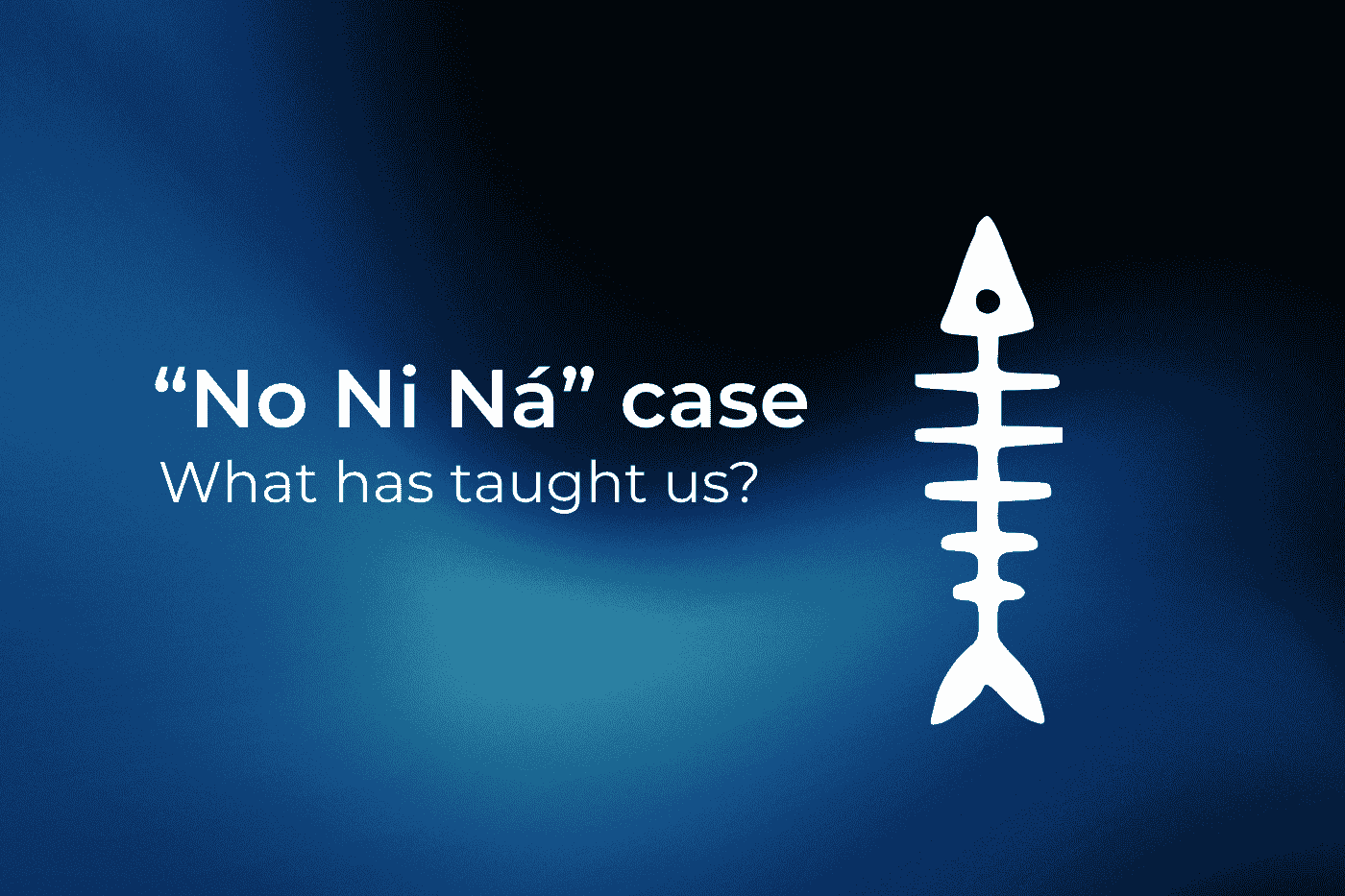
A recent example that illustrates this scenario is the dispute over the “No Ni Ná” trademark, launched by Paz Padilla and her daughter for a fashion line. In this case, the replacement of the letter “I” with a fishbone has raised legal questions that go beyond the design itself: Can a common symbol acquire distinctiveness? What conditions must a trademark meet to be successfully registered?
What does it mean for a trademark to be distinctive?
Distinctiveness is what makes a brand unique and allows consumers to associate a product or service with the company that offers it. When a sign fails to establish that connection, it ceases to fulfill its essential purpose.
Trademark registration authorities evaluate this distinctiveness by considering two key factors:
- The products or services you wish to protect.
- The perception of the target audience the brand is aimed at.
If a trademark lacks distinctiveness, it cannot be registered. Among the most common reasons are:
- Descriptiveness: This occurs when the mark directly describes characteristics of the product or service, such as its nature, quality, or origin. Example: using “DULCE” for confectionery products.
- Use of generic terms: words commonly used in an industry, such as “SOFTWARE” for computer programs.
- Common expressions in commerce: terms that have become part of everyday language, such as “BIO” for organic foods.
- Overly generic slogans: Phrases like “THE BEST FOR YOU” do not allow consumers to identify a specific company.
- Functional shapes or those dictated by the nature of the product: In the case of three-dimensional trademarks, shapes that are essential or commonplace—such as the basic outline of a bottle—cannot be registered.
- Designs that are too generic or common: overly simple elements, such as a red circle for electronic products, do not allow one company to stand out from another.
Identifying symbols as a distinguishing feature: an increasingly demanding landscape
Not all components of a trademark need to be equally distinctive. A trademark may include elements that, taken individually, have weak distinctiveness or lack distinctiveness entirely.
The use of recognizable icons as trademarks is common in industries such as fashion. Examples such as the skull used by SCALPERS FASHION S.L. or the puma used by Puma SE demonstrate that symbols can become highly distinctive.
But that popularity has led to stricter registration criteria. In the case of “No Ni Ná, ” fish bones are commonly used as a reference to Cádiz and areas such as Zahara de los Atunes, which makes it difficult to consider it an exclusive mark.
To defend its registration, the company would have to prove that:
- Consumers do not associate the "raspa" with a generic symbol of the industry.
- Or that, after prolonged and continuous use, the design has acquired a high degree of distinctiveness or even renown, as is the case with Longchamp’s horseman on horseback, which is unmistakably recognized by the public.
Copyright Protection: An Important Limit
Just because a sign lacks distinctiveness does not mean it is without legal protection. If the design of the “No Ni Ná” logo is original and unique, it could be protected by copyright.
However, this protection would only prevent the exact copying of the specific design, not the use of generic variations of the motif. Therefore, a lawsuit against a different fish scale design would have little chance of success.
Tips for Creating Original Brands and Avoiding Conflicts
The “No Ni Ná” case demonstrates the importance of investing in distinctive and creative branding from the very beginning. Here are some key recommendations for entrepreneurs and designers:
- Avoid generic or common terms used in the industry.
- Opt for invented, arbitrary, or evocative symbols that have no direct connection to the product or service. Some successful examples include Google and Apple in the technology sector.
- Conduct a preliminary trademark search to avoid conflicts.
- Seek advice from a professional specializing in intellectual property before launching the brand on the market.
Originality as a Brand Positioning Strategy
The level of distinctiveness required may vary by industry. In highly saturated sectors such as fashion, cosmetics, or food, finding truly distinctive marks is more challenging. Conversely, in technology or emerging sectors, where there is greater creative freedom, it is easier to meet this requirement.
In any case, the more unique, original, and memorable the trademark is, the greater the chances of successfully registering it and establishing it in the market.
Lorena Sánchez, Attorneys and Specialists in the Trademark Department at Elzaburu