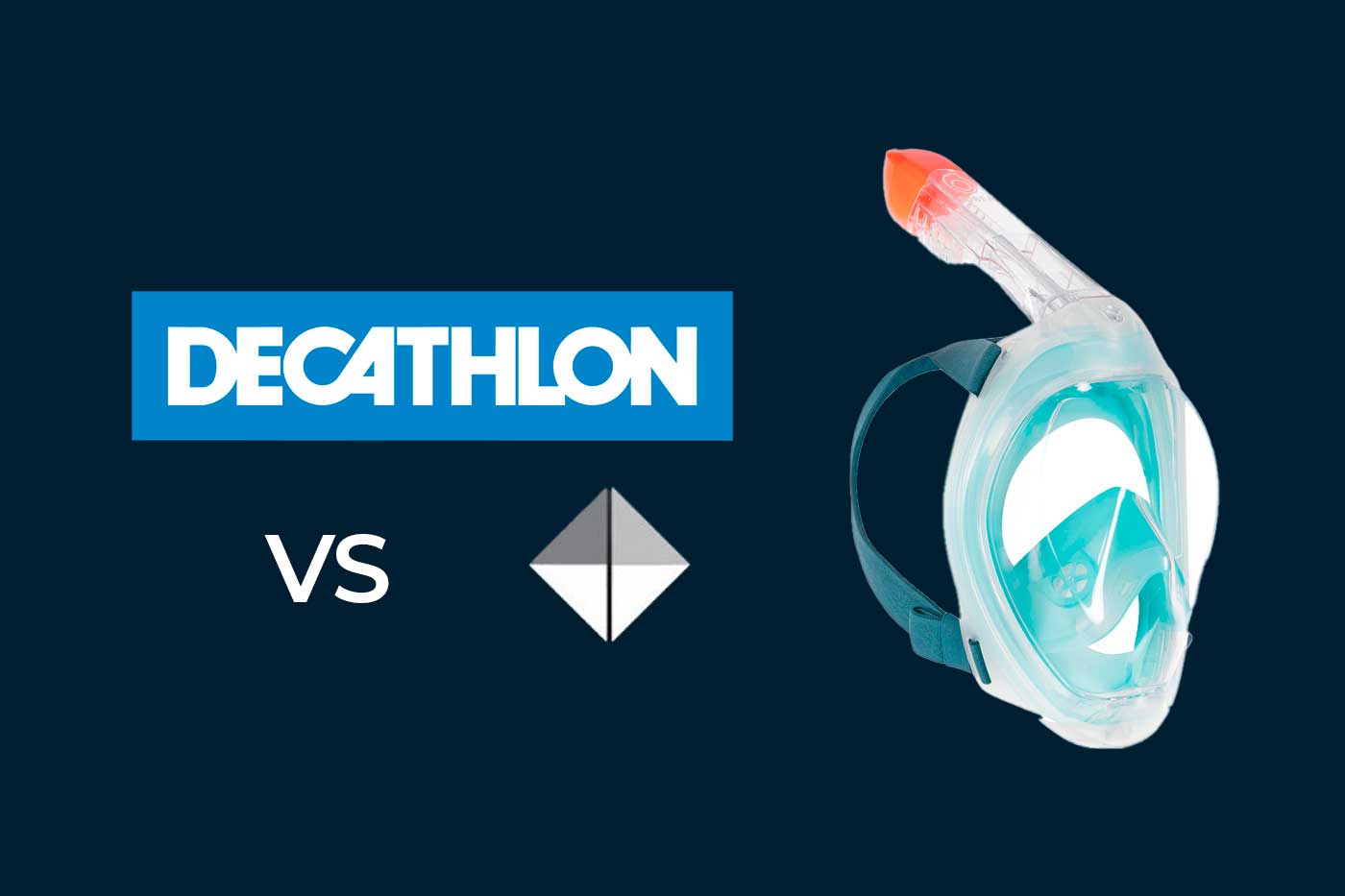

On June 4, 2025, the General Court of the European Union (GCEU) upheld the validity of two Community designs registered by Decathlon for its popular Easybreath snorkel mask, dismissing the invalidity actions filed by the German company Delta-Sport Handelskontor GmbH. The decision, set forth in cases T-1060/23 and T-1061/23, provides up-to-date guidance on how functionality, distinctiveness, and overall impression are analyzed in the protection of industrial designs in the EU. For those who manage design portfolios or litigate in the field of industrial property, these rulings are essential.
These judgments by the General Court of the European Union mark a significant milestone in the interpretation of Regulation (EC) No. 6/2002 on Community designs. In them, the Court addressed two key issues raised by Delta-Sport: whether the characteristics of the design were dictated exclusively by its technical function and whether the designs lacked individual character due to prior disclosures.
The TGUE concluded that certain design elements, such as the oval shape of the frame and the “X”-shaped strap attachment, were not determined solely by technical function but also reflected the designer’s aesthetic choices. Furthermore, the fact that there were viable alternatives for fulfilling the same technical function reinforced the idea that there was room for creativity.
With regard to distinctiveness, the Court held that, although there were similarities to earlier designs (including Decathlon’s own patents), the differences in elements such as the shape of the frame, the colors, the strap, and the tube cap were sufficient to create a distinct overall impression on the informed user.
1. Background: From Registration to Litigation Regarding Community Designs
- 2013 and 2014: Decathlon registered two designs (002340224-0001 and 002526699-0001) for the Easybreath mask with the EUIPO ; the mask featured an innovative one-piece visor and tube.
- Application for invalidation: Delta-Sport argued that the visible features of the product were dictated exclusively by its technical function (Art. 8.1 of the Design Regulation) and that there were sufficient prior disclosures to deprive the design of its individual character (Art. 6 of the Design Regulation).
- The EUIPO rejected the application for a declaration of invalidity, and Delta-Sport appealed to the General Court of the European Union.


002340224-0001
002526699-0001
Source images of the judgments: Cases T-1060/23 and T-1061/23
2. Key Legal Points in the Rulings on Decathlon's Designs
2.1. Technical Function vs. Aesthetic Choices
Some design elements, such as the oval frame and the way the strap attaches to the head, were not driven solely by technical requirements. These details also reflect aesthetic decisions made by the designer.
2.2. Uniqueness and Overall Impression
Even acknowledging similarities with prior patents and utility models, the TGUE concludes that the formal and visual differences are sufficient to create a distinct overall impression on the “informed user.” The Chamber emphasizes that the comparison is made as a whole, without breaking down individual components.
2.3. Available Alternatives and the Designer's Discretion
The Court also considered whether there were viable alternatives to the contested design that could perform the same technical function. This was key to demonstrating that the designer had a margin of creative freedom, thereby reinforcing the validity of the aesthetic choices made. The presence on the market of designs featuring different technical solutions made it possible to reject the claim that the contested elements were mandatory.
2.4. Evidentiary Value of the Documents Submitted
The TGUE carefully examined the evidence submitted by Delta-Sport, including images of prior products and technical documents. However, it determined that this evidence was insufficient to demonstrate a lack of novelty or distinctiveness, as it did not reproduce the same essential elements with the necessary precision and clarity. The comparative analysis focused on the perception of the informed user, not on a detailed technical analysis.
2.5. Practical Significance for Design Protection
These rulings confirm that aesthetics matter and that designers have the right to protect their creative expression, even in functional products. This is particularly relevant for companies with extensive design portfolios, such as Decathlon, which must anticipate potential conflicts and justify the design decisions they make.
3. Practical Implications for Companies and Designers
- A Commitment to Visible Creativity
- Even in highly functional products, small variations in shape, edges, or proportions can make all the difference. This case demonstrates that there is room for creativity and that it deserves protection.
- Document the design process
- Keeping sketches, renderings, and proof-of-concepts makes it easier to demonstrate that certain design choices are based on aesthetic criteria and not just technical requirements.
- Keep an eye on pre-announcements
- Although court rulings allow for similarities, a thorough clearance search reduces the risk of invalidation due to lack of distinctiveness.
- Strengthens marketing and usability arguments
- Demonstrating how the public perceives the design (opinions, awards, sales) helps establish a distinct overall impression before the EUIPO or the courts.
- Prepare thorough expert reports
- The opinions of experts in ergonomics, engineering, and design may be key to refuting the claim of exclusive technical function.
Judgments T-1060/23 and T-1061/23 confirm that, in sectors with common technical solutions, the designer’s creative scope and the informed user’s perspective remain decisive for protecting a design in the EU. For this reason, when developing defense strategies against invalidation actions for Community designs, it is important to always combine technical expertise, creativity, and market evidence.
At Elzaburu, we assist companies and designers throughout the entire process of managing, protecting, defending, and internationalizing their industrial designs (across all sectors and for all types of products).
Paloma Querol, Associate and Attorney at the ELZABURU office in Valencia.