

In the fashion industry, where aesthetic innovation and differentiation are a constant goal, adequately protecting intangible assets is key to maintaining a competitive advantage.
Industrial design is the primary route companies typically take when they want to protect the appearance of their products. However, it is not the only option. There are other forms of protection that, depending on the business objectives and the nature of the mark, may also be of interest and even desirable.
Among them are so-called non-traditional trademarks, which allow for the protection of certain elements; if successfully registered, they grant the owner an exclusive right that can be extended indefinitely, provided that the corresponding fees are paid at the time of renewal.
When Does It Make Sense to Develop a Non-Traditional Brand?
Without delving into a theoretical definition (which we already covered in the article on types of trademarks), the significance of non-traditional trademarks in the fashion industry lies in identifying the point at which an element shifts from being merely aesthetic to serving a truly distinctive function.
The key lies not in the type of symbol, but in how the consumer perceives it: if that element allows the product’s business origin to be identified, its protection as a trademark may be considered.
Industrial Design in the Fashion Industry
Industrial design is the natural and customary legal tool for protecting the appearance of a product, especially in the fashion industry, which is characterized by constantly changing collections.
However, as certain elements become established in the market, they may acquire additional distinctive value that goes beyond their purely aesthetic aspect. It is at this point that it may make sense to supplement (or, in some cases, replace) the protection afforded by design protection with a trademark strategy.
This is justified because the design protection regime has two structural limitations that do not exist in the trademark system: first, the requirement of novelty and distinctiveness, which means that, prior to the filing or priority date, the design must not have been made available to the public, nor may there be any prior art that creates a similar overall impression; and, second, the limited duration of protection, which in the European Union is a maximum of 25 years.
Trademark Protection: The Key Lies in Consumer Perception
Regardless of the type of sign, the key factor in determining whether a trademark (traditional or otherwise) can be registered is its ability to identify the source of the business.
In other words, when consumers see that element, they should be able to recognize which company is behind it, even without having to read a name or logo.
This criterion is particularly relevant in the fashion industry, where numerous elements that initially serve an aesthetic purpose may, through their use in the market and the average consumer’s perception of them, come to acquire distinctive character.
In practice, this can be observed in situations such as the following:
- Unique packaging or shapes, particularly in the perfume and cosmetics industry, where the design of the bottle or container is sufficiently original to be perceived by consumers as an indicator of the company's origin.
- A color or combination of colors, provided they are specific and eye-catching for short statements.
- Promotional slogans that aren't perceived as purely laudatory.
- " Trade dress," that is, the overall appearance of a business establishment or commercial space, refers to situations where its design, layout, and visual elements make it possible to identify a specific company.
Examples of non-traditional brands in fashion and beauty
The fashion and beauty industry offers numerous examples of how certain elements have evolved from being purely aesthetic to becoming true hallmarks:
- The red sole of Louboutin (a trademark based on position and color) is one of the best-known examples, where protection focuses on the red sole of a high-heeled shoe and the specific location of that element on the product.
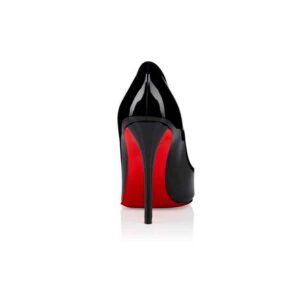
Louboutin's red sole. Source: Christian Louboutin website.
- Levi’s red label (positioning brand), which illustrates how a seemingly secondary element can become distinctive through its consistent use across all of the brand’s garments.
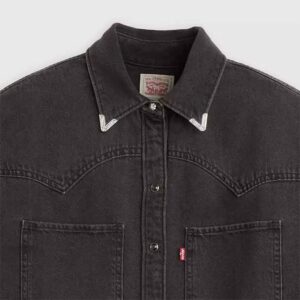
Levi’s Red Label. Source: Levi’s website
- The three Adidas stripes (positioning mark), whose protection is based on their specific placement on the product.

Three Adidas stripes. Source: Adidas website.
- Burberry's “Check” pattern (a signature design), an example of a repeating design that has transcended its decorative function.
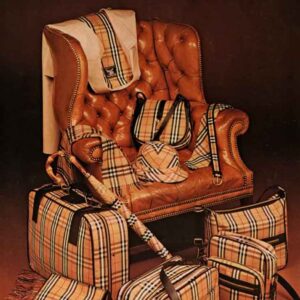
Burberry “Check” print. Source: Burberry website.
- The Louis Vuitton monogram (brand logo), based on the systematic repetition of a recognizable symbol. It is typically associated more with leather goods.
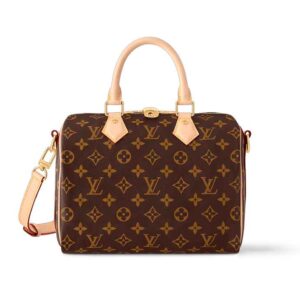
Louis Vuitton monogram. Source: Louis Vuitton website.
- The Hermès Birkin bag (three-dimensional trademark), whose shape has become so well-known that it allows one to identify the brand.

Hermès Birkin bag. Source: Hermès website.
- Jean Paul Gaultier's perfume bottles (a three-dimensional brand), which demonstrate how a shape can function as a brand when it is particularly distinctive.

Jean Paul Gaultier perfume bottles. Source: Jean Paul Gaultier website.
- Sephora stores ( a three-dimensional brand), where the layout of the retail space (layout, colors, and visual elements) makes it possible to identify the company's origins.
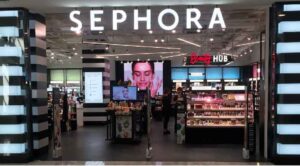
Sephora store at La Vaguada Shopping Center.
These cases share a common element: they are not merely attractive designs, but rather signs that, over time and through use in the marketplace, have acquired a clear identifying function.
Limitations and Strategic Value: Protection Beyond Registration
The protection of non-traditional trademarks offers significant advantages, but it is not without its challenges. Not every aesthetic element can become a trademark, especially in an industry such as fashion, where many signs serve primarily a decorative function.
Although, from a legal standpoint, no higher degree of distinctiveness is required than for traditional trademarks (word or design trademarks), the practice of trademark offices (especially the EUIPO) shows that, in order to meet the minimum threshold of distinctiveness, the claimed shape, configuration, or color must differ significantly from the customary practices and standards of the industry.
Otherwise, such elements will be perceived as intrinsic characteristics of the product or its presentation, which, in most cases, leads to the refusal of registration due to a lack of distinctiveness; the applicant must then demonstrate, if applicable, that the mark has acquired distinctiveness through use in the market or has acquired secondary meaning.
Once the threshold of distinctiveness has been met, trademark protection provides significant strategic value. Unlike industrial design protection, it allows for indefinite protection, provided it is renewed.
From a practical standpoint, this is particularly relevant in the fight against counterfeits and imitations, since trademark protection allows for action not only against identical copies but also against marks that create a risk of confusion or association in the mind of the consumer.
Protection of Intangible Assets in the Fashion Industry: A Strategic Issue
In the fashion industry, protecting intangible assets requires a flexible approach tailored to each specific case. There is no single optimal approach; rather, there are various tools that must be combined depending on the business objectives and the nature of the mark.
Non-traditional trademarks, although less common, can play an important role in this strategy when the protected element goes beyond its aesthetic dimension and becomes part of the brand’s identity.
Cristina Velasco, Senior Associate in the Trademark Practice Group at ELZABURU.