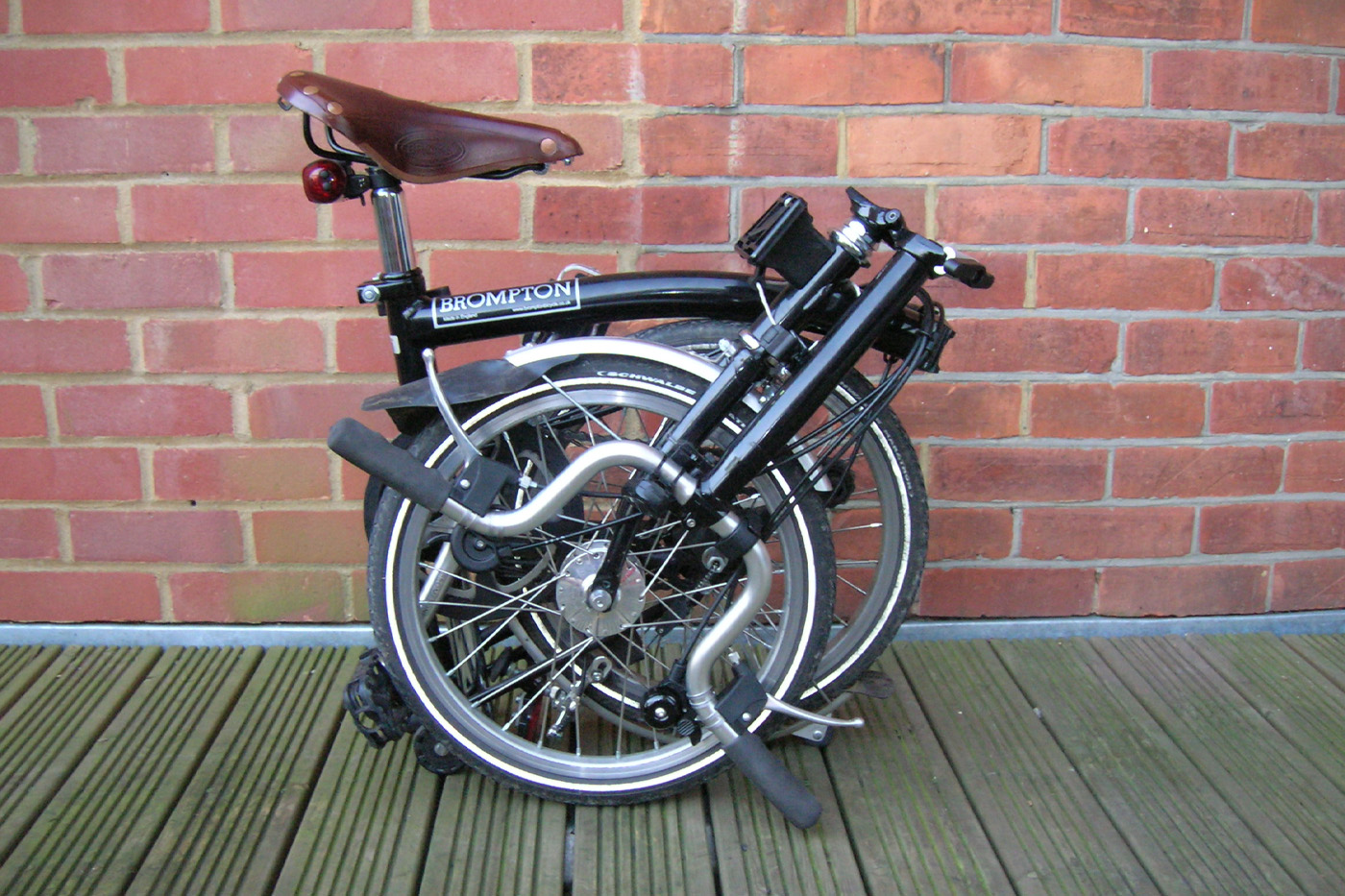

Following the CJEU’s June 11, 2020, ruling in Case C-833/18 Brompton, the answer—as the song goes—is blowing in the wind. And it’s not surprising that this is the case.
Let’s review the case: Brompton is a British company that markets a folding bicycle, which has been sold in its current form since 1987 and was protected by a patent due to its technical features: the Brompton bicycle can assume three different positions (folded, unfolded, and an intermediate position), allowing it to remain balanced on the ground.


With the patent rights having expired, Brompton is suing Get2Get on the grounds of copyright infringement for marketing a bicycle whose appearance is very similar to that of the Brompton bicycle and which can be adjusted to the three positions mentioned in the previous section.
The question is clear: Can an object that is defined by its technical characteristics to the extent that it has been protected by a patent constitute an intellectual work? The CJEU refers the matter back to the national court, but not before reiterating certain criteria.
The Court finds that it is true that the design of the bicycle in question is necessary to achieve a specific technical result, namely, the bicycle’s ability to assume three positions, one of which allows it to remain balanced on the ground. However, the national court must determine whether, despite that circumstance, the bicycle constitutes an original work resulting from intellectual creation.
In this regard, the ruling notes that this is not the case when the creation of an object has been determined by technical considerations, rules, or other requirements that have left no room for the exercise of creative freedom or have left such a limited scope that the idea and its expression become indistinguishable. If the form of a product is dictated solely by its technical function, that product is not eligible for copyright protection.
To make this determination, the national authority must assess whether, through the choice of the product’s form, its creator has expressed his or her creative ability in an original manner by making free and creative decisions and has shaped the product so that it reflects his or her personality.
At this point, the Court adds that the existence of other possible ways to achieve the same technical result is not decisive in assessing the factors that guided the creator’s decision. Similarly, the intent of the alleged infringer is irrelevant in the context of that assessment.
With regard to the existence of a prior patent—which had already expired at the time of the main proceedings—and the effectiveness of the form in achieving the same technical result, these factors need only be taken into account if they shed light on the considerations that underlay the choice of the form of the product in question.
The Court concludes that Articles 2 through 5 of Directive 2001/29 must be interpreted to mean that the copyright protection they provide applies to a product whose form is, at least in part, necessary to achieve a technical result when that product constitutes an original work resulting from intellectual creation, since, through that form, its author expresses his or her creative ability in an original manner by making free and creative choices, such that the form in question reflects his or her personality—a matter which it is for the national court to determine, taking into account all the relevant elements of the main proceedings.
In short, it seems clear that the boundaries separating intellectual property from other industrial property rights (patents, designs, trademarks) remain unclear, and that in practice , national courts still have a great deal of discretion despite (or perhaps because of) the criteria—as precise as they are ambiguous—established by the CJEU.
Author: Antonio Castán