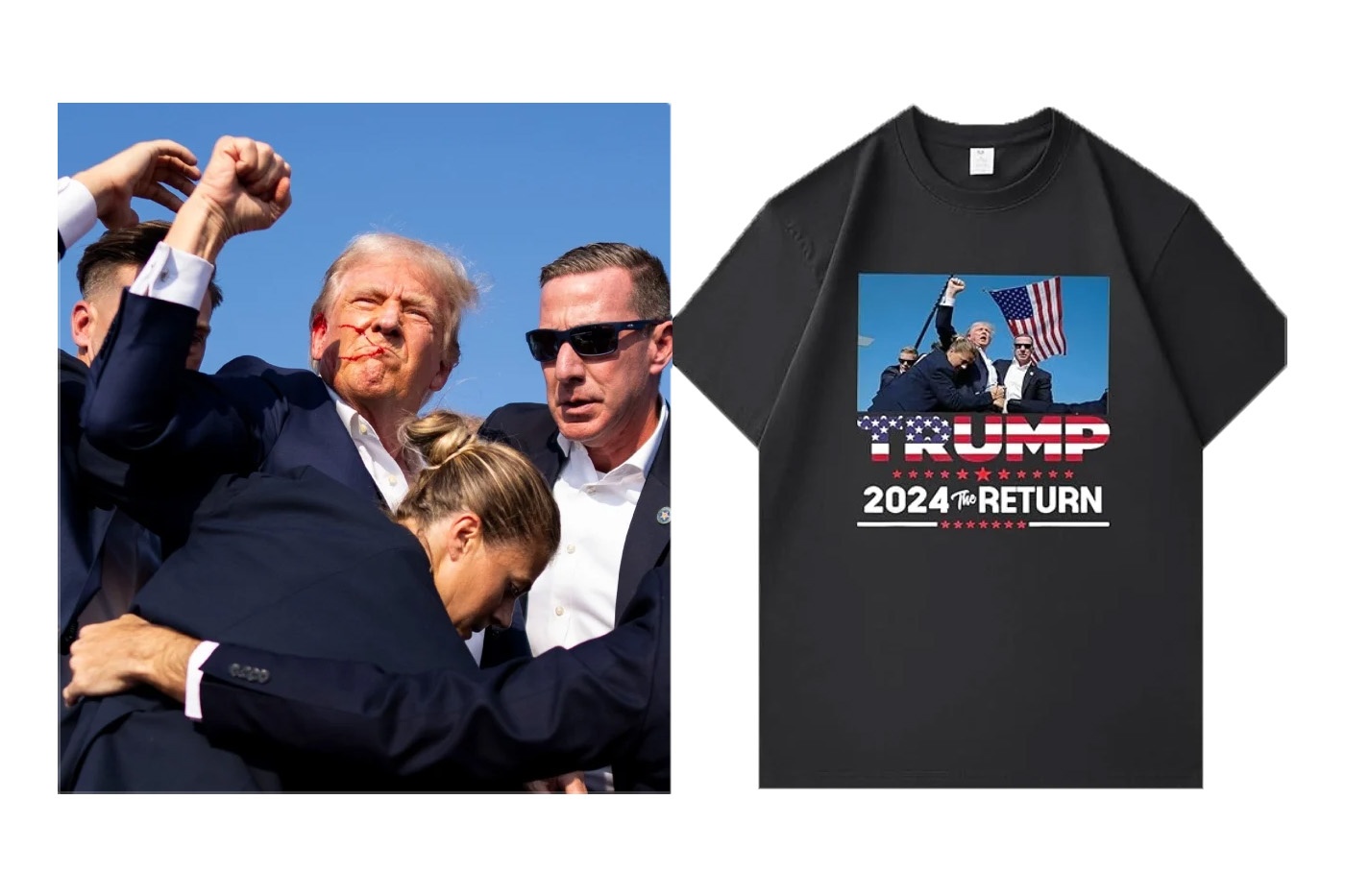
On July 13, Donald Trump survived an assassination attempt while delivering a speech at a rally in Pennsylvania. Just a few hours later, T-shirts and other merchandise featuring an image of the triumphant candidate—with his fist raised—were already being sold, after he emerged unscathed from the attack.
Is it legal to sell these products without authorization from Trump or the photographers who took these photos? Regulations regarding the right to reputation and the right to one's own image vary by jurisdiction.
What Is the Right to One's Own Image Like in Spain?
The applicable organic law in Spain is Law 1/1982, of May 5, which, in Article 8.2, establishes that the right to one’s own image“shall not preclude its capture, reproduction, or publication by any means in the case of persons holding public office or engaged in a profession of public prominence or visibility, provided that the image is captured during a public event or in places open to the public, or where a significant historical interest prevails.”
The fact is that, although a person’s increased public profile entails a reduction in the protected scope of their image and privacy, this does not mean that such a person is deprived of the rights to which they are entitled.
In other words, although photos of public figures may be published, the unauthorized commercial use of these images would be unlawful and would fall under the provisions of Article 7, paragraph 6, of Law 1/1982, which establishes that “the use of a person’s name, voice, or image for advertising, commercial, or similar purposes, without the consent of that person, shall be considered an unlawful infringement of the right to honor, to one’s own name, and to the image of the affected person.”
Yes to reproduction, no to commercialization
Under this law, at least in Spain, products cannot be marketed using a photograph of a politician without that person’s consent. And, for the same reason, the work of a photographer or artist cannot be reproduced or distributed without their authorization, or without the authorization of a natural or legal person authorized by them to license such uses.
Those who violate these laws may face civil actions to protect their honor, privacy, or personal image in connection with the use of the photographed person’s image, as well as civil actions for infringement of intellectual property rights in connection with the unauthorized use of the photographs.
Similarly, if someone were to use a photograph—of which they are not the author—for commercial purposes after digitally altering it, they would still be infringing on the rights to that photograph.
Among the exclusive rights enjoyed by intellectual property rights holders are the rights of reproduction, distribution, public performance, and adaptation.
Complainants may ask platforms to remove infringing products
Just a few hours after the infamous attack on Trump, T-shirts and other merchandise commemorating the event were already available for purchase on AliExpress and Amazon. Do these platforms bear any responsibility for the sale of these items?
Amazon, like other online sales platforms, has mechanisms in place for reporting infringing content that are available to holders of industrial and intellectual property rights, as well as rights to reputation, privacy, or one’s own image; therefore, those who believe they have been harmed may contact the platform directly to request the removal of such content.
It would also be worth exploring the possibility of seeking injunctive relief (either before filing a lawsuit or in conjunction with it) to have infringing products removed or blocked from sale.
Would Trump or the photographer have any financial rights to those sales?
Any rights holder whose rights are being exploited by a third party without their consent is entitled to claim compensation, either in the form of a license or, at a later stage—as part of a claim—as compensation for the damages caused.
Alba Mª López, Associate Partner in the Business and Contracts Practice at ELZABURU