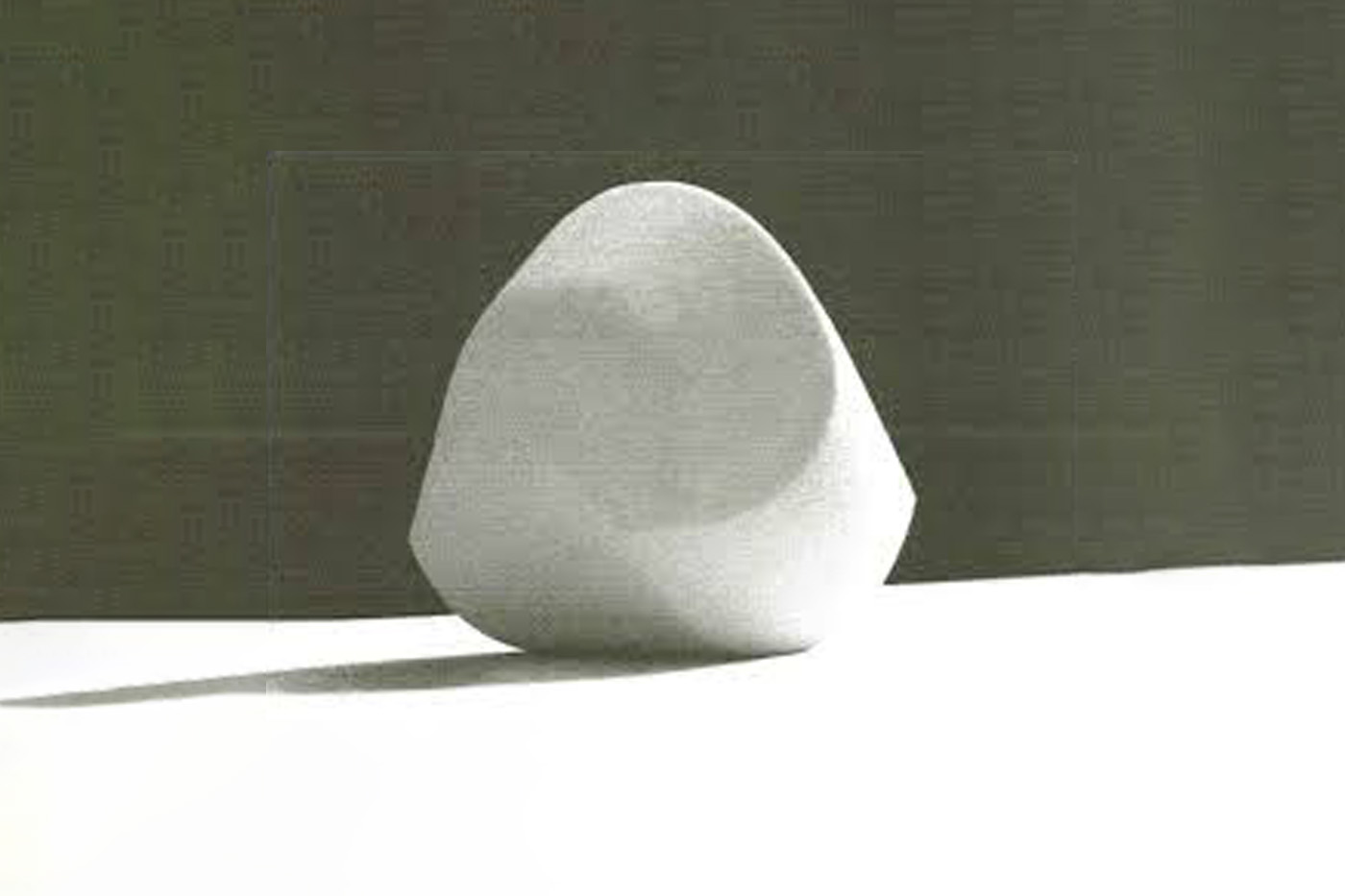

The Court of Justice “clarifies” what role the relevant public or the average consumer should play in analyzing the prohibition on the registration of (three-dimensional) shape trademarks whose subject matter may fulfill a technical function or confer substantial value on the product.
Judgment of the Court of Justice of April 23, 2020, in Case C‑237/19, the Gömböc Case
On February 15, 2015, the Hungarian company Gömböc Kft. filed a trademark application consisting of a three-dimensional sign to distinguish decorative articles (Class 14), decorative articles made of glass and earthenware (Class 21), and toys (Class 28).

The Hungarian Office refused to register the trademark on the grounds that the sign for which registration was sought represented a three-dimensional object which, due to its external design and the homogeneous material used, always returns to its equilibrium position; and that the shape of that object served, in its entirety, to achieve the technical objective of ensuring that it always straightens out (Art. 2.2(b) of the Hungarian Trademark Act = Art. 3.1(e)(ii) and (iii) of Directive 2008/95 on Trademarks).
More specifically, the Office found that, with regard to toys, the object—which always returns to its equilibrium position—was composed of elements designed to achieve that purpose; therefore, those elements fulfill a technical function, and the object is also designed to achieve a specific technical result. With regard to decorative items, the Office held that the object embodied an attractive and decorative design with a casual appearance that influenced the consumer’s purchasing decision and, therefore, added substantial value to the product, which, moreover, had become the “tangible symbol of a mathematical discovery that has provided answers to questions concerning the history of science.”
In assessing the grounds for refusing this trademark, the Office took into account not only the graphic representation of the sign as it appeared in the trademark application file, but also evaluated the relevant public’s perception of that object. In the Office’s view, the public knew from advertising and use of the product that it always returned to its equilibrium position (that is, it fulfilled a technical function). Furthermore, the public also knew that the product embodied the symbolic value of the mathematical discovery described above (and therefore attributed substantial value to the product).
The additional consideration taken into account by the Office in support of its grounds for refusal—particularly with regard to the decorative elements—stemmed from the fact that the subject matter of the trademark was already protected as an industrial design. This circumstance, in the Office’s view, confirmed that such an object—which met the requirement of distinctiveness required for designs—served a decorative function and had an aesthetic appearance that added substantial value to the product.
The refusal to register the trademark was appealed through the various courts all the way to the Hungarian Supreme Court. In light of the doubts raised in resolving the matter, the Supreme Court referred a series of preliminary ruling questions to the Court of Justice (CJ), which are detailed below.
If you would like more details about the ruling, please view the full document.
Author: Jesús Gómez Montero
Former Partner at ELZABURU and Member of the Advisory Committee of the Alberto Elzaburu Foundation