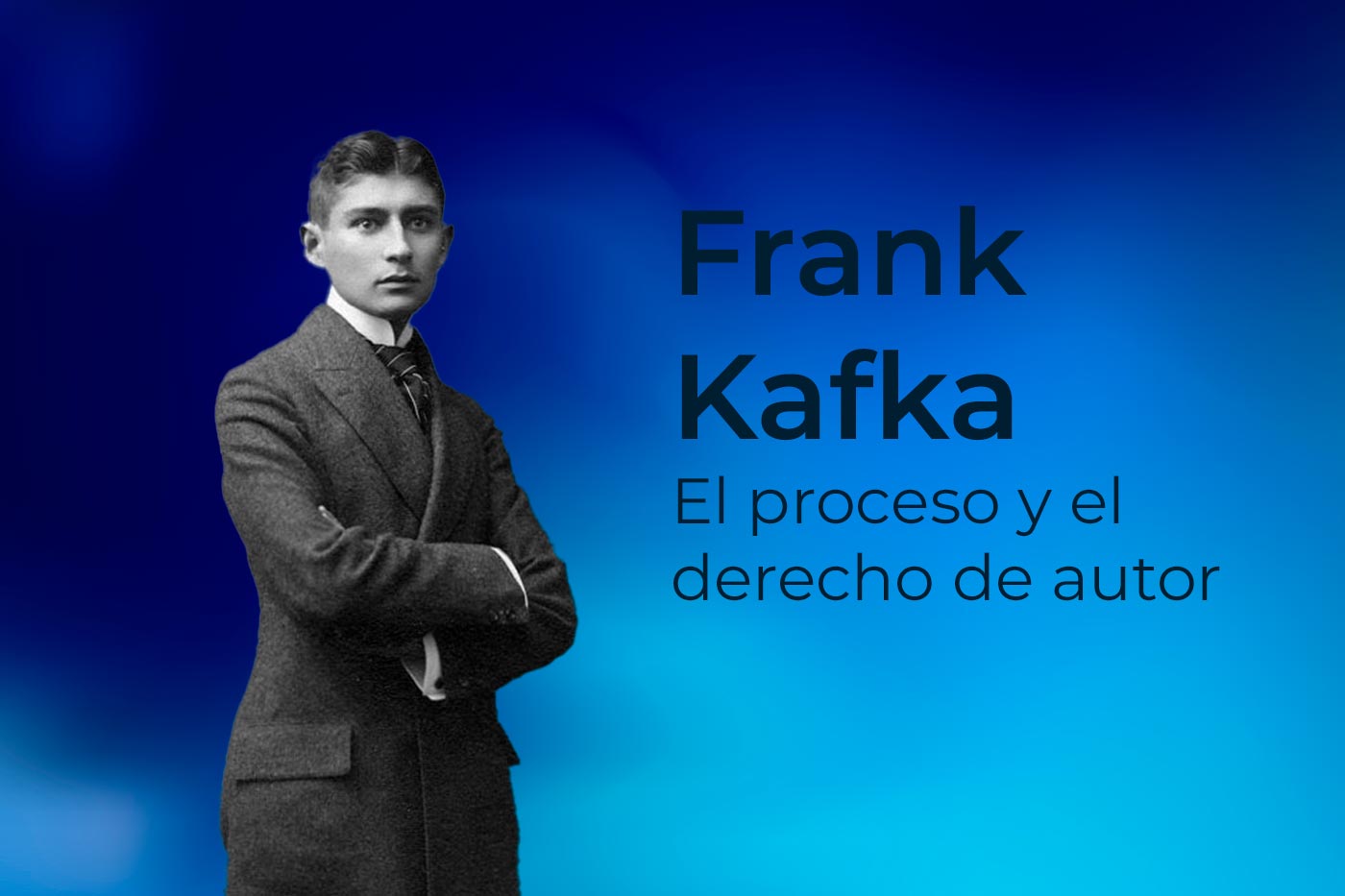

April 26 marked the 100th anniversary of the publication of *The Trial*, one of Franz Kafka’s most iconic works. Its story, as relevant today as it was when it was first published, offers an unparalleled opportunity to reflect on the role of copyright and the value of intellectual property as safeguards of the author’s creativity, integrity, and artistic vision.
The Paradox of Publishing Against the Author's Will
The Kafka case is one of the most hotly debated in the world of copyright law. The Czech writer left clear instructions to his friend Max Brod: to destroy all his manuscripts after his death. However, Brod disregarded that wish and published works that are now part of the universal literary canon.
From a legal perspective, this act constitutes a violation of the author's moral rights, particularly with regard to the rights of publicity and the right to object to defamatory works. Despite this, the result was the preservation of an invaluable legacy.
The “Kafkaesque” as a Reflection of Contemporary Legal Paradoxes
*The Trial* starkly depicts a judicial process in which the defendant is unaware of the charges against him, has no access to an effective defense, and is ultimately executed without ever having been heard by a visible judge. Rather than a traditional legal critique, the play presents a deeply unsettling vision of depersonalized power and the absurdity to which a judicial system can descend when it loses sight of the individual.
A century later, the “Kafkaesque” remains present, albeit in more subtle forms. It is not far-fetched to apply that adjective to current situations such as the prolonged failure to renew the General Council of the Judiciary, the proliferation of procedural reforms that create legal uncertainty, or even legislative initiatives aimed at circumventing court rulings of historic significance (handed down in proceedings conducted with impeccabledue process). It can also be evoked by the tensions that arise in the field of copyright law with every attempt to reform intellectual property law, when creators perceive the risk of diminishing protection.
Film Adaptation and Respect for Moral Rights
In 1962, Orson Welles adapted *The Trial* for the screen in a personal and atmospheric version that, although it introduced some narrative changes—such as reversing the order of certain episodes or a different ending—remained deeply faithful to Kafka’s spirit. What is significant from a copyright perspective is that this was the only film by Welles that was not subject to external interference during the editing process. The director himself acknowledged this: “It wasn’t tampered with, either in the editing or in anything else.”
Interestingly, Welles conceived a scene for this film that was never included, but which is remarkably relevant today: an episode in which Josef K. consults a fortune-teller who interprets his fate using a computer. In the screenplay, the protagonist reflects on the possibility of replacing a human judge with a machine. Although it was ultimately cut, this scene foreshadows current debates about the application of artificial intelligence in the justice system and its implications—including for intellectual property and the limits of human judgment in the creation and evaluation of works.
Transformation, the Public Domain, and Reinterpretations
Kafka’s figure has also been reinterpreted in contemporary fiction. In *The Cockroach* (2020), Ian McEwan reverses the plot of *The Metamorphosis*: instead of a human turned into an insect, we witness a cockroach waking up transformed into the Prime Minister of the United Kingdom. Beyond political satire, this work raises an interesting question from the perspective of the right of adaptation, one of the forms of exploitation provided for in intellectual property law.
Although Kafka’s works are in the public domain—since more than eighty years have passed since his death—the reuse of elements from his works continues to raise purely rhetorical questions from a copyright perspective, except for issues that would affect the right of integrity or authorship.
Kafka, Borges, and the Tension Between Authorship and Publication
In the wake of the publication of Kafka’s short stories, Jorge Luis Borges reflected on the fact that some authors wish to keep their works unpublished or even destroyed. He recalled that Virgil wanted the *Aeneid* to be burned, and that Shakespeare never considered compiling his plays. For Borges, perhaps these authors trusted in the “pious disobedience” of their heirs. But in Kafka’s case, he believed that “Kafka saw his work as an act of faith and did not want it to discourage people.”
The truth is that today, one hundred years after the publication of *The Trial*, its legacy remains as relevant as ever. On the contrary, in a world where challenges to creative freedom and legal certainty persist, Kafka’s work serves as a necessary reminder—an uncomfortable mirror, but also a symbol of the value of artistic expression and the need to protect it.