The link between sports and intellectual property continues to grow stronger. A year ago, we examined how certain soccer celebrations could be registered as distinctive marks. Today, we find a new example of this trend in Lamine Yamal, who recently registered seven European Union trademarks with the European Union Intellectual Property Office (EUIPO).
Personal Branding as a Strategic Asset
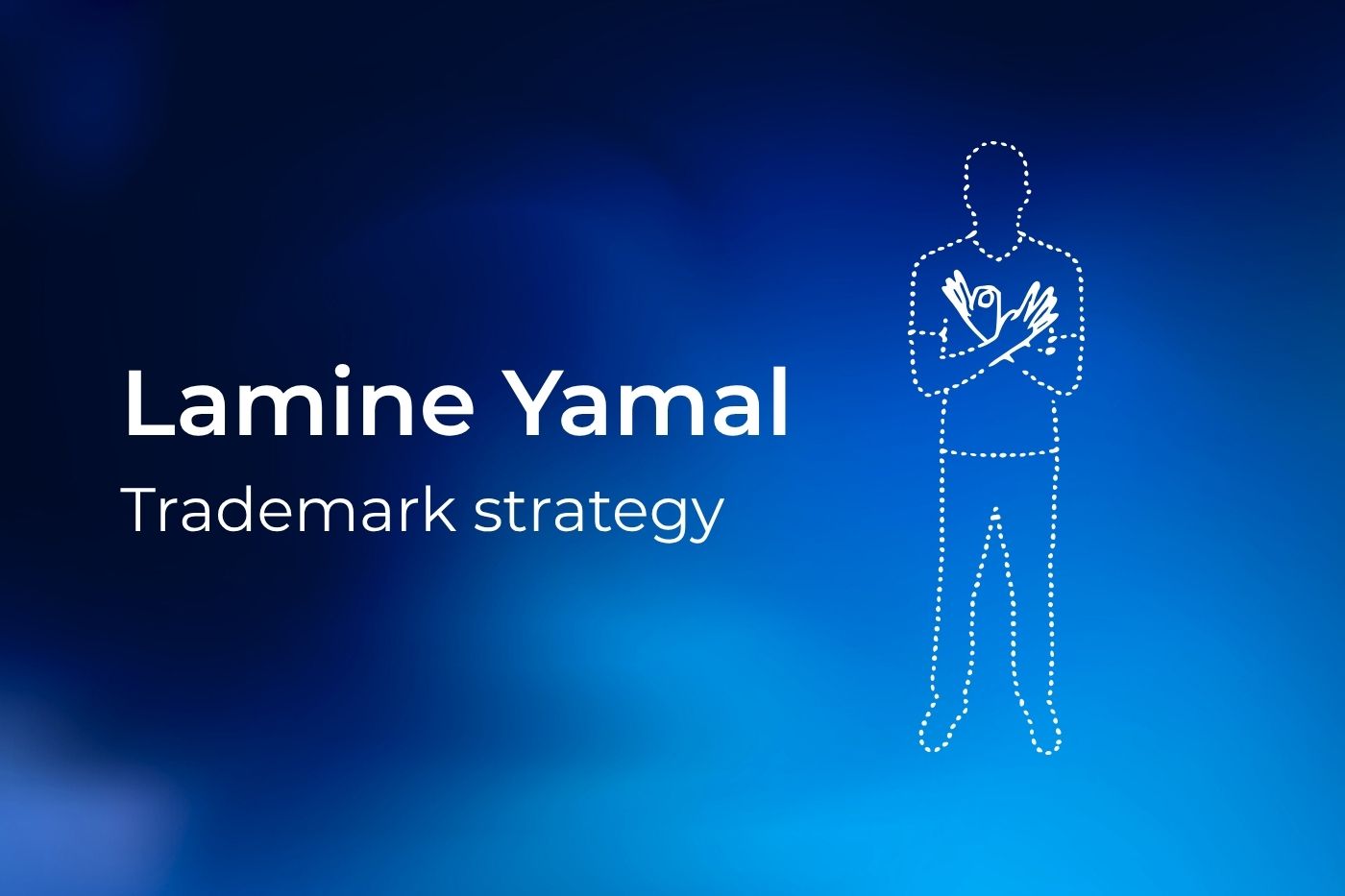
Registering trademarks with the EUIPO is no small matter: it involves establishing a legal framework to protect intangible assets that will accompany the athlete both on and off the field. In Yamal’s case, this strategy will allow him to control the use of his first and last names through two different trademark registrations, as well as the gesture he makes when scoring a goal (304) through five other registered trademarks, preventing third parties from using any of these elements as trademarks or capitalizing on them without his authorization.
Last May, the first trademarks were registered with the EUIPO for sports apparel and footwear, caps, and various types of clothing. Shortly thereafter, protection was expanded by filing applications to register the word marks “LY304,” “304,” and “304 FC” for a broader range of products, including soccer balls, gloves, action figures, sunglasses, helmets, watches, headphones, backpacks, barbells, and video games. This extension of protection reflects a strategic, long-term vision, which advises registering a trademark not only for products or services whose launch is imminent, but also for those to which the brand’s use might be extended in the medium or long term.
Gestures as Distinctive Signs
A year ago, we noted how players like Kylian Mbappé had registered their celebrations as trademarks. In Yamal’s case, the trademark protection for his goal-scoring gesture (number 304) refers to the last three digits of the ZIP code for his neighborhood, Rocafonda, in Mataró (Barcelona).

Lamine Yamal's Celebration: A Record of the Gesture He Made After Scoring a Goal
The registration of this celebration does not protect its performance on the field ( where any other player could perform it without infringing the trademark), but rather its use in the commercial sphere. In other words, it grants the owner an exclusive right to commercially exploit the gesture protected by the trademark and to prevent third parties from using it on products or services without authorization, thereby establishing it as an asset capable of commercial exploitation.
It is also worth noting that, in addition to the protection afforded by trademark law, claims based on copyright (provided sufficient originality is demonstrated) or on the protection of the right to reputation, privacy, and one’s own image may arise in some cases.
A forward-looking strategy
A soccer player’s career, no matter how successful, has a limited duration. Trademark registration is a key tool that allows an elite soccer player to extend his or her economic, social, and cultural influence beyond their time on the field. In this regard, Yamal’s decision reflects a clear understanding that his image and distinctive marks are part of an intangible asset that should be protected from the very beginning.
Furthermore, the combination of such a unique and personal way of celebrating his goals, a number that holds special significance for him, and his geographic origins also reinforces the brand’s authenticity, creating a narrative that blends personal identity, a connection to his hometown, athletic success, and public recognition.
The case of Lamine Yamal confirms an increasingly established trend: elite soccer players are adopting a strategy of protecting as trademarks not only their names and nicknames, but also their goal-celebration gestures and other personal symbols that represent their identity.
At Elzaburu, we are closely monitoring this trend, convinced that intellectual property has become a key element in managing athletes’ identities and creating value beyond the playing field.
Fernando Ilardia, Partner in the Trademark Practice Group at Elzaburu