
Organizing cultural and festive events often involves commissioning or using creative works, such as posters, illustrations, or graphic designs. These creations are protected by intellectual property laws, which require the author’s permission for their use.
A ruling handed down by a commercial court has reiterated that the substantial reproduction of a work without permission—even if formal variations are introduced—may constitute plagiarism and result in financial liability for the person who uses it.
Facts of the Case
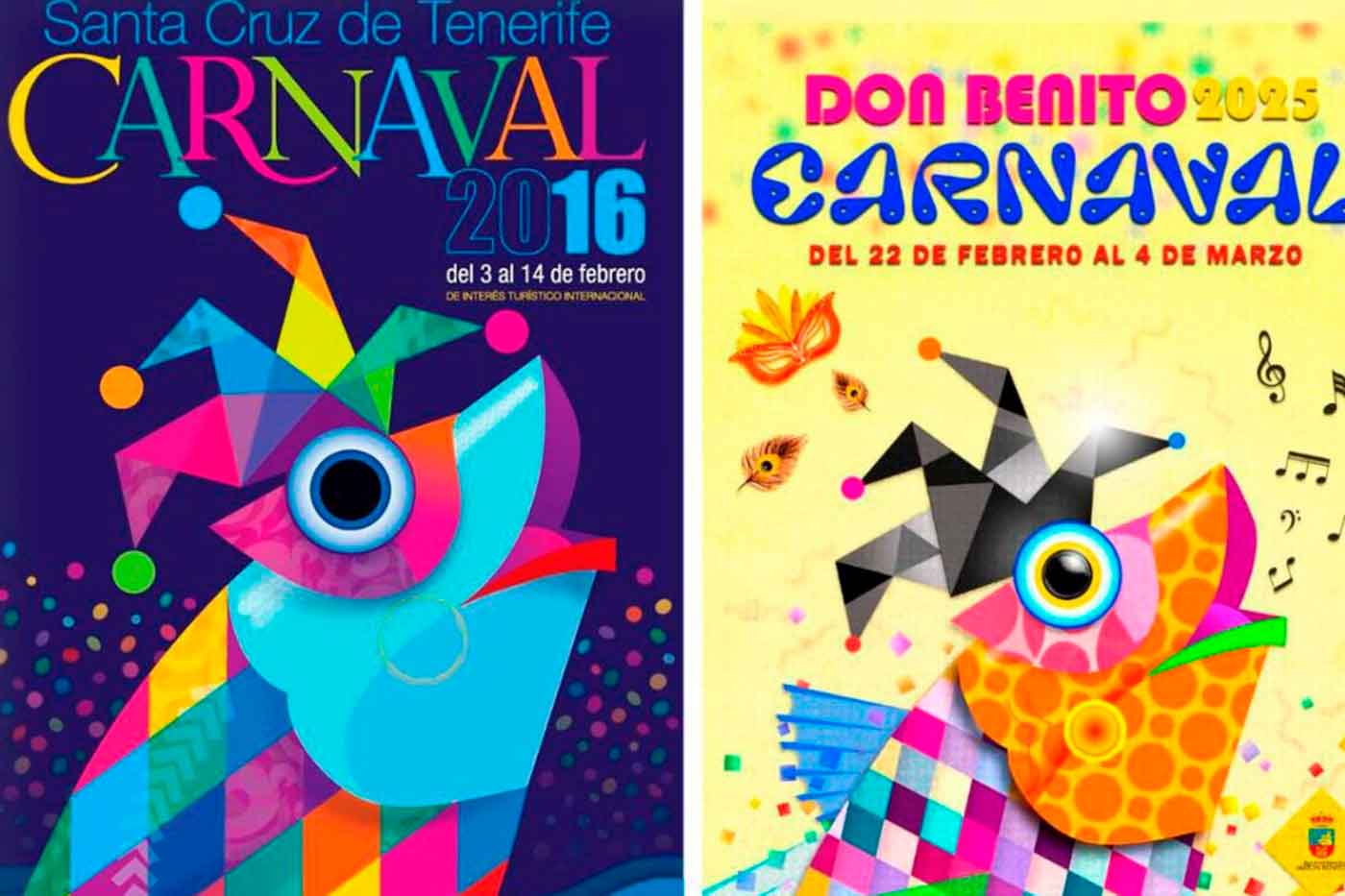
The dispute arose after it was discovered that the promotional poster for the Don Benito (Badajoz) City Council’s Carnival had allegedly been plagiarized—or at least inspired by—the one designed by Torres Franquis for the same festivities, but nine years earlier (2016) and for the town of Santa Cruz de Tenerife, for which he was paid 1,630 euros.
The similarity concerned the main element of the design: a “chicharro” fish depicted in a distinctive graphic style that had become a visual symbol of the original event.
The poster used by the town in Extremadura retained that same central motif, changing only the colors, adding some decorative elements to the background, and substituting the typeface.
After sending several letters without receiving a response, the creator filed a lawsuit seeking:
- recognition of the infringement of his copyrights
- the removal and destruction of all copies, both in physical and online formats
- compensation for the damages suffered
Criteria Applied by the Court
Minor changes do not rule out plagiarism
The judge ruled that the modifications made by the city council lacked sufficient creative substance to constitute a new work.
Despite these modifications, the essential features of the original design remained: the same dominant element, a matching graphic configuration, and a substantially identical structure. The similarity was therefore recognizable and relevant from a legal standpoint.
On that basis, the ruling finds that the use of the poster without the author’s authorization constitutes a copyright infringement under the Intellectual Property Law. Furthermore, it also finds that moral rights have been infringed, in particular the right to the integrity of the work and the right to be identified as the author.
Ownership of Rights
The Don Benito City Council argued that ownership of the rights belonged to the Santa Cruz de Tenerife City Council, since it was the entity that had commissioned the poster at the time. The judge rejected this argument and noted that the commission did not entail the acquisition of full ownership of the exploitation rights. Thus, the author remained the original owner of the rights, while the city council held only a right of use under the agreed terms, without the authority to freely dispose of the work.
Compensation and Measures Taken
The ruling set total compensation at 6,500 euros, distinguishing between two categories:
- Financial damages: 500 euros, equivalent to the amount the author would reasonably have received had he authorized the use.
- Compensatory damages: 000 euros, taking into account the public dissemination of the poster, its institutional use, and the creator's professional career.
In addition, it was agreed that:
- the immediate cessation of use
- the removal and destruction of physical copies
- the removal of digital publications
- the publication of the resolution in local and regional media
- the imposition of court-ordered costs.
Practical Implications
This case highlights that the concept of “inspiration” has clear legal boundaries in the context of intellectual property. When a new creation reproduces the essential and recognizable elements of a prior work—even if it incorporates incidental or decorative changes—it cannot be considered independent.
Simply changing colors, fonts, or minor details does not alter this conclusion if the substantial identity of the design is preserved. In such cases, the use of the work without authorization constitutes unauthorized exploitation and, therefore, a copyright infringement.
The ruling under review confirms this approach by finding plagiarism despite the changes made and by recognizing both the financial and emotional harm resulting from the institutional use of the poster.
Proper management of intellectual property rights and respect for authorship are essential to preventing unauthorized use of creative works and the resulting financial and legal liabilities arising from their improper exploitation.
Elzaburu provides advice on the protection, defense, and litigation of copyrights and other intangible assets, drawing on constantly updated knowledge of applicable regulations and case law.
Carlos Morán, a partner at Elzaburu specializing in industrial and intellectual property litigation and unfair competition.