
Just when it seemed that Lionel Messi had finally stopped making headlines after a tumultuous summer, on September 17, 2020, the Court of Justice of the European Union (CJEU) ruled in Cases C-449/18 and C-474/18 on the appeals filed by EUIPO and J.M.-E.V. e hijos S.R.L. against the judgment handed down by the General Court (GC).
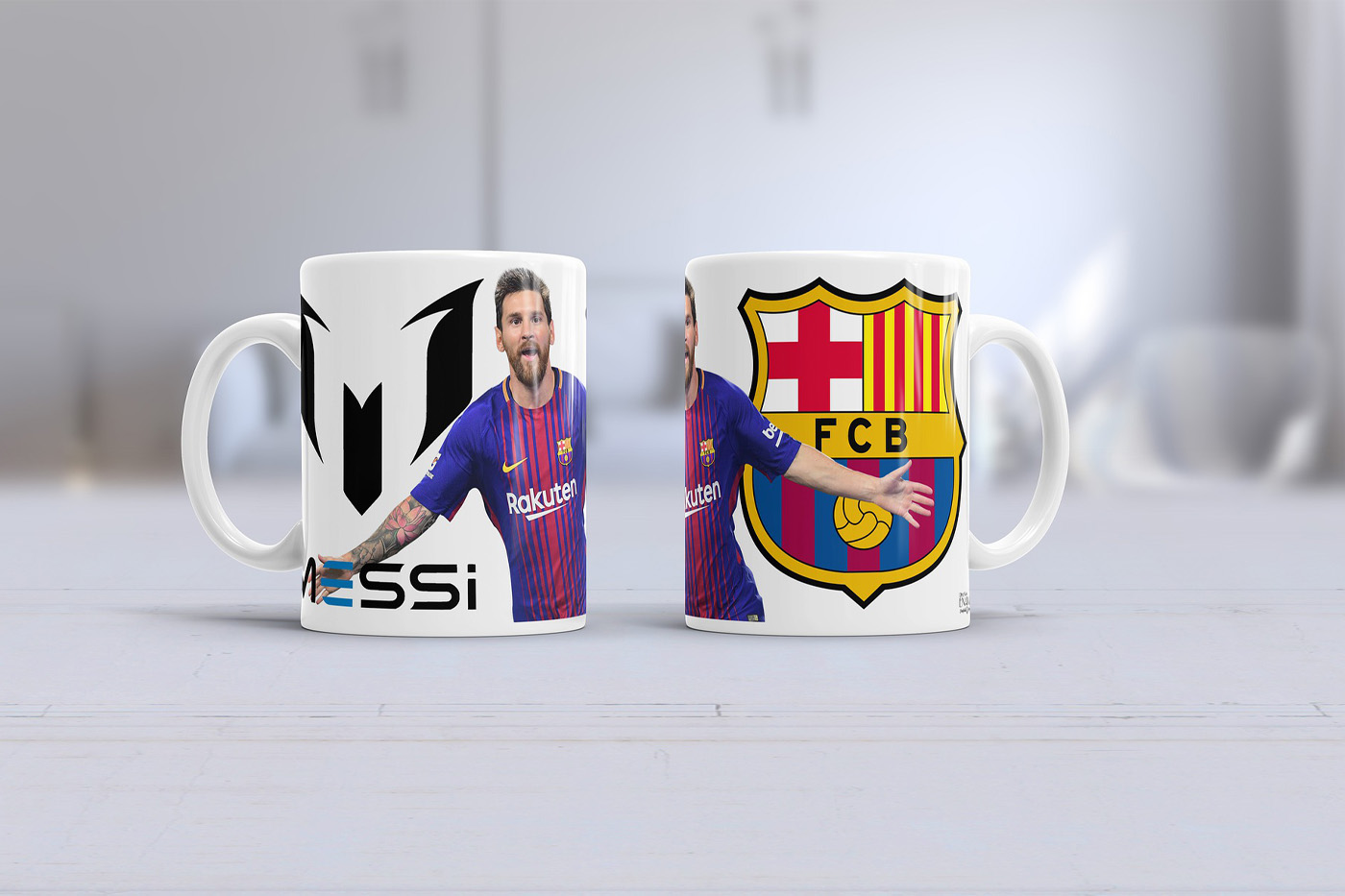
As we mentioned previously, and to recap, F.C. Barcelona player Lionel Messi filed European Union trademark application No. 010181154 with EUIPO in 2011 to distinguish goods in classes 9, 25, and 28, using the following graphic:

As a result of that application, the owner of the earlier European Union trademarks Nos. 3436607 and 414086 MASSI (word marks), registered in classes 25, 9, and 28, respectively, filed an opposition based on the existence of a likelihood of confusion and/or association (Article 8.1. b) of the EUTM Regulation) between the trademark applied for by Leo Messi and the earlier trademarks regarding the“MASSI” mark.
EUIPO ruled in full favor of the opposition filed by the owner of theMASSI trademarks, thereby rejecting Leo Messi’s application on the grounds that there was a likelihood of confusion between the conflicting marks. Consequently, in 2014, Lionel Messi filed an appeal against the rejection decision, but EUIPO dismissed it.
In September 2014, the applicant appealed that rejection decision before the General Court, arguing that the trademarksMESSIandMASSIwere perfectly compatible for registration purposes, since the EUIPO had failed to consider the importance of the conceptual level when analyzing the matter.
The General Court ruled on the appeal on April 28, 2018, granting the European Union trademark at issue; this decision was appealed to the Court of Cassation by both EUIPO and J.M.-E.V. e hijos S.R.L.
Well, the Supreme Court has ruled on this matter and confirmed the decision already issued by the General Court in 2018, establishing the following:
- In Case C-449/18 P (EUIPO), the Court of Justice held that the General Court had duly taken into account the perception of the MESSI and MASSI marks by the entire relevant public when assessing the likelihood of confusion, and not just by a portion of that public, as EUIPO had argued. This is due, in the Court of Justice’s view, to the appellant’s misinterpretation of the General Court’s judgment.
- With regard to Case C-474/18 P (J.M.-E.V. e hijos S.R.L.), the high court notes that, like the reputation of the earlier trademark, the potential fame of the person requesting that their name be registered as a trademark is one of the relevant factors to be taken into account in assessing the likelihood of confusion, to the extent that such fame may influence the relevant public’s perception of the trademark (Judgment of the Court of Justice of the European Union of June 24, 2010, Becker v. Harman International Industries, C-51/09 P, EU:C:2010:368, paragraph 37). This implies that the General Court reasonably found that Lionel Messi’s reputation constituted a relevant factor in establishing a conceptual distinction between the terms “messi” and “massi.”
- Similarly, the General Court holds that—in response to the appellant’s argument that the General Court relied on facts and evidence presented to it for the first time—Lionel Messi’s reputation was already part of the subject matter of the dispute before EUIPO.
Furthermore, the General Court adds that the General Advocate rightly stated that, given that the notoriety of the surname “Messi”—as the surname of a world-famous soccer player and public figure—was a well-known fact, it could be known to anyone or easily ascertained using accessible sources. Those sources were available to EUIPO when it adopted its decision, and EUIPO should have taken them into account when analyzing the conceptual similarity between the MESSI and MASSI trademarks.
- Finally, the Court of Justice determined that the appellant misinterpreted the judgment in Ruiz Picasso et al. v. OHIM (C-361/04 P), since the appellant argued in his appeal brief that the General Court had held that, under certain circumstances, conceptual differences can offset the visual and phonetic similarities between the signs in question.
In this regard, the Court of Justice notes that the global assessment of the likelihood of confusion implies that conceptual differences between two signs may counteract the visual and phonetic similarities between them, provided that at least one of those signs has, from the perspective of the relevant public, a clear and specific meaning, such that the relevant public can grasp it immediately. Therefore, given that the relevant public would perceive the signs at issue (MESSI and MASSI) as two conceptually different signs, the application of the judgment in Ruiz Picasso et al. v. OHIM (C-361/04 P) was correct.
The message conveyed by the Court of Justice in this case—in our view, quite correctly—is clear: regardless of the visual and phonetic similarities between two trademarks, there may be no likelihood of confusion if there is a marked conceptual distinction between them; therefore, Article 8(1)(b) does not apply.
This marked conceptual difference in the present case is based on the fact that the Argentine star’s surname enjoys widespread recognition among the relevant public—a well-known fact that must be taken into account so that the later trademark may be registered despite the existence of earlier MASSI trademarks. It seems obvious that, were the surname “Messi” not so well-known, the trademarks “MESSI” and “MASSI” would clearly be incompatible, and therefore the trademark application at issue here should have been denied.
The question we must now ask ourselves is whether the Court of Justice’s reasoning applies to cases in which the applicant’s trademark is not a “personality” trademark, but rather a trademark that already enjoys a high degree of recognition and awareness among the relevant public as a result of its use in the market. In other words, could a trademark’s reputation be considered a well-known fact by EUIPO, such that the acquired distinctiveness of the applied-for trademark should be regarded as a relevant factor when analyzing the likelihood of confusion with respect to prior trademarks?
We'll have to wait and see what direction EUIPO's practice takes from now on in this regard.
Author: Manuel Mínguez
Previously published in Economist & Jurist