
Background
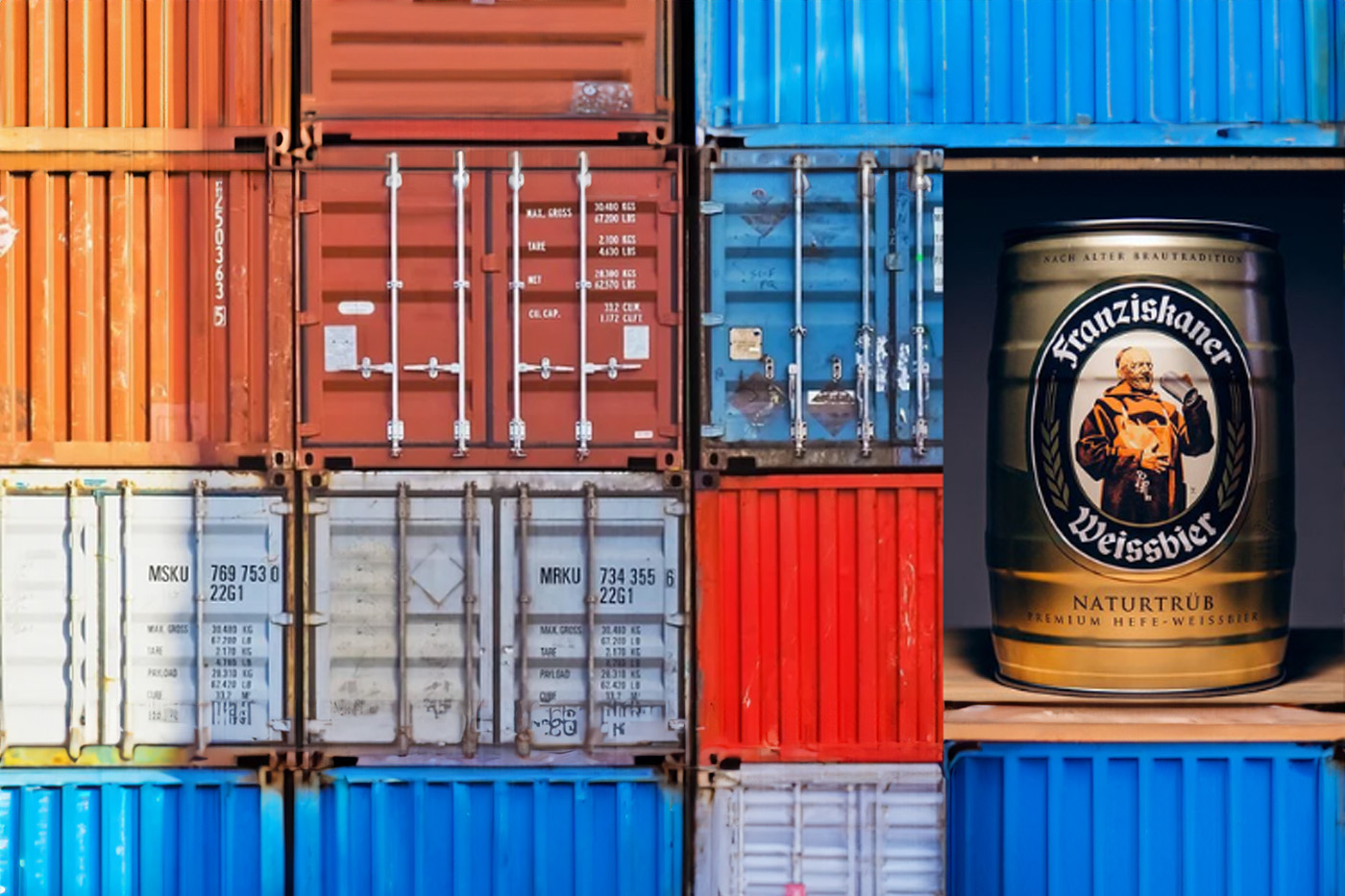
SPATEN-FRANZISKANER-BRÄU GmbH is the owner of two international trademarks, “Franziskaner” (No. G807592) and “Franziskaner Weissbier” (No. G1241072), both of which are licensed to Budweiser Investment (China) Co. Ltd. (hereinafter “Budweiser”) for use and maintenance in China.
On March 7, 2019, Budweiser filed a trademark infringement lawsuit, alleging that Guangzhou Keyuan Import & Export Co. Ltd. had infringed its trademark rights by importing, without its permission, a shipment of beer identical to the two international trademarks mentioned. The defendant argued that the imported beer was a “legal parallel import,” since it was produced in Europe by the trademark owner (SPATEN-FRANZISKANER-BRÄU GmbH) and exported by its affiliate, and therefore did not constitute an infringement of the trademark rights in question.

The Yuexiu District People's Court ruled in favor of the plaintiff at the first instance, ordering the defendant to destroy the infringing products and compensate the plaintiff for its losses. The Guangzhou Intellectual Property Court, however, overturned the first-instance ruling and held that the defendant's products constituted legitimate parallel imports.
The Decision
The Court of Appeals first clarified the definition of “parallel importation of trademarks” as “the cross-border trade in products manufactured or sold abroad by the trademark owner and bearing the trademark lawfully affixed thereto, which are imported into a third country or sold through customs without the consent of the trademark owner or its licensee.” Generally speaking, parallel importation of a trademark is identified by the following five constituent elements.
- The rights holder has legal authority over the trademark in both the exporting and importing countries;
- Imported products are manufactured and introduced to the foreign market by the trademark owner or with the owner's consent;
- Trademark rights in both exporting and importing countries are held largely by the same person or entity;
- The goods are imported into the target territory without the consent of the trademark owner in the importing country; and
- The import does not violate the importing country's legal customs control procedures.
In this case, the court found that the beer in question was produced and marketed in Germany by SPATEN-FRANZISKANER-BRÄU GmbH, and sold and exported by INBEV BELGIUM S.A. to OKUNI TRADING BUANGKOK CRESCENT, the authorized importer and distributor of “Franziskaner” beer in Singapore. Subsequently, STARBEV PTE LTD resold the aforementioned goods, which it had purchased from OKUNI TRADING, to the defendant, and OKUNI arranged for shipment from Singapore to China directly in accordance with the sales contracts between OKUNI and STARBEV and between STARBEV and the defendant. The available evidence showed that the manufacturer of the goods, the seller and shipper in Europe, the licensor who authorized the import and sale in Singapore, and the plaintiff in the case were all companies belonging, directly or indirectly, to the Anheuser-Busch InBev NV/SA group.
Therefore, the court found that the parallel-imported goods were genuine.
Second, since the Trademark Law of the People’s Republic of China does not explicitly prohibit parallel imports of trademarks, the court must base its ruling on the legislative intent and the principles of trademark law in each case—that is, to safeguard the function of trademarks and protect the interests of consumers.
The primary function of a trademark is to distinguish the origin of goods. In this case, the trademark used on the allegedly infringing goods was owned by the same rights holder in both the country of origin (Germany) and the final country of import (China). Therefore, for the relevant public in the Chinese market, the allegedly infringing trademark did not disrupt the unique relationship between the trademark owner and the parallel-imported goods, and thus did not give rise to a likelihood of confusion.
Furthermore, both the parallel-imported goods and those authorized for sale on the Chinese market were subject to the same quality control system as the rights holder’s products and had been marketed by the rights holder in accordance with market standards, such that the quality assurance inherent in the trademark can be applied.
In light of the foregoing, the court ruled that the Chinese trademark in question had not been infringed, since the parallel-imported products did not undermine the functions of the Chinese trademark nor create a risk that consumers would mistakenly identify the origin of the products.
Comments
In this ruling, the court took a neutral stance on parallel imports of trademarked goods, holding that the legality of a parallel import must be assessed on a case-by-case basis in light of the circumstances of the specific case. If the trademark rights used on the parallel-imported goods are held substantially by the same person as the trademark rights in the importing country, and the function of the Chinese trademark is not affected, there is no reason to prohibit the parallel import.
Author: Dan Liu