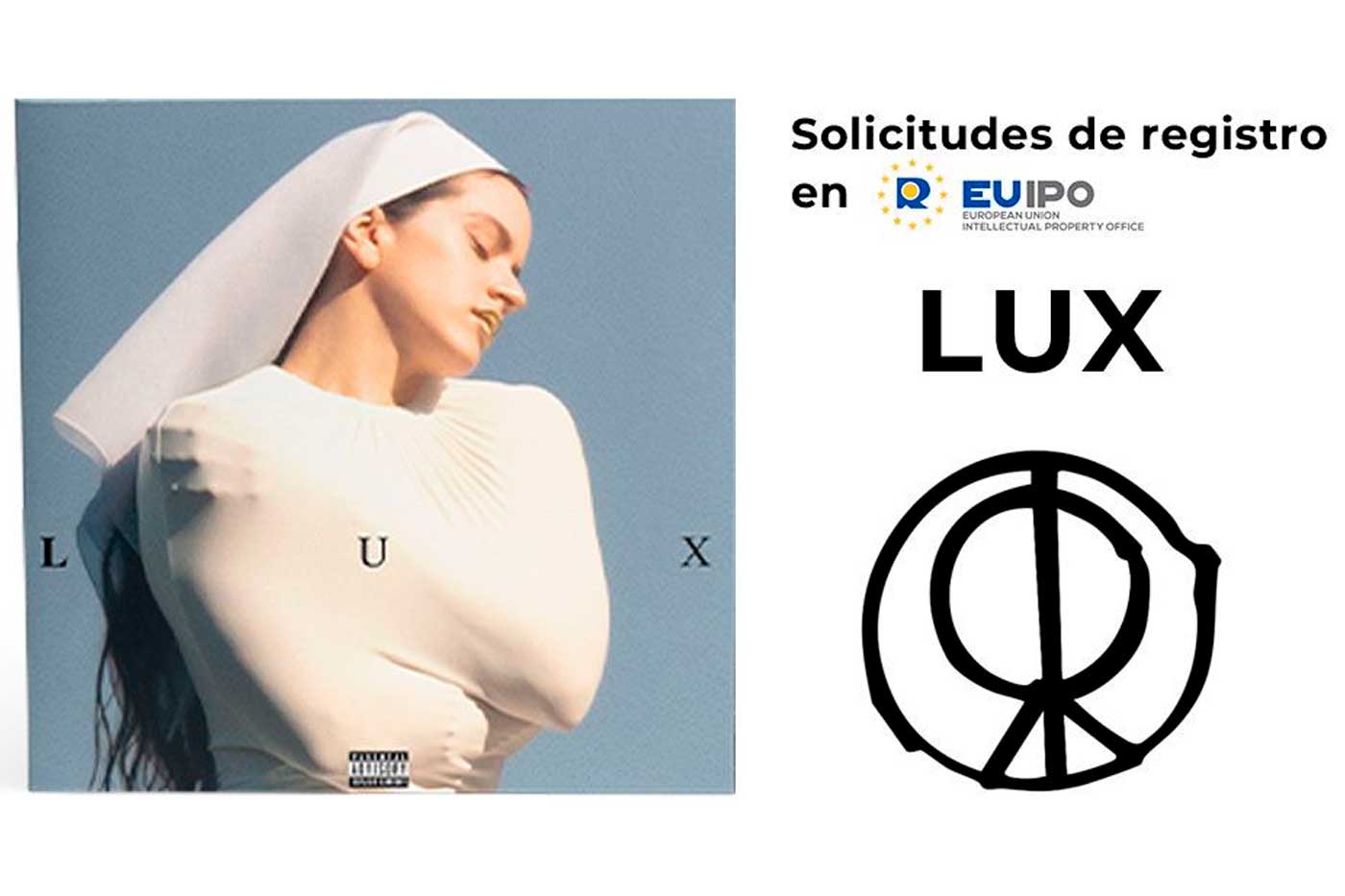


Registering a trademark associated with a musical project has become an essential tool in the industrial property and intellectual property strategies of contemporary artists. Rosalía’s recent application for the European trademark “LUX,” months before the release of her new album, illustrates how trademark law can anticipate market trends and protect the commercial value of the intangible assets associated with artistic creation.
Early Registration and Legal Priority
Filing an application for a European Union trademark before the launch of a cultural or musical product allows the applicant to establish a priority date and obtain a presumption of legal protection against third parties. In the case of “LUX,” the artist filed the application on June 6, 2025, for classes 9, 25, and 41, which include musical recordings, clothing, and entertainment services.
This strategy prevents potential opportunistic registrations by third parties seeking to profit from the commercial value of the mark and facilitates the drafting of licensing agreements ( merchandising, distribution, etc.) with greater legal certainty.
The application is currently under review by the European Union Intellectual Property Office (EUIPO). Once this stage is complete, a three-month period will begin during which holders of prior rights may file an opposition on relative grounds. Consequently, an opposition could still be filed if there are similar prior trademarks.
Risks of Not Registering a Trademark in Other Jurisdictions
One of the fundamental principles of trademark law is its territorial nature. This means that the protection granted by a European Union trademark is effective only within that territory.
Failure to register the trademark in relevant jurisdictions may leave the owner vulnerable to unauthorized use or prior registrations by third parties. In this case, Rosalía has also applied for registration in the United Kingdom and the United States, a move consistent with the international significance of her previous Motomami World Tour.
However, at this time, there is no record of an application in China, where releasing the album before registration could have made it easier for a third party to beat them to it. Without a local registration, it would be more difficult to take action against potential infringements or misuse of the “LUX” mark in that market.
The Distinctive Character of “LUX”
One of the key factors in granting a trademark is its distinctiveness. The EUIPO examines applications to rule out generic or descriptive signs in accordance with the absolute grounds for refusal set forth in the EU Trademark Regulation.
Although “LUX” means “light” in Latin and is commonly associated with luxury, this term does not directly describe the protected goods or services (such as clothing, musical recordings, or entertainment services). Therefore, there are no apparent legal obstacles to its registration.
Figurative and Symbolic Trademarks: Specific Characteristics
At the same time, another trademark related to “LUX” is a symbol. These figurative trademarks may also be registered, provided they are not limited to generic shapes and possess sufficient distinctiveness.
Unlike word marks, their distinctiveness is assessed from a visual perspective, based on whether the graphic symbol allows the business or artistic origin of the goods and services offered to be identified.
Disclosure and Transparency in Applications
In the case of European Union trademark applications, it is common for the timeline and information regarding potential oppositions not to be displayed until the application is published. This is because, while the application is under examination, the opposition period has not yet begun, and certain information is accessible only to the owner or the owner’s authorized representative before the Office.
The European Union Intellectual Property Office does not provide for the confidential processing of applications; therefore, this would not constitute a confidentiality strategy. Once the application is published, all essential information would become public.
Trademark Ownership and Relationship with the Record Label
In this case, for the record label to be able to claim a share of the revenue derived from the use of the trademarks, we must rely on what was agreed upon between the parties. In principle, without a formal licensing agreement with the record label, the artist herself will receive the revenue generated by the use of the trademarks registered in her name.
Legal Strategies for Capitalizing on Intangible Assets
When it comes to developing a strategy to capitalize on an album release, various factors come into play, depending on the creativity of the artist or the team. An example of how to leverage intangible assets in this context is the case of Rosalía’s album cover, unveiled at a massive event in Callao. To create the cover, certain rights must be assigned by the collaborators involved—such as the photographer or designer—and these rights are typically owned by the record label, in this case, Columbia Records.
Another way to capitalize on a release—by leveraging intangible assets—is through “listening parties,” a format that originated in the United States and has been used by major artists such as Ye (a.k.a. Kanye West). These types of events serve not only as a promotional tool to generate buzz but also as a unique experience for fans, who can listen to the album for the first time alongside the artist. Rosalía, in particular, has opted for a more intimate format than other artists, thereby creating a more personal connection with her audience and enhancing the experience surrounding the release. This has undoubtedly made it necessary to consider a series of legal measures to protect such activities. For example, formalizing contracts with venues, obtaining public communication licenses, establishing data processing conditions, and managing access. In short, as with almost all music releases, it is the combination of legal measures that makes the difference in determining whether a product will be successful.
Common Mistakes in Intangible Asset Management
The first step in capitalizing on intangible assets to avoid future problems with an album release is to ensure that you have all the necessary rights assignments or licenses for phonographic and publishing exploitation, as well as trademark registrations and rights to other key elements such as artwork, cover designs, and any visual material associated with the release. It is essential to avoid any type of claim for rights infringement, both during the release phase and after the product has been distributed.
A common—and potentially costly—mistake is failing to formalize agreements with producers, performers, and collaborators. It is not uncommon, even today, to see albums released in both physical and digital formats that later lead to claims of copyright or moral rights infringement. These disputes can arise for reasons such as the unauthorized use of samples or rights assignments that were not properly signed. In addition, visual elements—such as the cover art or any other graphic material used in promotion—must be adequately protected to avoid conflicts related to intellectual property.
Lucía Palomino, Attorney in the Trademark Practice Group at Elzaburu, & Jesús Nogués, Attorney in the Media and Entertainment practice group at Elzaburu.
Image: Rosalía's website and EUIPO.