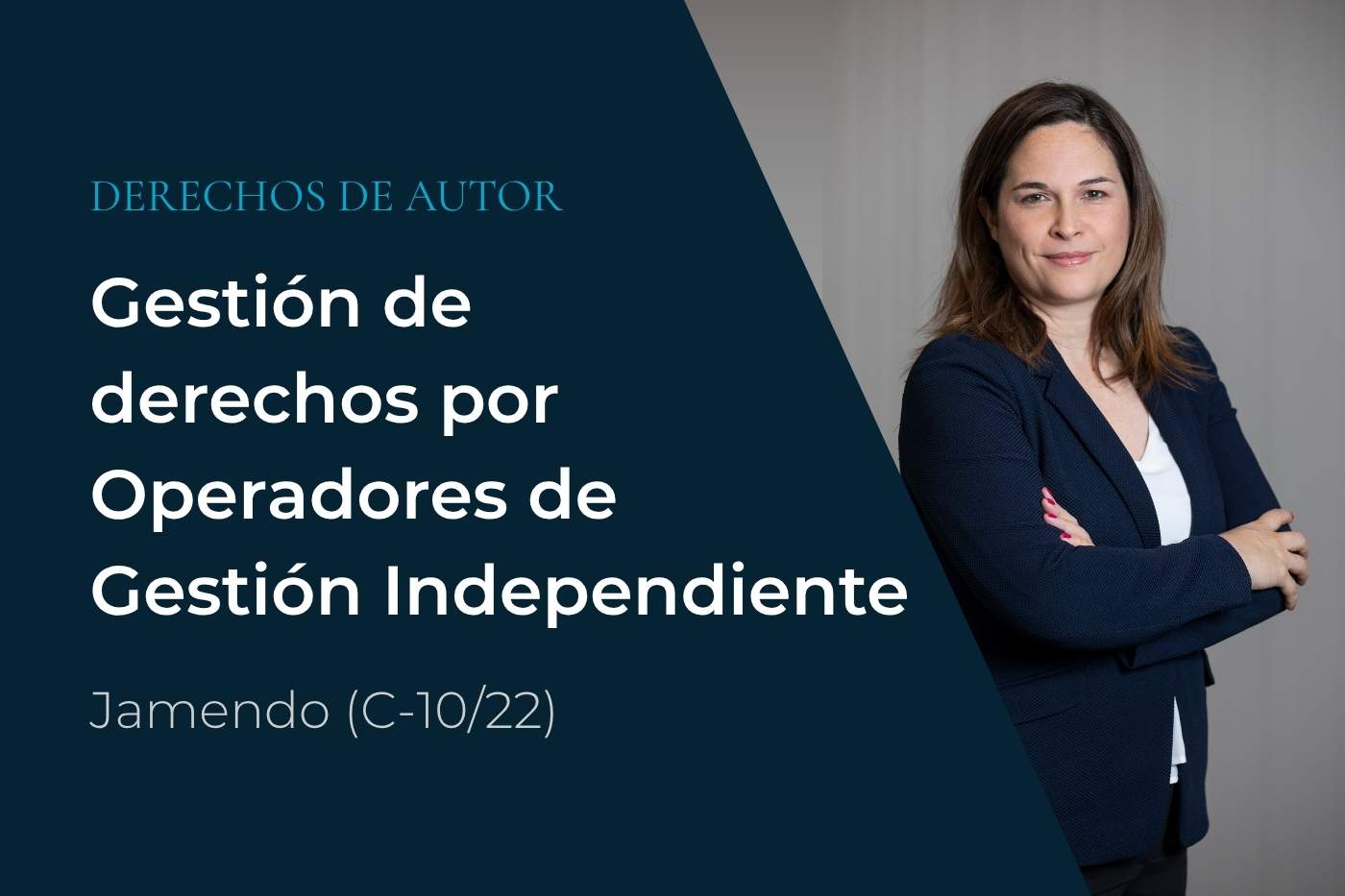

Judgment of the Court of Justice of March 21, 2024, Jamendo (C-10/22).
Facts
The ruling stems from the dispute between Liberi editori e autori (“LEA”) and Jamendo regarding Jamendo’s role as an intermediary in the field of copyright in Italy, which allows authors and rights holders to authorize the use of their musical works, particularly in digital and commercial settings.
LEA is a collective management organization that has filed a lawsuit against Jamendo, an independent management operator (“IMO”) based in Luxembourg that has been operating in Italy since 2004. The dispute arises because, under Italian law, the collective management of copyright was, in practice, reserved for entities authorized at the national level, which prevented operators established in other Member States from providing such services in Italy. LEA argued that Jamendo could not legally operate in Italy.
In light of doubts regarding the compatibility of this national regulation with EU law, the Ordinary Court of Rome referred a question for a preliminary ruling to the Court of Justice of the European Union (CJEU), focusing on the interpretation of Article 56 TFEU (freedom to provide services) and Directive 2014/26/EU on the collective management of copyright and related rights.
Statements
The Court of Justice of the European Union first examines whether Directive 2014/26 is the appropriate applicable law in this case and concludes that, although Article 2(4) extends the application of certain provisions of that Directive to OGI, it cannot be interpreted as requiring Member States to ensure that rights holders have the right to authorize an OGI.
The Court then analyzes Jamendo’s activities in light of Article 56 of the Treaty on the Functioning of the European Union (TFEU), which prohibits Member States from adopting measures that render impossible, impede, or hinder the free provision of services by operators established in another Member State.
The Court concludes that the activities of independent management operators constitute the provision of services within the meaning of Article 56 TFEU; therefore, national regulations governing their access to the market must respect the freedom to provide services.
In this regard, by failing to consider less burdensome alternatives and opting for such a broad restriction, the Italian legislation violates Article 56 TFEU, as it imposes a disproportionate limitation on the freedom to provide services. The Court thus makes it clear that Italy cannot reserve copyright intermediation solely to authorized national entities when this constitutes an unjustified obstacle for operators from other Member States.
Comment
The Court of Justice’s ruling is in line with established case law affirming the primacy of the fundamental freedoms of the internal market over national regulations that, in the field of intellectual property, have exclusionary or protectionist effects. The Court notes that the collective management of copyright, even when serving the legitimate purpose of protecting rights holders, constitutes an economic activity subject to the requirements of Article 56 TFEU.
From this perspective, the ruling is particularly significant in that it defines the scope of Directive 2014/26/EU, clarifying that the Directive does not impose an obligation on Member States to ensure that rights holders have the option of authorizing independent management operators, nor does it legitimize national restrictions that prevent such operators from entering the market. In this way, the Court avoids a broad interpretation of the Directive that could justify regulatory barriers incompatible with EU law.
Furthermore, the ruling has clear practical implications in the context of the digital and cross-border exploitation of protected works, where the existence of national barriers hinders the efficient granting of licenses. By reinforcing the principle of the freedom to provide services, the Court of Justice promotes a more competitive and flexible environment, to the benefit of both rights holders and users.
In short, the Court’s ruling contributes to the harmonization of the European collective management market, while requiring Member States to review their regulatory frameworks to ensure that the requirements imposed on operators are truly proportionate and non-discriminatory, thereby guaranteeing a balance between the protection of copyright and the effective functioning of the internal market.
Mabel Klimt, Managing Partner at ELZABURU.