
Throughout history, Spain has been the birthplace of great explorers, scientists, and inventors whose contributions have been pivotal in many fields of knowledge. However, in many cases, the recognition and fame for their discoveries and advances have been attributed to others, relegating these Spanish pioneers to obscurity.
Why does this happen? Often, the success of an innovation depends not only on its ingenuity, but also on its dissemination, commercialization, and, above all, its adequate protection. Effective registration of patents, utility models, and designs is crucial to ensuring that inventors’ efforts and creativity are recognized and rewarded.
Spanish Explorers and Discoverers: Mapping the World Before Anyone Else
One of the areas in which Spain has made fundamental contributions is geographical exploration. For centuries, Spanish navigators and scientists opened up trade routes, documented unknown territories, and undertook expeditions that expanded the boundaries of the known world.
For example, the Jesuit Pedro Páez Jaramillo discovered the sources of the Blue Nile in 1618, nearly 150 years before British explorers claimed this discovery. Similarly, Lorenzo Ferrer Maldonado was the first to describe the Bering Strait in 1588, although his name was overshadowed by the Dane Vitus Jonassen Bering more than two centuries later.
Similarly, the Jesuit José de Acosta documented the Peruvian Current in 1590, which would eventually become known as the Humboldt Current in honor of the German explorer who rediscovered it in the 19th century.
Spanish Pioneers in Technology: From the Steam Engine to the E-Book
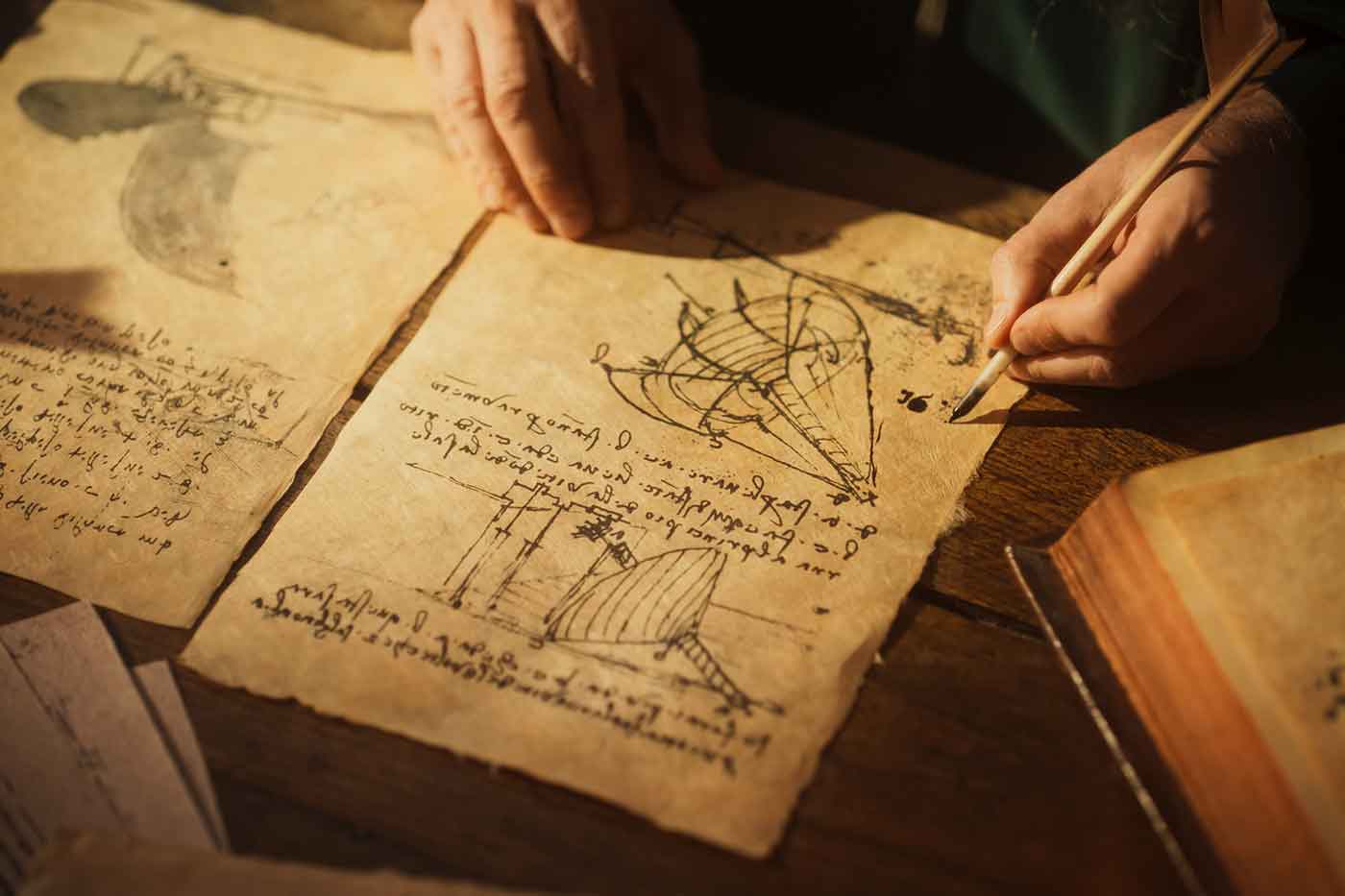
Spain has not only been a country of explorers, but also of inventors ahead of their time. A clear example is Jerónimo de Ayanz, whom many consider the Spanish Leonardo da Vinci. Among his inventions are a diving suit, a prototype submarine, and a steam engine patented in 1606 (developed more than a century before James Watt’s famous engine).
Another example is Ramón Verea, who in 1892 designed the first calculator capable of performing the four basic arithmetic operations. However, he never sought to commercialize it, so his idea did not gain widespread popularity until the prototypes developed by the Swiss engineer Otto Steiger.
Ángela Ruiz Robles, a teacher from León who patented the " Enciclopedia Mecánica" in 1949, which is considered the first prototype of an e-book. Despite this, the American Michael Hart is commonly regarded as the inventor of the e-book.
The Unknown Inventor of Epidural Anesthesia
Military physician Fidel Pagés developed epidural anesthesia in the 1920s, and his findings were published in Spanish medical journals. However, his work went unnoticed internationally until, a decade later, the Italian Achilles Dogliotti claimed credit for the discovery. Only when evidence of Pagés’s work was presented did Dogliotti acknowledge Pagés as the true inventor of the technique.
The Value of Protecting Innovation
These are just a few examples of why it is important to ensure that inventions and discoveries are recognized and protected. Many innovative ideas have been lost throughout history not only because they were never commercialized, but also because they lacked adequate legal protection.
Today, inventors have access to key tools such as patents, utility models, and industrial designs, which allow them to assert ownership of their creations and prevent third parties from appropriating their innovations without recognition or compensation.
Commercial success may depend on many factors, but ensuring the recognition and protection of intellectual property is the first step toward enabling inventors not only to “reap the rewards” but also to enjoy the fruits of their ingenuity.
At Elzaburu, we have been advising inventors, entrepreneurs, and companies on protecting their industrial and intellectual property for over 160 years. If you have an innovative idea, don’t hesitate to contact us to ensure its recognition and commercial exploitation.
Elisa Prieto Castro, Knowledge Manager at Elzaburu