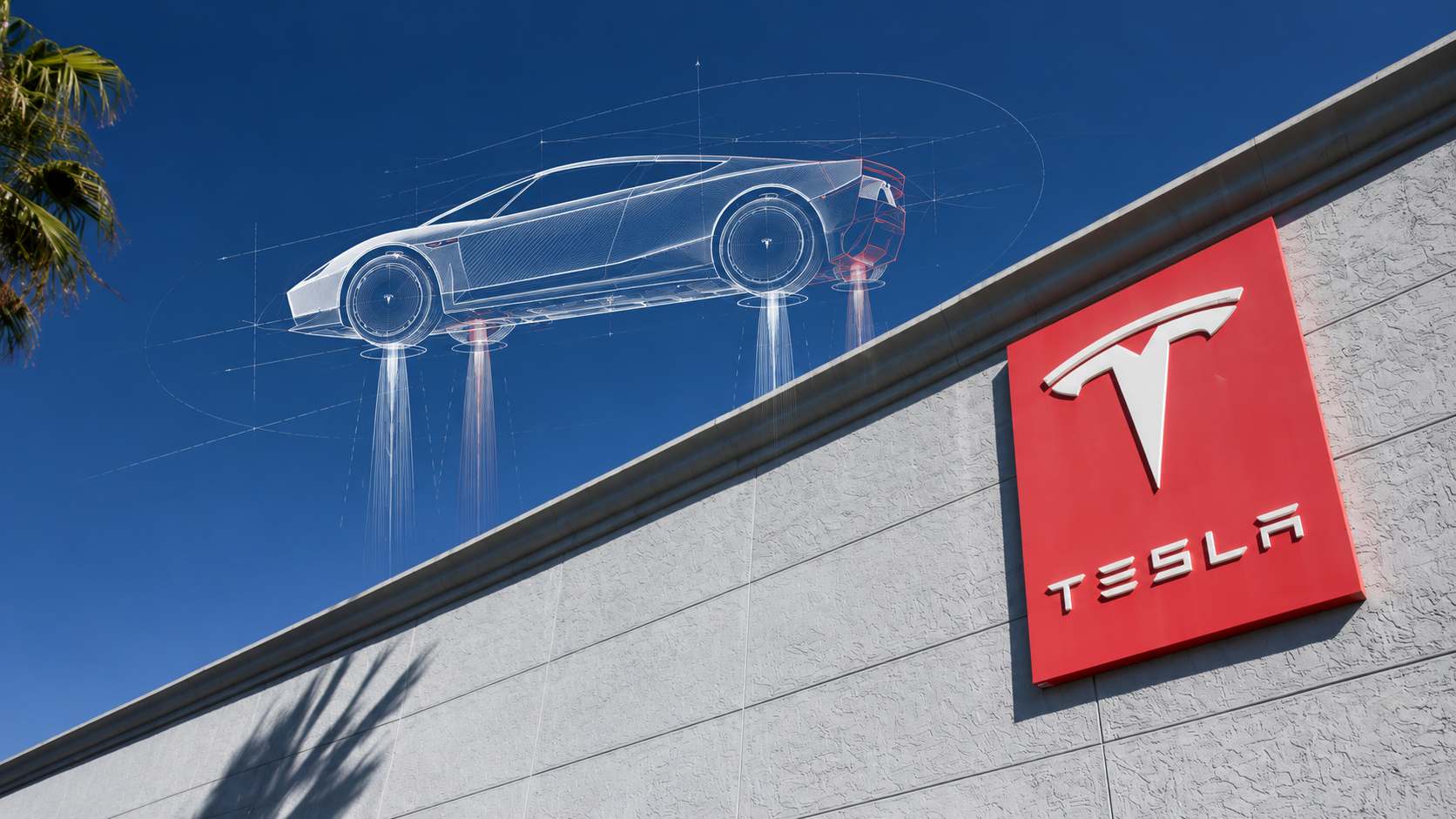


An electric car capable of accelerating from 0 to 100 km/h in less than a second, staying upside down, and even lifting off the ground to perform maneuvers in the air. That's the new Tesla Roadster, which the company unveiled on October 15.
Among its unique features are a suction system that keeps the vehicle firmly planted on the ground, active aerodynamic elements, and cold-gas thrusters that enable aerial maneuvers.
But today we want to take a closer look at the intellectual property strategy behind the new Tesla Roadster—from the logos that identify the vehicle to the technical solutions that could make some of its features possible.
The Tesla Roadster's branding: much more than just a name
As can be seen, the strategy to protect the trademarks associated with this project began long before the new model was unveiled. As early as 2005, Tesla filed a trademark application with the United States Patent and Trademark Office (USPTO) for the trademark  in Class 12, which was registered on July 24, 2007 (US 3,269,364).
More recently, on February 3, 2026, new trademark applications were filed with the USPTO. First, the figurative trademark  in 12th grade (US 99630872), which features a stylized version of the word “ROADSTER.” In addition, a figurative trademark was also registered
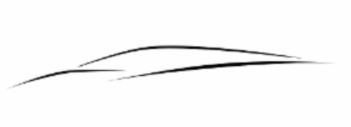 in 12th grade (US 99630860), which seeks to protect a symbol consisting of three curved lines that form a sort of triangular shape. The application does not expressly establish a link between this symbol and the vehicle depicted. However, given that it was filed on the same day as the previous application, one possible interpretation—among others—is that the design abstractly evokes the silhouette of the vehicle, hence the interest in obtaining protection for this symbol.
Meanwhile, on April 28, 2026, a new application for a figurative trademark was filed, the US 99792259  , which features a triangular emblem incorporating the name "ROADSTER" and four vertical lines extending upward.
What is new about this trademark application is that it broadens its scope compared to previous ones to include classes 9, 12, 25, and 37, which means it covers products and services more or less related to vehicles, such as batteries, computer applications, clothing, and certain charging, repair, and maintenance services for electric vehicles.
This strategy highlights the importance the company places on protecting the various elements through which the public identifies a product—even beyond the car itself. The name, its graphic representation, and associated symbols can be used in various media and marketing activities.
Although the most recent trademarks have not yet been granted, taken together, they provide insight into part of Tesla’s strategy and highlight the value of trademark protection in strengthening and preserving the commercial identity of the new Roadster.
What Patents Reveal About the Tesla Roadster's Technology
Tesla has unveiled a sports car that could very well have come straight out of the movie *Back to the Future*, although behind what looks like science fiction lies engineering.
In the case of the Roadster, we can highlight three patents recently filed by Tesla that could be implemented in this model.
An early patent, US 12377920 B1, describes a system of fans and movable skirts located under the vehicle. Its purpose is to generate downforce to improve traction, adapting to different speeds and driving conditions.
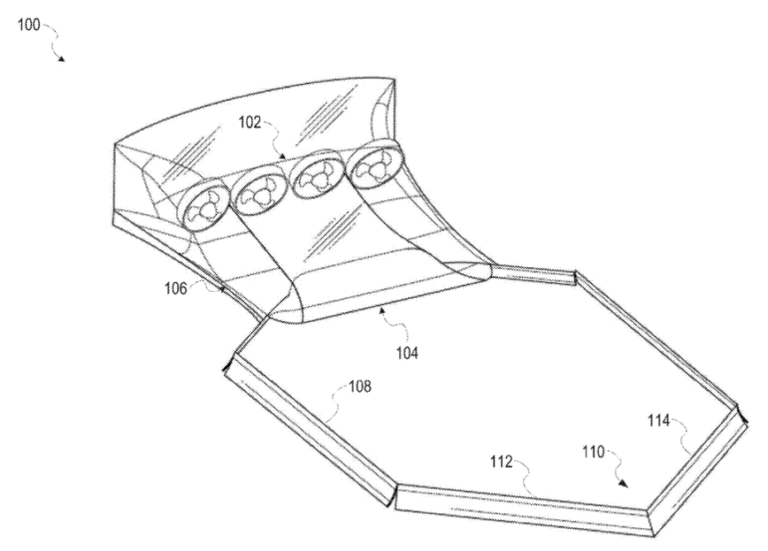
Figure 1. U.S. Patent 12377920 B1: Adaptive Vehicle Aerodynamics
A second patent, US 12746987 B1, filed in 2024 and granted in September 2026, proposes another solution: electric fans that draw air from under the vehicle and expel it from the rear. In this case, vertical strips optimize the system’s performance without the need for components such as the front spoilers.
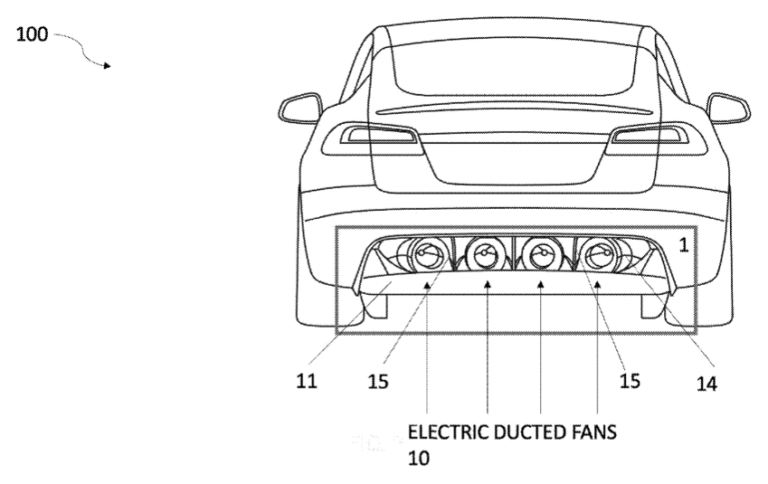
Figure 2: U.S. Patent 12746987 B1: Car with an Electric Fan
And there is a third patent application, published in September 2026, that focuses on the deployable rear wing. Patent application US 2026/0285418 A1 describes a device that remains virtually hidden within the body when not in use and that, when deployed, can adjust its angle to modulate drag and downforce based on driving conditions.
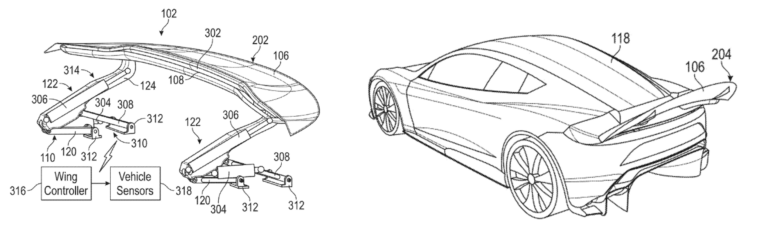
Figure 3: U.S. Patent 0285418 A1: Retractable Rear Spoiler
These three publications propose different solutions for improving the aerodynamic performance of a high-performance vehicle. However, there is a significant difference between what a patent describes and what is ultimately incorporated into a car. The fact that Tesla has patented a technology compatible with the Roadster does not necessarily mean that it has been integrated into the model that was unveiled.
What We Still Don't Know About the Flying Tesla Roadster
However, the Roadster’s biggest innovation does not seem to lie in these figures. Tesla focused much of its presentation on something far more surprising, under the slogan “Defying Gravity”: a cold-gas propulsion system, developed using SpaceX technology, that allows the vehicle to lift off and maneuver in the air.
The physical principle is relatively simple: when gas is expelled at high pressure in one direction, a force is generated in the opposite direction. The challenge lies in ensuring that this thrust is sufficient and, above all, that it can be precisely controlled in a car.
Tesla claims that it uses fully electric actuators capable of making small adjustments in fractions of a second to stabilize the vehicle during flight. But many technical questions remain to be answered.
At this time, we have not identified a published patent application that specifically explains how Tesla has implemented the flight system.
Tesla talks about going “beyond the limits of physics.” In reality, the laws of physics remain the same. What changes is engineering’s ability to find new ways to harness them.
Because, even though we don't yet know how far the new Roadster will go, we do know that intellectual property plays an essential role in protecting the value of ideas.
Patricia Gómez, an associate in the Trademark practice, and David Hidalgo, an associate in the Patent practice.