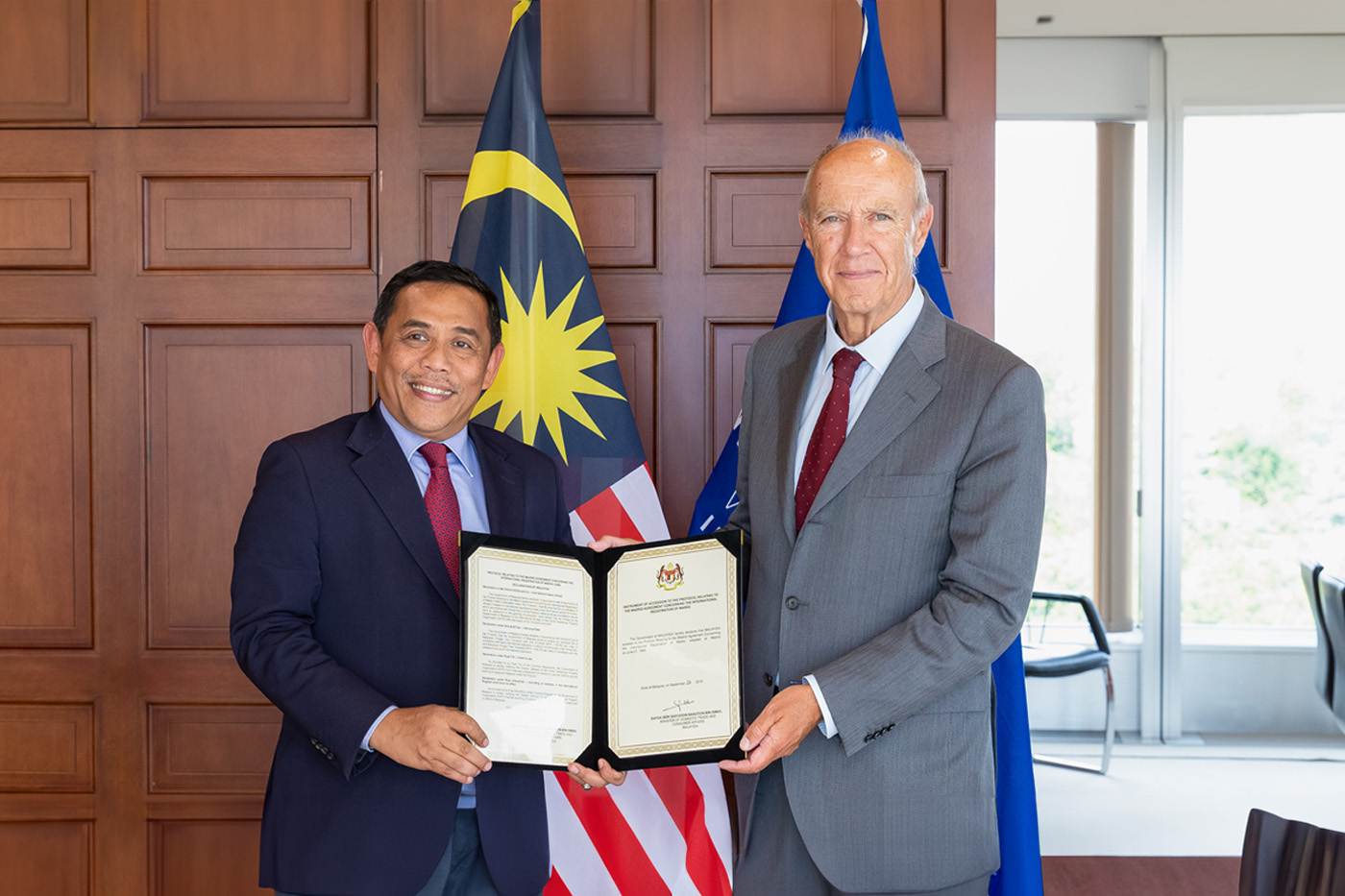

Malaysia was the last country in Southeast Asia to deposit its instrument of accession to the Madrid Protocol. On September 27, 2019, this historic milestone took place, placing Malaysia among the 122 members of the Madrid System for the international registration of trademarks.

Among the major countries in Southeast Asia, Malaysia and Myanmar (formerly Burma) were the only ones that had not yet joined this practical and effective system for managing trademarks worldwide. The following countries are part of the system: Singapore, Vietnam, Laos, the Philippines, Cambodia, Brunei Darussalam, Thailand, and Indonesia. Myanmar is now the only country in the region that does not allow for the international registration of trademarks through the Madrid System; however, it is expected to do so in 2020, once its new Trademark Law has been implemented and its administrative system is fully operational. East Timor and other small dependent territories will remain outside the Madrid System, as their accession is undoubtedly very unlikely in the short to medium term.
Like other countries in the Madrid System—particularly neighboring Singapore— Malaysia has reserved certain rights that allow it to adapt international regulations to local ones. Among these, when designating Malaysia through the international system, it is important to note that this country requires a declaration of intent to use the trademark and that such a declaration is deemed to have been implicitly made during the application process. Like some Protocol countries, the deadline for notifying provisional refusals will be extended to 18 months or may be exceeded in the event of an opposition, which may result in a lengthening of the proceedings, as well as various other considerations that Protocol member countries may adopt.
Malaysia’s accession to the Madrid Protocol took effect on December 27, 2019. To achieve this goal, the Malaysian authorities had to go through a lengthy preparation process to finally enact their new Trademark Law, which specifically provides for the country’s accession to the Madrid System and which took effect on the same date.
The new Malaysian law opens registration to non-traditional signs that can be graphically represented (color marks, sound marks, holograms, etc.), collective marks, and multi-class marks, as well as new official deadlines that are more in line with those of other jurisdictions. These are some of the key issues addressed by the new law, which reflect a significant effort to modernize and adapt to the changing times.
Authors:Cristina Arroyo and Juan Miguel Sáinz de Marles