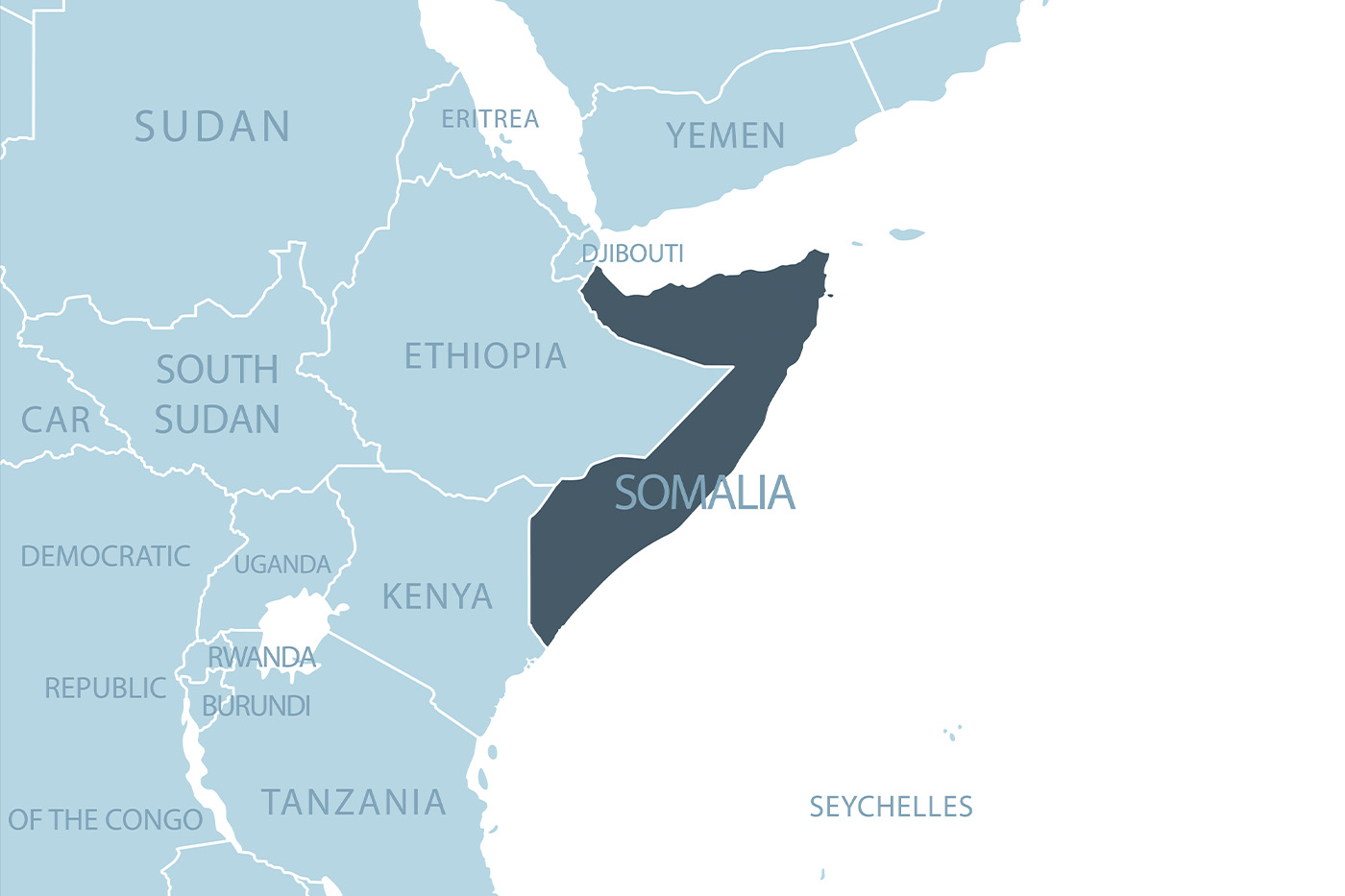

Nearly 33 years after the closure of Somalia’s Intellectual Property Office—a consequence of the devastating civil war and the collapse of one of the world’s most unstable states—the Somalia Intellectual Property Office (hereinafter SIPO) has resumed operations in Mogadishu as a result of a slow but essential reconstruction process.
The Long Road to Reviving Trademark Protection in Somalia
For years of inaction and lack of protection in intellectual property matters, African experts advised against devoting resources and financial investment to the protection of trademark rights in this country, as there was a complete lack of security and guarantees of any kind.
In the absence of reliable and effective legal options, some stakeholders published precautionary notices in English- and Somali-language newspapers—an informal preventive measure of limited effectiveness in a context as extremely complex and adverse as that of the country. And that brings us to the million-dollar question: Why? To what end? Is the intention, perhaps, to litigate in Somalia to defend trademark rights?
This, I think, remains the big unknown.
Asia's Interest in Africa and the Role of East Africa in International Trade
However, the world is changing dramatically. Africa is changing as well. Today, Asia’s importance in international trade and its interest in the African continent are indisputable, particularly on the part of China and India (which has dominated trade along the eastern coast for centuries). China dominates infrastructure construction and civil engineering in East Africa, while India dominates trade.
Goods from Asia are virtually dependent on maritime transit through the Horn of Africa, just as the Silk Road has been for centuries. Asia knows how strategic this is.
So, what are the prospects for trademark protection in Somalia?
Despite the SIPO’s efforts, there are still some reservations regarding the legal foundations and framework of the Somali trademark system. Furthermore, just as a small glimmer of hope was beginning to emerge on the global stage, a new climate of global crisis has taken hold, one that tends to have a negative impact on places where instability and fragility prevail. We’ll see.
Despite the challenges, experts are now more inclined to consider this jurisdiction as another option in the continent’s internationalization processes, with all the caveats that the context requires.
It is claimed that there has been positive progress, that—little by little—a certain stability and recognition of the pre-federal constitution are beginning to take hold, and that SIPO has defined objectives. Everything points to the possibility of a new intellectual property law in the not-too-distant future.
Regardless of the foregoing, there are many factors to consider, and each interested party will need to evaluate them when the time comes. However, it should be noted that any trademark protection obtained in Somalia will have no effect and will not be recognized in the Republic of Somaliland.
Somaliland: A Region with Its Own Intellectual Property Framework
As if it were the indomitable Gaulish village from our beloved Asterix and Obelix, perched atop the Horn of Africa, we find the separatist and independent neighbor Somaliland. Paradoxically stable—at least until the very recent Memorandum of Understanding, signed with Ethiopia earlier this year, which has reignited tensions in the region—it is geographically hemmed in between Djibouti, Ethiopia, and Somalia itself.
This small, little-known country (with limited international recognition) does not have an intellectual property registry or a trademark law, but it does have a system for preventing infringements through precautionary notices in newspapers—as its neighbor used to do—until, as this article began, its Intellectual Property Office was reactivated.
Cristina Arroyo, Director of the International Brands Division at ELZABURU