
One of the most important factors in the progress and development of civilizations is the ability of resourceful people to innovate and create tools and processes that improve the quality of life or manufacturing processes.
The last quarter of the 19th century was marked by a dramatic surge in the number of new inventions and technologies, and Spain—despite having joined the Industrial Revolution late—also experienced a boom in innovation.
Our firm, ELZABURU (then known as Vizcarrondo), was a unique witness to that era due to the shortage of intellectual property professionals in our country. We observed innovations in virtually all areas of production, but we were particularly struck by the large number of innovations in the following areas.
Minerals and Other Raw Materials
Although the Industrial Revolution in Spain was still in its very early stages, the development of manufacturing industries in countries such as the United Kingdom, Germany, and France led to a growing demand for raw materials—both as sources of energy and as materials for the construction of machinery and equipment.
Spain was a region where mineral and material resources had barely been exploited, making it an attractive destination for companies involved in mining and the processing of metals and minerals.
Toward the end of the 19th century, we find a large number of patents related to mineral treatments and processes, such as methods for producing aluminum, purifying lead, producing soft iron… and many others. Likewise, it was common to discover new mining systems and machinery, such as towing devices and extractors.

Mineral Extraction Apparatus by Lorenzo Riera and Oliver (Privilege No. 4088)
Electricity and Lighting
In the final decades of the 19th century, Europe experienced a veritable race to develop a lighting system. Major advances were patented in the production and distribution of energy and its application to lighting homes and public streets. ELZABURU lists the patents of Edison and Charles Francis Bush, but also those of Spaniards such as Eusebio Molerá and Juan Cebrián, who also made significant inventions in this field.
As a fun fact, if you're wondering who patented the first light bulb, the answer isn't Edison! Despite having registered nearly 2,000 patents worldwide, it was Joseph Wilson Swan who invented the first light bulb in 1878. We'll tell you all about the history of electricity here.

Patent for an Improvement in Edison's Electric Lights (1879)
Transportation
Numerous inventions related to transportation emerged, not only in the field of railroads (or, as they are often referred to,“iron roads”) but also in thefieldsof ships, carriages, funiculars, etc.

Patent for an electric motor for railroads and streetcars by The Patton Motor Company (1892)
Telecommunications
The world of telecommunications, along with that of lighting, is one of the most fascinating and has seen some of the greatest technological advancements, particularly with the development of the telegraph and the telephone.
Numerous inventions and improvements emerged based on Graham Bell's famous telephone patent, ranging from the development of microphones, doorbells, and bells to switching systems for telephone exchanges. However , did you know that Graham Bell is not the true father of the telephone? It was actually Antonio Meucci who invented the telephone.
Such was the desire to achieve long-distance wireless communication that we have already discovered, in our archives from the early 20th century, several prototypes of cell phones, with a patent dating back to 1902.

War industry
Throughout the 19th century, Europe experienced a particularly turbulent period politically, which led to the outbreak of numerous armed conflicts. As a result, a major arms industry developed, basing its success on the development of new machinery and explosive components.
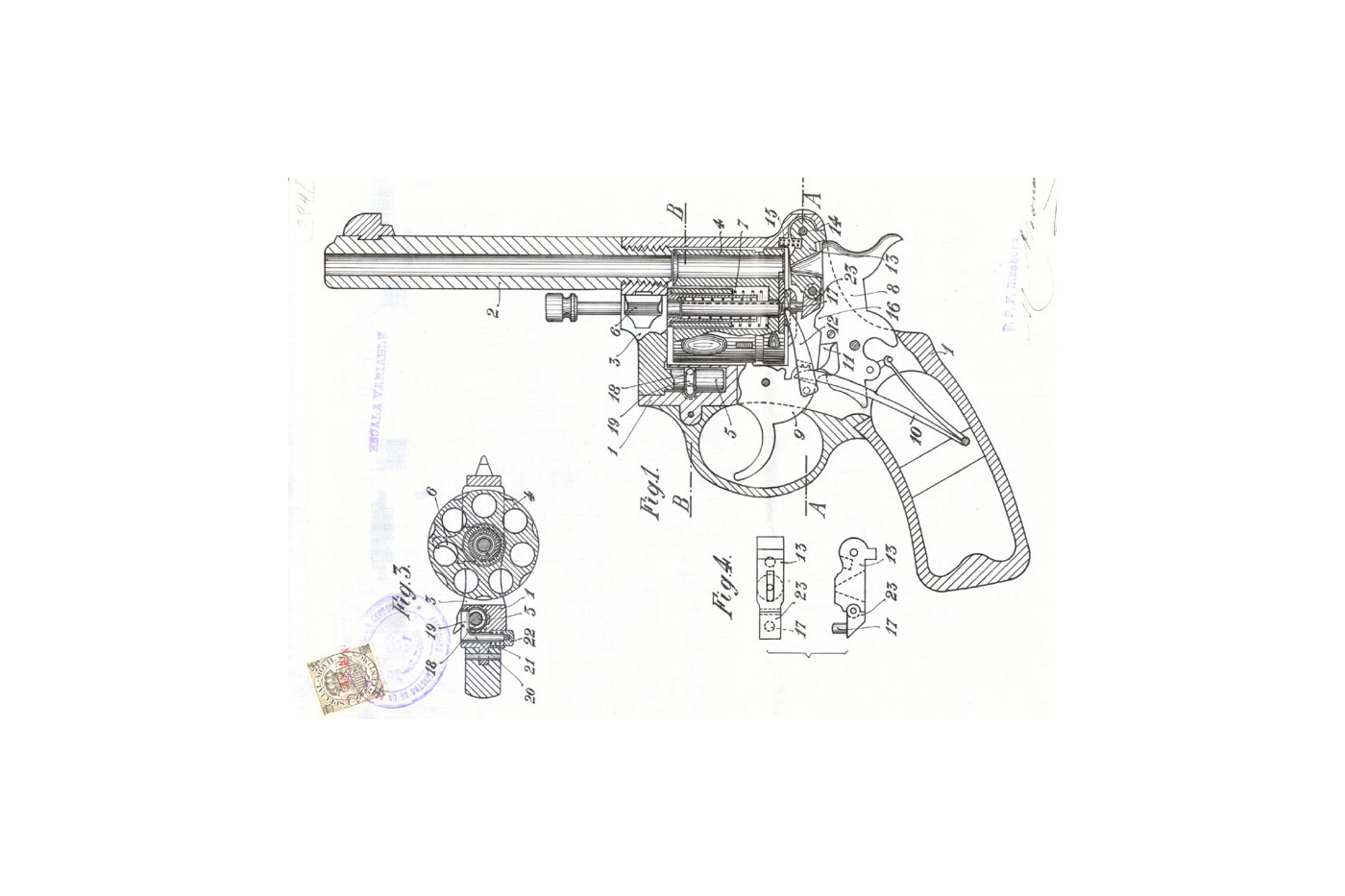
Patents relating to firearms—both small arms and artillery—are common. Of particular note here are the patents of Alfred Krupp, known as “The Cannon King” because of the significance his inventions came to have in the Prussian army’s military campaigns.
Likewise, numerous explosive compounds were patented, most notably Alfred Nobel's invention of dynamite.
In short, the last quarter of the 19th century marked a golden age for innovation in Spain, with advances that transformed industries and changed everyday life. ELZABURU played a crucial role in protecting these inventions, helping to turn the ingenuity of the era into tangible progress.
Today, more than a century later, we remain committed to the mission of protecting and promoting the innovation that drives society's development.

All images were taken from the OEPM Historical Archive: http://historico.oepm.es/buscador.php
Elisa Prieto, Head of Knowledge Management at ELZABURU