Jamaica Joins the Madrid Protocol
In recent years, the number of countries that have joined the Madrid System has skyrocketed. Particularly noteworthy is the pace at which the Americas are adding members to the Protocol, which is creating new opportunities for the protection of trademarks for owners with interests in the Western Hemisphere.
Jamaica is the latest country to announce its accession to the Madrid Protocol, which is scheduled to enter into force on March 27, 2022.
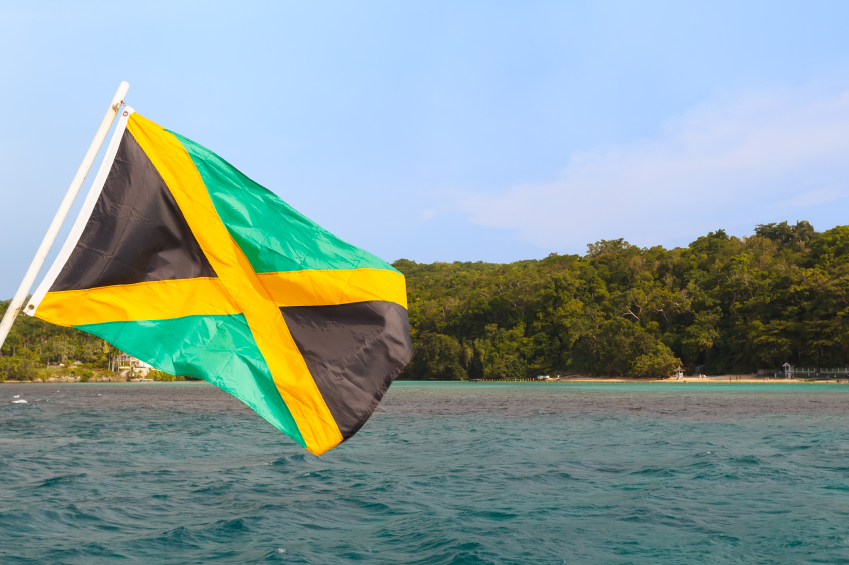
The influence of North America (primarily the U.S. and Canada) on trade relations is particularly strong in this country. And although Jamaica is not a major brand-name market internationally—nor can one expect high consumption of foreign goods—it is undoubtedly an important international tourist destination where Spanish hotels have a significant presence. It is also a major producer and exporter of sugarcane, spices, and fruits; coffee; tobacco; and cannabis (a rapidly expanding market in the pharmaceutical and therapeutic industries); and, of course, reggae music, for which it is the birthplace, mecca, and universal benchmark.
Author: Cristina Arroyo
U.S. trademark law and the USPTO are working to prevent the proliferation of fraudulent trademark applications
Since 2019, the U.S. Patent and Trademark Office (USPTO) has required the involvement of a local attorney in the handling of trademark applications and the provision of the owner’s email address as a prerequisite for filing trademarks with the Office. Furthermore, the Office has reserved the right to randomly request additional evidence of use of registered trademarks.
In this regard, the next step will take place on December 27, 2021, when the“Trademark Modernization Act (TMA),” enacted a year ago, takes effect. This will likely be one of the most significant milestones in recent years in U.S. trademark practice.
The TMA amends the Act in two main ways: it introduces new procedures that simplify the cancellation of trademarks that are not being used properly, and it modifies certain aspects of existing procedures.
With regard to the procedures created“ex novo,”in this article we will focus on the two most important ones, as they may alter the Office’s current landscape by seeking, in the words of our American colleagues, a “cleaning up of the register”: “Ex Parte Expungement and Reexamination Proceedings.”
The purpose of both is to ensure the proper functioning of the Office: “to make room and create space” for the registration of trademarks by owners who legitimately use their trademarks, and to prevent the registration of trademarks that are not used or are used inappropriately.
Both procedures offer a faster, easier, and less expensive alternative to the judicial process—which is exorbitantly costly in the U.S.—for canceling trademarks. And that is why, in a jurisdiction with a long history and culture of trademark protection, we may see new trends emerge in trademark protection strategies.
- Through the expungement process, anyone (including the Office itself) may request a ruling on the lack of use in commerce of a trademark. This procedure seeks a declaration of total lack of use in commerce with respect to a registered trademark, for all or part of the claimed goods and/or services. A negative ruling in an expungement proceeding would mean that the trademark has never been used for all or any of the goods or services.
Such a request may be filed with respect to a trademark between 3 and 10 years from the date of registration. However, until December 27, 2023, it is possible to file such a request with respect to any trademark that has been registered for 3 years or more. This exceptional time limit could be interpreted as a sort of incentive to cancel trademarks or to encourage owners to bring their registrations into line with their actual use.
- For its part, the Re-examination procedure allows a third party (as well as the Office itself) to request the cancellation of some or all of the goods and/or services covered by a trademark on the grounds that the trademark was not in use on the filing date of the application or before the deadline for filing a declaration of use, where applicable.
It is important to remember that the U.S. trademark system is based on the“first-to-use”principle and that, depending on the basis claimed in the trademark application, proof of use will be required either before or after the filing date. Therefore, the relevant time period for these purposes will depend on the claim regarding use made in each particular case.
There is no doubt that trademark protection in the U.S. will require owners to make a greater effort in selecting their protection strategies, to have an extremely realistic and accurate understanding of how they intend to use their trademarks, to provide highly precise descriptions of goods and services, and to present solid and sufficient evidence.
Consequently, as of December 27, 2021, trademark owners will not only have to pass the screening of their affidavits of use, but there will also be a risk of trademark cancellation at the request of third parties or the Office itself.
The TMA also clarifies certain aspects of existing procedures:
Thus, in trademark cancellation proceedings before the Trademark Trial and Appeal Board (TTAB), the fact that a registered trademark has never been used in commerce is added as a ground for cancellation. This ground may be invoked after the first three years from the date of registration.
Although it will not take effect until January 1, 2022, the flexibility and shorter timeframes provided for in the TMA are particularly relevant when resolving official actions identified by the Office. The deadlines for responding to an official action will be three months, rather than the generous six months currently allowed.
Finally, we also believe it is worth noting the introduction of a two-month deadline for third parties to file what is known in the U.S. as a “Letter of Protest” (a type of statement or request for evidence) regarding a ground for refusal of trademark registration during examination proceedings.
These are undoubtedly significant changes intended to ensure that the trademark registration process and the smooth functioning of the U.S. market are not undermined; in some cases, they will affect the strategies designed by trademark owners to defend, protect, and maintain their trademarks in a jurisdiction that is essential to the portfolios of trademark owners worldwide.
Author: Cristina Arroyo
The United Arab Emirates Joins the Madrid Protocol
The United Arab Emirates has signed the instrument of accession to the Madrid Protocol, which will enter into force on December 28, 2021. With the addition of this country, there are now 125 members of the Madrid System, three of which are members of the Cooperation Council for the Arab States of the Gulf. Oman and Bahrain were already members of the system.

This Persian Gulf country is one of the richest countries in the world and ranks among the top five in terms of per capita income. Wealth is concentrated primarily in the two largest emirates, Dubai (the most cosmopolitan) and Abu Dhabi (the most conservative and the country’s capital), and is based mainly on oil and natural gas production, although tourism, the financial and real estate sectors, and construction have become increasingly important in recent years. It plays a key and strategic role in Middle Eastern and global diplomacy and is one of the main gateways to Asia.
Its stability and wealth make it attractive to foreign investment and international trade, with the luxury market proving to be particularly significant.
One of the obstacles posed by the domestic route for trademark protection in the United Arab Emirates is the high cost of local legal services and official fees, which are extremely high in some cases. The fee for international applications in the United Arab Emirates is still unknown, and it is almost certain that the country has reserved the right to charge a separate fee; however, joining the international system will likely offer trademark owners a cost advantage when protecting their trademarks.
Author: Cristina Arroyo
The Conflict Between Legal Names and Brands (or Trade Names)
Conflicts between corporate names and trademarks (or trade names) are very common, and there has always been significant debate—both in legal doctrine and in case law—regarding the relationship and differences between these two concepts and, specifically, regarding the scope of the exclusive right conferred by a trademark (or trade name) registration as opposed to a corporate name that may be identical or similar to such marks.

First, we need to clarify the differences between these various concepts:
- The corporate name is the name used to identify companies in legal transactions (it will normally appear in company documents relating to its legal relationships, such as invoices, contracts, etc.). It is registered with the Commercial Registry, and its regulation is set forth in the Commercial Registry Regulations.
- A trademark is the name or symbol used to identify a company’s products and services in the marketplace and distinguish them from those of other companies, and a trade name is the name or symbol used to identify a company in commercial transactions and distinguish it from other companies engaged in similar or identical activities in the marketplace. Both are registered with the Spanish Patent and Trademark Office, and registration grants the owner the exclusive right to use them in commerce.
What happens when a company name matches or resembles a registered trademark or trade name? Does that company name constitute an infringement of the latter?
The provisions of the Trademark Law that resolve this conflict are as follows:
- Supplementary Provision 14
- Article 34
Additional Provision 14 of the Trademark Law establishes a prohibition applicable to the Commercial Registry: commercial registry authorities shall deny the requested corporate name if it matches or is likely to cause confusion with a well-known trademark or trade name.
Under this provision, it is therefore clear that a new application for a corporate name cannot conflict with a registered trademark or trade name. But what happens when the trademark or trade name is not well-known? Or when that corporate name is already registered in the Commercial Registry? Can the owner of the trademark or trade name invoke their exclusive rights to request the cancellation of the corporate name or prevent its use?
In this other case, we must refer to Article 34 of the Trademark Law, which is the provision governing the rights conferred by the registration of a trademark or trade name. According to this provision, in order for the owner of the trademark or trade name to prohibit a third party from using a sign, several cumulative requirements must be met; of these, for the purposes of the matter at hand, we would like to highlight the following:
- It must be used in commercial traffic.
- And the use must be in connection with products or
It follows from the above that:
- The mere registration of a corporate name in the Commercial Registry does not, in and of itself, constitute an infringement of a prior trademark or trade name that the owner of such rights may prohibit. It is necessary for that corporate name to be used in commercial transactions—that is, in the marketplace.
- The mere use of a corporate name as such—that is, for its intended purpose, which is to identify the company in legal transactions—cannot constitute an infringement of a prior trademark or trade name registration that would entitle its owners to prohibit such use. The use of said corporate name must be in connection with goods or services.
Ultimately, this would constitute improper use of the corporate name, since, as noted above, that is not the purpose for which it is intended (the purposes specific to trademarks and trade names), which is to identify the company in legal transactions.
In summary, the owner of a registered trademark or trade name may prohibit the use of a corporate name provided that (in addition to other requirements regarding infringement—such as likelihood of confusion, etc.) such corporate name: (i) is used in the course of trade, and (ii) in connection with goods or services. The right to prohibit infringing use of a corporate name is also expressly provided for in Article 34.3(d) of the Trademark Law.
Furthermore, case law has confirmed the aforementioned criteria or requirements. The CJEU judgment in this matter is well-known: C-17/06 Céline of September 11, 2007, is particularly well-known; its legal principles remain in force and continue to be applied by our national courts.
Previously published in Economist & Jurist
Author: María Cadarso
Eurasian IP System: A New Trademark System in Eastern Europe
Since around 2015, a new system has been taking shape in Northern Europe that aims to harmonize and unify, to a certain extent, trademark registration in Armenia, Belarus, Kazakhstan, Kyrgyzstan, and Russia. It is known asthe “Eurasian IP System,”or, in Spanish, the Eurasian Intellectual Property System.
The Eurasian System was established primarily within the framework of the“Eurasian Economic Union (EAEU)” and is based on the“Treaty on the Eurasian Economic Union.” For now, only the five countries mentioned are members, but it is quite possible that other countries in the region will join over time.

For us Spaniards—and, in general, for the Western world—the Eastern markets on our continent may seem somewhat unfamiliar, distant, of little relevance, or very removed from our daily lives, which are so focused on the European Union and the Americas. However, globally—especially in Asia—these markets are of immense importance. The Russian market looks primarily toward Asia, and this process of integration with other countries in the region to boost their economies has been underway for many years.
The alliance among these five countries aims to establish a single free economic zone in which goods, capital, services, and people can circulate freely within a single market and under a framework of coordinated customs integration.
As far as our profession is concerned, the new trademark registration system is about to be implemented—it was originally scheduled for 2020—as yet another opportunity for trademark registration and protection, even though there are still many details to be worked out. In addition to the logical objectives of any common market, it appears that this new system also aims to streamline trademark registration in these jurisdictions.
When compared to other well-known registration systems, it would generally be more similar to the Madrid System than to the European Union trademark system or the one administered by the African Intellectual Property Organization (OAPI). It is not a completely unified system, but rather one that allows for the obtaining of a trademark registration covering a bundle of national registrations while maintaining a certain degree of unity and centralization for certain procedures and aspects. Therefore, once this new registration system enters into force, it will constitute yet another strategic option for the protection and internationalization of trademarks.
Some details about what will become the Eurasian Trademark System are already known. Here are a few highlights:
- The application shall be a single application and shall be filed with any intellectual property office of the applicant's choice among those in Armenia, Belarus, Kazakhstan, Kyrgyzstan, and Russia.
- One of the offices of the member states will serve as the “receiving office” and will be responsible for conducting a formal review of the application.
- The substantive examination will be conducted by the intellectual property office in each country.
- As one might expect, the official language will be Russian.
- For a trademark to be granted, it must be granted in all countries. In other words, even though a trademark, once granted, consists of a bundle of national registrations, it must be granted by all offices. Otherwise, it will be necessary to convert the Eurasian registration into separate national registrations.
- The procedure is expected to take approximately one year.
- There will be an opposition procedure with a 3-month deadline. The opposition must be filed with the receiving office where the application was submitted.
- It is expected that use of the trademark in one of the countries will serve as proof of use in the others.
- It is unclear which office one must file a trademark renewal application with, but it stands to reason that it must also be filed with the office that received the original trademark application.
- It is unknown whether the Eurasian Trademark is expected to become part of the Madrid Protocol. Therefore, it will not be possible to designate this jurisdiction through the Madrid system, at least in the short to medium term.
- At present, there are no courts or a unified, centralized Eurasian administrative body. Therefore, it appears that administrative matters must be addressed with the office through which the trademark application was filed, and legal matters will be heard by the competent national court.
It will be very interesting to see how this new Eurasian System and the Madrid Protocol coexist in practice. The reality is that the Madrid Protocol allows for the protection of trademarks not only in Armenia, Belarus, Kazakhstan, Kyrgyzstan, and Russia, but also throughout virtually all of Northern Europe and much of Asia through a procedure that is partially centralized in the initial stages and currently allows for a more or less centralized management of trademark portfolios.
Author: Cristina Arroyo
Previously published in Economist & Jurist
Somalia. Somali trademark registrations are now possible
Nearly 30 years after the Somali Intellectual Property Office was closed as a result of the devastating civil war, and thanks to a painstaking but essential process of rebuilding a failed state, the Somali Intellectual Property Office (SIPO) has been established in Mogadishu.
During the years of inactivity and lack of protection in intellectual property matters, African experts advised against devoting efforts and financial investment to the protection of trademark rights in this country, as there has been a complete lack of security and guarantees of any kind. In the absence of effective legal options, some stakeholders published precautionary notices in English- and Somali-language newspapers—an informal practice of limited effectiveness in a context as complex as Somalia’s.
Despite the opening of the Registry, some reservations remain regarding the legal foundations and framework of the Somali trademark system. However, African experts are already showing openness to promoting this jurisdiction as another option in the continent’s internationalization processes. It is noted that positive progress is being made, that a certain degree of stability and recognition of the pre-federal constitution is beginning to emerge, and that SIPO has defined objectives. Everything points to the possibility of a new intellectual property law in 2021 (although timelines are uncertain in contexts such as Somalia’s) that could introduce a simple, modern trademark registration system, with English as the official language and an opposition procedure.
Regardless of the above, there are still many challenges and implications in the region that each interested party will have to assess when the time comes.
Author: Cristina Arroyo
Asia's Ongoing Process of Joining the Madrid System
On February 24, 2021, WIPO published the announcement of Pakistan’s (Islamic Republic of Pakistan) accession to the Madrid Protocol. This Asian country is the 124th member of the Madrid System. It has, of course, joined through the Madrid Protocol, and its accession is expected to take effect on May 24, 2021.

Strategically located on the Asian continent, between India, Tajikistan, Afghanistan, China, Iran, the Indian Ocean, the Arabian Sea, and the Gulf of Oman, it is a country that has historically played a vital role in global trade and also has one of the largest and most diverse populations in the world. Despite its political and economic instability, it has grown considerably in recent years, ranking among Asia’s leading economies.
Foreign investment, at least until the COVID-19 era, had been a key driver of Pakistan’s economic development, and Pakistan’s accession to the Madrid System will undoubtedly go a long way toward simplifying the procedures for protecting the trademark rights of foreign companies and economic operators in the country once the global economic flow stabilizes.
Author: Cristina Arroyo
The Court of Justice rules for the first time on the ban regarding the “agent’s mark”
The Court of Justice issued its judgment of November 11, 2020 (C-809/18 P; MINERAL MAGIC), in which, for the first time, it had the opportunity to establish the requirements that must be met for the application of Article 8(3) of the European Union Trademark Regulation (EUTMR).
This provision—which is based on Article 6 septies of the Paris Convention (PC)—covers the situation in which an agent (a person with a commercial relationship with the owner of a foreign trademark) applies for the foreign owner’s trademark in their own name without the owner’s consent. In layman’s terms, this is known as the “unfaithful agent” scenario.

The facts underlying the judgment in question can be summarized as follows. The British company JOHN MILLS filed an application for the European Union trademark MINERAL MAGIC to distinguish various goods in Class 3. Prior to the application, there was a distribution agreement between JOHN MILLS and the U.S. firm JEROME ALEXANDER CONSULTING regarding goods marketed under the name MAGIC MINERALS BY JEROME ALEXANDER. Upon learning of the filing of the “MINERAL MAGIC” trademark, the U.S. firm filed an opposition, invoking Article 8(3) of the EU Trademark Regulation. Among other grounds, it cited the existence of the U.S. trademark registration for “MAGIC MINERALS BY JEROME ALEXANDER,” also for goods in Class 3.
The fundamental issue, which had already been addressed by the EUIPO, was whether Article 8(3) of the EU Trademark Regulation could be applied when, as in the present case, the designations of the European trademark and the U.S. trademark were not completely identical, nor were the goods covered by both trademarks identical—at least in their entirety.
Since there was no identity between the marks, the EUIPO Opposition Division rejected the U.S. firm’s claims. However, the subsequent appeal was upheld by the First Board of Appeal of the EUIPO, and as a result, the MINERAL MAGIC trademark was, at that time, refused. The Board adopted a flexible interpretation of the provision set forth in Article 8(3) of the EU Trademark Regulation, ruling that it could also apply when the marks in question were similar both in their designations and in relation to the goods they designated.
After JOHN MILLS filed the appropriate appeal, the General Court upheld it in its judgment of October 15, 2018 (T-7/17). Essentially, the General Court interprets Article 8(3) of the EUTM Regulation literally, which refers to “that mark,” implying—in the General Court’s view—that the foreign mark and the mark applied for must be the same and, consequently, identical. Furthermore, to support its position, the General Court cites the preparatory work conducted during the drafting of Draft Regulation No. 40/94 on the Community Trade Mark. Among these background materials was a document that explicitly stated that a delegation’s proposal—that the provision in question also apply to cases involving “similar” trademarks for “similar” goods—had not been accepted. In the General Court’s view, since Article 8(3) is so clear in its wording, there was no need to rely on other interpretive sources, such as Article 6f of the Paris Convention. Therefore, it held that, since there was only a mere similarity between the marks at issue, the conditions for applying Article 8(3) of the EU Trade Mark Regulation were not met.
The Constitutional Court, on the other hand, holds that in order to apply Article 8.3 of the TFEU, it is essential to take into account Article 6 septies of the GATT, since the European Union is a member of the World Trade Organization and, as such, is obligated to comply with the TRIPS Agreement, which, in turn, stipulates that Articles 1 through 12 of the GATT must be respected.
Well, although the Court of Justice acknowledges that the French version (which is the authentic one) of Article 6 septies of the CUP uses the expression“cette marque”to refer to the earlier trademark, this does not mean that the background of the provision should not be examined. In this regard, the Court of Justice states that the Proceedings of the 1958 Lisbon Conference—which was the conference at which this provision was introduced—indicate that a trademark applied for by the agent or representative of the owner of the earlier trademark may also be protected under that provision when the trademark applied for is similar to the aforementioned earlier trademark.
In other words, the Court of Justice does not take it for granted that Article 8(3) of the EUTM Regulation (and its predecessor, Article 6 septies of the CUP) applies only in cases of identical trademarks, and it already recognizes that, a priori, it may also be applied in cases of “similarity.” And in this regard—and I find this argument very convincing—the CJEU clearly states that“if Article 8(3) of the EU Trade Mark Regulation were to apply only to cases of identity between marks (including identity in use), such an interpretation would have the effect of calling into question the general concept of the European Union Trademark Regulation, insofar as it would result in the owner of the foreign trademark being deprived of the possibility of opposing, on the basis of Article 8(3), the registration of a similar trademark by his agent or representative, whereas the agent or representative, once such registration has been made, would be entitled, specifically under Article 8(1)(b), to file an opposition to the subsequent application for registration of the original trademark by that proprietor due to the similarity of that trademark to the trademark registered by the agent or representative of that same proprietor.”
Based on these arguments, the General Court grants the appeal and even addresses the merits of the case, concluding that, in the present case, the conditions for the application of Article 8.3 of the EU Trademark Regulation are met and, therefore, the trademarks are incompatible.
In short, we can conclude that this ruling is of great significance, as it confirms the requirements that must be met for the owner of a foreign trademark to prevent the registration of a subsequent trademark filed by their agent or representative. In summary, we can state that these requirements—which must all be met cumulatively—are as follows.
-
- The first requirement is that, specifically in countries where trademark rights are acquired by registration, the person seeking to assert their rights must be the owner of a trademark in a country that is a party to the Paris Convention or the World Trade Organization.
-
- The second requirement is that there must have been a business relationship between the trademark owners prior to the filing of the contested trademark application. In this regard, there is agreement that the terms “agent” or “representative” must be interpreted broadly, including, for example, a distributor, as in the case decided by this judgment.
- The last of the requirements—which is, in fact, the one analyzed in the judgment in question—holds that it is not essential for the conflicting trademarks to be identical; rather, the requirement may also apply in cases where there is a resemblance between the trademarks and a similarity in the goods or services claimed under both trademarks.
If these requirements are met, Articles 8.3 of the EU Trademark Regulation and 6 septies of the Spanish Trademark Code will apply, unless—as those provisions state—the agent can justify his or her actions or has authorization (which I understand must be express) from the owner of the foreign trademark.
Author:Jesús Gómez Montero; Former Partner at ELZABURU and Member of the Advisory Committee of the Alberto Elzaburu Foundation
Mandatory Use of the Registered Trademark: Some Considerations
In this post, I would like to share some thoughts on the mandatory use of registered trademarks, in light of the content of several recent rulings handed down by the judicial bodies that make up the Court of Justice of the European Union.
 In the judgment of the Court of Justice dated October 22, 2020 (C-720/18) raised in connection with the use of FERRARI’s “Testarossa” (figurative) trademark, my attention was drawn to a reference to a treaty (the existence of which, frankly, I was unaware of) signed as far back as 1892 between Switzerland and Germany. This treaty—which, according to the ruling, is still in force—stipulates that Any adverse consequences that, under the laws of the Contracting Parties, result from the nonuse of a trademark for a certain period of time shall not apply if the trademark has been used in the territory of the other Contracting Party (Art. 5.1).
Based on this circumstance, the use of a German trademark in Switzerland will be valid for proving the use of a German national trademark, which, therefore, cannot be revoked even if it is not used on German territory. The resulting paradox stems from the fact that, as the ruling points out, if that same German trademark is used to oppose a new application for a European Union trademark, such opposition will not succeed if the applicant for the European Union trademark requests that proof of use of the German trademark be provided, since that use does not take place within the territory of the European Union.
 Another ruling I would like to discuss is that of the General Court dated September 23, 2020 (T-601/19) which ruled on a case involving opposition proceedings between the European Union trademark application “in·fi·ni·tu·de” and the earlier Spanish trademark “infinite,” both intended to distinguish wines. As part of those proceedings, the opponent was required to prove use of its trademark, for which it submitted various documents demonstrating that the “infinite” trademark had been used in connection with the export of wines to Canada, Puerto Rico, and the United States.
Once the use of the “infinite” trademark was admitted, the Court proceeded to assess whether there was a likelihood of confusion between the conflicting trademarks; in this regard, the Court began by determining that the relevant territory was Spain and the relevant public consisted of the general public, whose level of attention is average. The truth is that both of these circumstances may require some qualification, since, given that the trademark is Spanish, it seems appropriate that the relevant territory be Spain; however, upon closer examination, it must be acknowledged that the product is sold and consumed outside the EU, so, in the reality of the market, the likelihood of confusion—at least as assessed from the perspective of the general public—would arise in those countries, since that “general public” would consist of consumers in Canada or the United States.
Logically, such a target audience is not appropriate for analyzing a trademark conflict arising within the European Union. In cases involving use established through the export of the product to third countries, it seems more logical to assume that the relevant audience should consist of professionals involved in the import or export of the products; and such an assessment must be conducted by determining, in this case, the level of attention paid by these professionals.
 The last of the rulings I would like to report on is the one handed down by the General Court on October 28, 2020 (T-583/19). This case concerns the FRIGIDAIRE trademark, which was partially revoked by the EUIPO because sufficient use could not be demonstrated for certain products (washing machines, dishwashers, etc.).
The trademark owner had submitted evidence of the trademark’s use to distinguish those household appliances, including, among other evidence, proof of the sale of such products for use at U.S. military bases in Belgium and Germany. However, the General Court held that in these cases there is no use within the territory of the European Union, since the areas occupied by such military bases are not part of that territory; therefore, as there is no use of the FRIGIDAIRE trademark in the European Union, it must be canceled for those products.
As can be seen, the cases addressed in the cited rulings are somewhat unusual and serve as further evidence that, when applying trademark law , any assessment must be made on a case-by-case basis, taking into account the specific circumstances of each case.
Author:Jesús Gómez Montero, Former Partner at ELZABURU and Member of the Advisory Committee of the Alberto Elzaburu Foundation
Trinidad and Tobago: A New Country in the Americas Joins the International Trademark Registration System
The latest addition to the Madrid System, just announced, is Trinidad and Tobago, also known as Trinidad and Tabago. Interestingly, this Caribbean archipelago has a capital city whose name clearly derives from Spanish: Port of Spain.
As of October 12, 2020, Trinidad and Tobago has become the latest addition to the already long list of countries participating in the international trademark registration system. Specifically, it is the 123rd country.

On that date, October 12, the country's authorities deposited the instrument of accession to the Madrid Protocol, which will enter into force on January 12, 2021, provided that the coronavirus pandemic allows everything to be ready by then.
In principle, this is a country where certain legislative matters have already been harmonized. For example, it operates a multi-class registration system and follows the eleventh edition of the Nice Classification. The term of trademark protection is 10 years from the filing date. However, in this regard, this jurisdiction has a unique feature: when trademarks claim priority, the term is calculated from that date rather than from the date of filing of the trademark application in Trinidad and Tobago.
For certain sectors of the economy—such as the hydrocarbons, refining, and petrochemicals sectors, or the steel industry—the Madrid Protocol offers a new option for protecting their trademarks in Trinidad and Tobago.
Author: Cristina Arroyo