How Open Intellectual Property Helps Drive the Green Transition
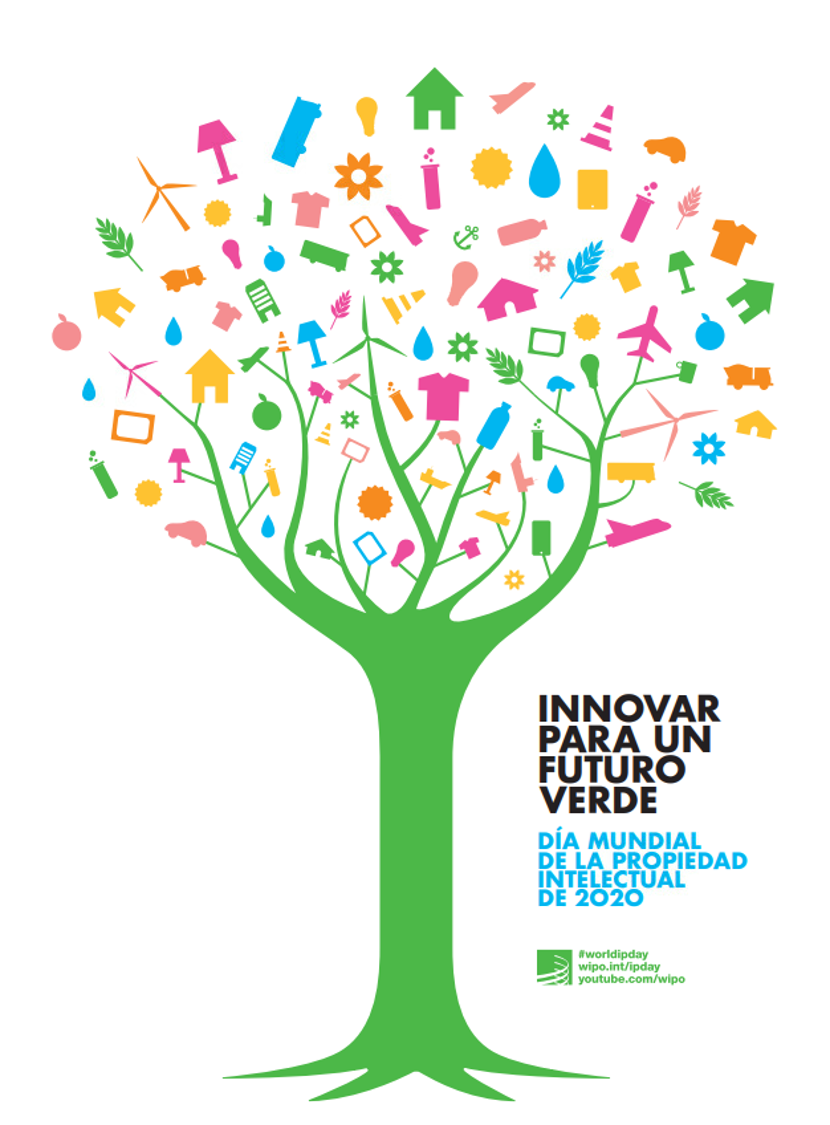
In 2020, World Intellectual Property Day was celebrated under the theme“Innovate for a Green Future.”
This is not the first time that WIPO has taken advantage of this special date to highlight the role that intellectual property must play in the so-called ecological transition. As early as 2009, under the theme “Promoting eco-innovation as an essential element for securing the future,” WIPO devoted part of its special issue to analyzing which intellectual property mechanisms and strategies could foster sustainable technological innovation.
At that time, the Eco-Patent Commons initiative—backed by major companies such as IBM and Nokia—was beginning to gain traction. The goal was to provide free access to any user worldwide to a set of patents for which the participating companies committed not to enforce their rights, provided that those patents were used to innovate and implement industrial processes in the field of sustainability. Despite the initiative’s ambitious nature, the most recent studies on the subject suggest that its practical impact on the dissemination of green technologies was modest, due in part to issues stemming from the organization’s structure, a lack of monitoring regarding the use of the contributed patents, and the absence of mechanisms to enable effective technology transfer—which is especially important in the case of complex patents.
However, the discontinuation of Eco-Patent Commons in 2016 should not be viewed as a failure. On the one hand, it serves as a learning experience upon which to build similar projects in the future. On the other hand, Eco-Patent Commons has made a significant contribution to fostering debate on the applicability of open intellectual property strategies to the field of sustainable technological innovations, particularly by questioning whether open-source-based strategies can replicate the success achieved in the world of software.
One of the most talked-about examples of an open intellectual property strategy regarding patents with environmental applications is Tesla. In 2014, the company surprised everyone when its CEO, Elon Musk, announced that Tesla would no longer take legal action against those who, in good faith, used its technology. Although Tesla cited the desire to follow the spirit of the open-source movement—to promote the development of electric cars in order to curb climate change—as the main reason for this decision, it is clear that this move has significant strategic implications. Allowing other manufacturers to use Tesla’s innovations lowers the barriers for new companies to enter the electric vehicle market, which will eventually strengthen the ecosystem in which Tesla operates (by improving the network of suppliers, charging stations, etc.). This, in turn, will increase demand for electric vehicles, from which Tesla stands to benefit.
Tesla's case is just one example of how closed or protectionist intellectual property strategies are not always the solution. In the field of sustainable innovation, moreover, the choice between protectionist strategies and open or collaborative ones can be particularly influenced by CSR, reputational, and regulatory considerations.
From a regulatory standpoint, various proposals have been put forward, some of which aim to promote investment in green technologies (through tax incentives for licensing or the implementation of expedited procedures for patent applications), while others are designed to increase access to patented technologies (for example, by limiting the ability to grant exclusive licenses or by creating funds to acquire patents and make them available to the public at a lower cost).
Meanwhile, in 2013, WIPO launched WIPO Green, an online platform that seeks to promote the dissemination of green technologies by facilitating contact between providers of such technologies and organizations interested in using them. In this case, the platform serves as a connecting point but does not impose any conditions on the type of collaboration that will be established between the parties.
Beyond the discussion on intellectual property strategies, the advance of digitization presents other types of opportunities and challenges from the perspective of sustainability. Specifically, one expanding field that will need to take environmental considerations into account in its development over the coming years is the data economy. Recently, the European Commission, in its Communication on A European Data Strategy, emphasized that the European data strategy must be geared not only toward increasing the productivity and competitiveness of markets but also toward benefiting society in terms of health, transparency, public services, and the environment. In this regard, the proper use of data can contribute to areas such as promoting the circular economy, improving sustainability in transportation, and enhancing the environmental performance of the agricultural sector.
Closely linked to data, artificial intelligence has great potential to help achieve the goals of the European Green Deal. In the White Paper on Artificial Intelligence—A European Approach for Excellence and Trust, published in February of this year, the Commission once again highlights the environmental implications of these types of technologies, noting their ability to critically analyze resource use and energy consumption, as well as to favor alternatives that are more environmentally friendly in decision-making.
Alongside these benefits, however, there is the significant ecological footprint associated with data centers and cloud services. For this reason, the Commission notes, the European Digital Strategy includes measures for the ecological transformation of the ICT sector.
There are undoubtedly many unknowns regarding the most appropriate mechanisms—both from a business strategy perspective and a regulatory perspective—for promoting innovation and the widespread adoption of green technologies. Equally numerous are the questions raised by the quest to strike a balance between the benefits and the environmental impact of digitalization. What does seem clear is that , a decade later , WIPO has sought to remind us that intellectual property—far from being an outside player—will play a decisive and facilitating role in successfully navigating the ecological transition.
Authors: Cristina Espín and Marina Manzanares
ELZABURU 2019 Yearbook
Despite the delay caused by the lockdown measures we have endured in Spain due to the global pandemic, and with our usual pride, we are pleased to present to our clients, friends, and colleagues the ninth edition of the ELZABURU Yearbook of European Case Law on Industrial and Intellectual Property.

While the Yearbook was being printed, our firm was saddened by the news of the passing of Alberto Elzaburu, its President, who had enthusiastically signed and presented previous editions. We would like to dedicate this edition to him, along with the photo that appears on the cover of this Yearbook.
Our regular readers will also notice that this issue reflects ELZABURU’s new corporate identity, which symbolizes the company’s commitment to adapting to the new demands of a market undergoing constant technological and social change.
This edition of the yearbook brings together 31 commentaries on rulings by the Court of Justice of the European Union, the Spanish Supreme Court, the European Union Trademark Court based in Alicante, and several Provincial Courts. All of this has been made possible thanks to the selfless and enthusiastic collaboration of a large team of professionals at the Firm, to whom we would like to extend our most sincere
thanks.
We hope that those interested in the evolution of the law in the field of industrial and intellectual property in Europe will enjoy this straightforward analysis, which makes no dogmatic claims.
Yearbook in e-book format
Visit our website
COVID-19 Announcement
Dear readers,
We would like to write a few lines to share with you the unprecedented situation we are experiencing and to convey, as much as possible, a message of hope.
First of all, we hope that all of you and your families are doing well. And to those of you who aren't feeling so well or who have family members or loved ones who are affected, please know that you have our full support and that we are here for you.
Right now, what matters most are the people. The situation is overwhelming all of us; events are unfolding rapidly, and we must be able to face and overcome these challenges together—and above all, by thinking of one another.
Professionally, ELZABURU was prepared for remote work, and we acted quickly to get up and running. This is a good time to learn and adapt to this technological, virtual, and collaborative environment.
That is why the firm is publishing statements on our website and social media with information about the internal measures that have been adopted and the consequences of the declaration of a state of emergency in Spain
- 1st STATEMENT – ELZABURU and the declaration of a state of emergency in Spain – [View]
- 2nd PRESS RELEASE – Procedural Deadlines – Have All Intellectual and Industrial Property Lawsuits in Spain Been Put on Hold? – [View]
- 3rd ANNOUNCEMENT – Mail and Courier Shipments – [View]
We hope you find this information useful,
A big hug to everyone,
The ELZABURU Team
ELZABURU, the leading company in intellectual property protection, is revamping its corporate image
Elzaburu, a firm specializing in the management of intangible assets, has revamped its corporate image. The new identity was designed by the Manuel Estrada studio and symbolizes the company’s commitment to adapting to the new demands of a market undergoing constant technological and social change. Elzaburu’s new brand features a modern typeface alongside a symbol that extends into space to represent the company’s commitment to supporting its clients’ innovation and progress.
Elzaburu, founded 155 years ago, was the first firm in Spain to specialize in intellectual and industrial property. The company’s history includes such important milestones as the patents for inventions created by Thomas Edison, Alexander Graham Bell, and Juan De la Cierva—the inventor of the autogyro—as well as the registration and protection of some of the most prominent trademarks of multinational companies around the world.
The firm protects and defends the intellectual and industrial property interests of 30% of the companies on the IBEX, as well as 36% of the leading Fortune 500 companies. Recently, a group of attorneys from Elzaburu was selected to advise the Chinese government on matters related to industrial property; the firm maintains its own office in China.
Over the years, Elzaburu has evolved from its initial focus on patent and trademark registration into a firm specializing in the protection and promotion of all types of creations and intangible assets across all sectors of economic activity, particularly in new technologies, e-commerce, entertainment, cybersecurity, data protection, domain names, trade secrets, and more.
Today, the firm has 165 employees—including attorneys and experts in various fields—who handle the legal defense of more than 70,000 active cases for over 3,000 clients worldwide.

Three ELZABURU attorneys have been selected to serve on a new council of experts that will advise the Chinese government on intellectual property matters
In this new year, 2020, China is launching a center called the Chinese Overseas Intellectual Property Dispute Center, through which it seeks to bring together professionals from different countries who are experts in intellectual property to serve as guides on matters related to this field. The center was established by the China National Intellectual Property Administration (CNIPA), which is the world’s largest intellectual property office with a staff of more than 20,000 people.

The 75 experts who are already part of this center were selected through a global, merit-based open competition. Of the 35 foreign professionals who will participate in this initiative, 6 are Spanish, and of those, 3 are attorneys at ELZABURU: Manuel Desantes, Enrique Armijo Chávarri, and Colm Ahern.
The CNIPA’s goal with this initiative is to provide guidance in resolving potential conflicts related to intellectual property. On the one hand, to safeguard its rights abroad and, on the other, to better understand the intellectual property systems and regulations of foreign jurisdictions.
As Manuel Desantes explains in an interview with Confilegal, the most significant challenge faced by Chinese companies seeking to expand internationally is a lack of familiarity with the legal systems of different countries; therefore, this advice will be essential for clearing up doubts and, in turn, preventing future conflicts. Furthermore, thanks to the collaboration of these experts, China will be better able to defend itself in the event that a foreign company infringes on its intellectual property rights.
By creating new channels for gathering and disseminating information on intellectual property disputes abroad, the center will seek to establish a guidance and coordination mechanism to manage disputes in this area involving Chinese companies.
Since China is the world's leading power in intellectual property, this project is expected to serve as a model for other countries in avoiding conflicts and litigation, thereby improving both legal certainty and international trade relations, Desantes concludes.