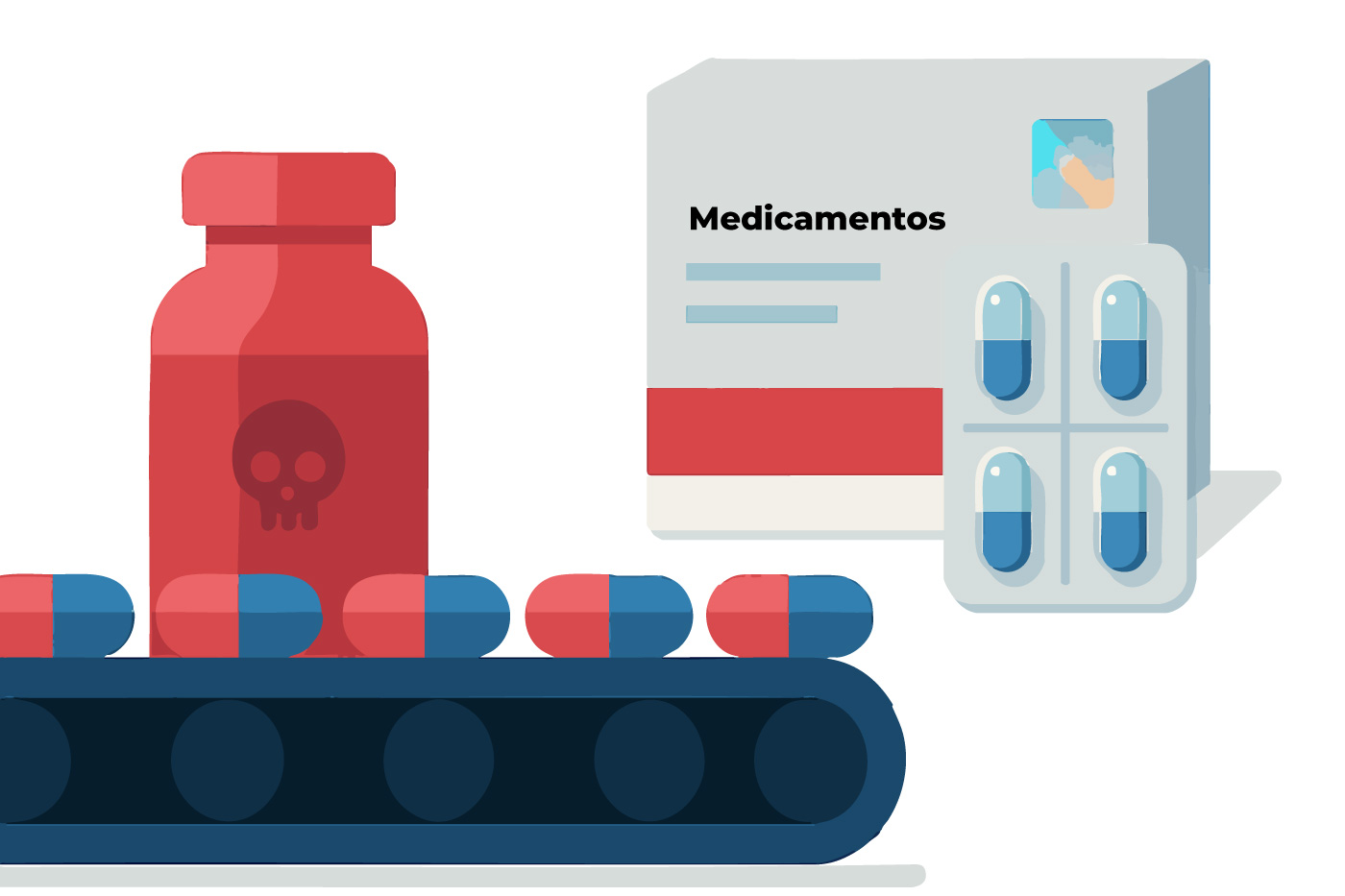

One in ten medicines on the market in developed countries is counterfeit or fails to meet the required quality standards, according to data from the World Health Organization (WHO). This alarming figure not only poses a serious risk to public health but also causes economic harm to the pharmaceutical industry and hinders global scientific and medical progress.
Counterfeit medicines pose a serious health risk, as they may contain the wrong ingredients, incorrect dosages, be past their expiration date, or contain hazardous substances. Their use endangers patients’ lives, especially in the treatment of serious diseases such as cancer, HIV/AIDS, tuberculosis, or malaria. In these cases, the use of counterfeit products is not only ineffective but can also worsen the patient’s condition, contribute to the development of treatment resistance, and undermine the effectiveness of public health policies.
A public health issue with global implications
The consequences of using counterfeit medications are particularly dangerous when they include low-quality antibiotics or antibiotics in insufficient doses. Instead of eliminating the infection, these products allow some bacteria to survive and become stronger, promoting the emergence of resistant strains.
E-commerce and Counterfeit Medicines
Despite efforts by authorities and the industry to curb this threat, the counterfeiting of medicines continues to rise. Over the past five years, the supply of these illicit products has increased by 35 percent, driven primarily by the boom in e-commerce. Digital platforms allow counterfeiters to reach a much wider audience, taking advantage of the anonymity offered by the internet and making it considerably more difficult to track them down and prosecute them.
The situation has become so serious that law enforcement agencies have stepped up their operations against the illegal trafficking of medications. The most recent of these is Operation Shield V, coordinated by Europol between April and November 2024, involved 30 countries. This operation led to the arrest of 418 people and the seizure of counterfeit medications valued at more than 11.1 million euros. These figures highlight the magnitude of the problem and its direct link to organized crime networks.
The Institutional Response to Counterfeit Medicines
To combat this threat, European countries have implemented traceability and verification systems within the legal supply chain for medicines. In Spain, the Spanish Medication Verification System (SEVeM) stands out as a key tool for ensuring the authenticity of every package dispensed at pharmacies.
SEVeM assigns each medication a unique identifier, similar to a QR code, which is verified at the time of dispensing. Thanks to this system, it is possible to detect whether a product has been tampered with or does not belong to the authorized supply chain. Currently, more than 22,000 pharmacies, 216 private hospitals, 340 distributors, and 543 laboratories are connected to this network.
Furthermore, pursuant to the Delegated Regulation (EU) 2016/161, as of September 30, 2024, it is prohibited to dispense medicines that trigger alerts in the system and that cannot be ruled out as suspected counterfeits. This regulation strengthens patient safety and requires all actors in the pharmaceutical supply chain to act with the utmost diligence.
The Work of the AEMPS and Public-Private Partnerships
The Spanish Agency for Medicines and Health Products (AEMPS) has established specific procedures for reporting suspected cases of counterfeit medicines, which are available to manufacturers, distributors, and pharmacies. These reports are continuously updated and serve as a valuable resource for identifying patterns and preventing new threats.
The fight against counterfeiting requires effective coordination among public institutions, pharmaceutical industry operators, and the public. Information, education, and public awareness are essential to reducing demand for these products and encouraging safe purchases through official channels.
Beyond Health: Impact on the Economy and Innovation
The harm caused by counterfeit medicines is not limited to public health. The economic losses for pharmaceutical companies are significant, as these illegal products compete directly with the originals, damage brand reputations, and reduce the return on investment in innovation.
Furthermore, they discourage scientific research. Developing a new drug requires years of work and enormous financial resources. The entry of counterfeit products into the market undermines those efforts, making investment in science and technology less attractive. Without sustained investment in R&D, medical progress stagnates, and millions of people could be left without access to effective and safe treatments.
The impact also extends to public health systems, which must deal with the consequences of using ineffective medications: repeated treatments, adverse effects, unnecessary hospitalizations, and campaigns to detect or recall products from the market.
Best Practices for Preventing Counterfeit Medicines
To protect yourself from the risks associated with counterfeit medications, it is recommended that you follow these guidelines:
- Buy only from authorized pharmacies, whether brick-and-mortar or online.
- Check to make sure the package has not been tampered with and that the security seal is intact.
- Check the drug's registration number in the AEMPS's CIMA database.
- Report any suspected counterfeit products to the appropriate authorities or the manufacturer's laboratory.
Drug counterfeiting is a global public health problem. It affects patients, harms the economy, undermines innovation, and strengthens organized criminal networks. Strengthening surveillance, promoting public education, and encouraging the purchase of medicines through official channels are essential steps in combating this threat.
At Elzaburu, we continue to support the protection of industrial property rights and to collaborate with authorities and companies to ensure consumer safety and market integrity.
Alberto Gallo.Associate in the Anti-Piracy Department at Elzaburu