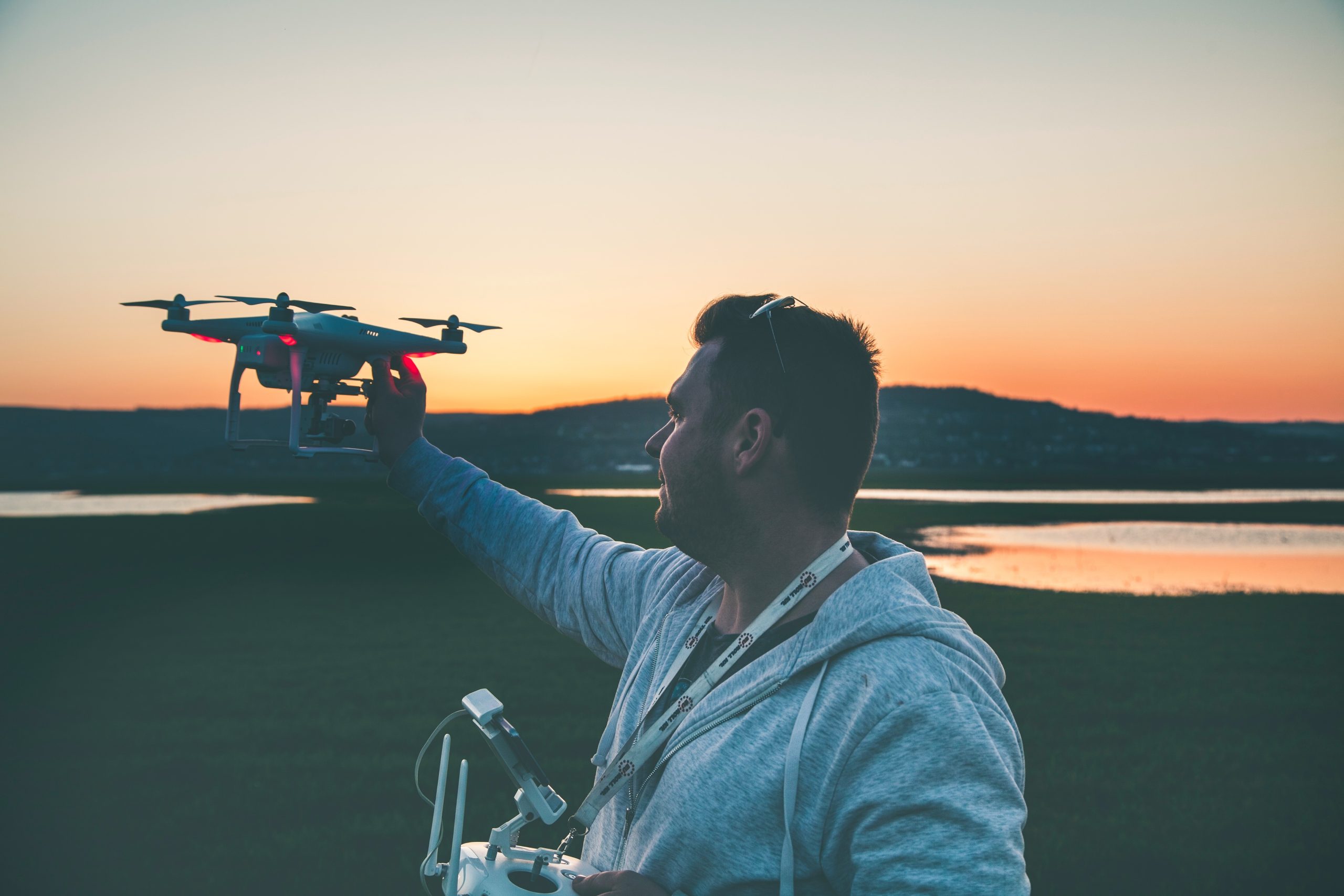

Changes to the regulations governing drones through European regulations have been significant, and we must remain vigilant about the changes that will be introduced in the near future, especially when drone use goes beyond mere entertainment and becomes a professional activity.
In this regard, the basic regulation governing these activities is Regulation (EU) 2018/1139 of the European Parliament and of the Council, dated July 4, 2018, which establishes common rules in the field of civil aviation.
The general regulation gives rise to Commission Implementing Regulation (EU) 2019/947 of May 24, 2019, which establishes the rules and procedures for the operation of unmanned aircraft systems (UAS)—the technical term for what we commonly refer to as drones. The entry into force of this regulation has recently been delayed due to delays in standardization processes and activities carried out in the sector. It will take effect gradually, with a phased schedule of dates for the various legal adjustments ranging from July 1, 2022, to December 2, 2025, as the final deadline.
In the case of Spain—and as the State Aviation Safety Agency (AESA) was quick to point out—the Implementing Regulation conflicts with the provisions of Royal Decree 1036/2017, which is the applicable national regulation regarding training. It is therefore likely that the regulatory escalation we mentioned earlier will be accompanied by national regulations that align European and national regulations.
In addition, any user who wishes to fly a drone must meet certain minimum requirements:
- Register as an operator on the AESA online portal and obtain an operator number in accordance with European regulations (except for the open category).
- Pilot training and licensing: In the open category, no license is required for Class 0 drones or drones weighing less than 250 grams. The training required for subcategories A1 and A3 is available free of charge on the AESA website.
- Mandatory civil liability insurance: In the open category, it is not required for Class 0 drones or drones weighing less than 250 grams.
- Flight rules: These depend on the drone's weight, the presence of other people, and proximity to buildings.
- Geographic Areas: In addition to the “flight rules,” there are restrictions on drone operations due to the presence of military zones, environmental protection, critical infrastructure protection, etc.
Even if the device is purchased solely for recreational purposes, users must comply with the regulations, as failure to do so may result in fines, which can be very high.
There’s no doubt that flying a drone can be an exciting activity, but we must pay attention to the law and, above all, to the changes that national regulations in this area are likely to undergo—whether we plan to pursue this professionally or simply as a hobby. As we’ve seen, ignoring this issue could end up costing us dearly.
Authors: Jaime Contreras & Mabel Klimt. Media & Entertainment
This article first appeared in Legal Industry magazine (Sept. 2022).https://www.flipsnack.com/cejchile/the-legal-industry-reviews-espa-a-vol-5-septiembre-2022/full-view.html.