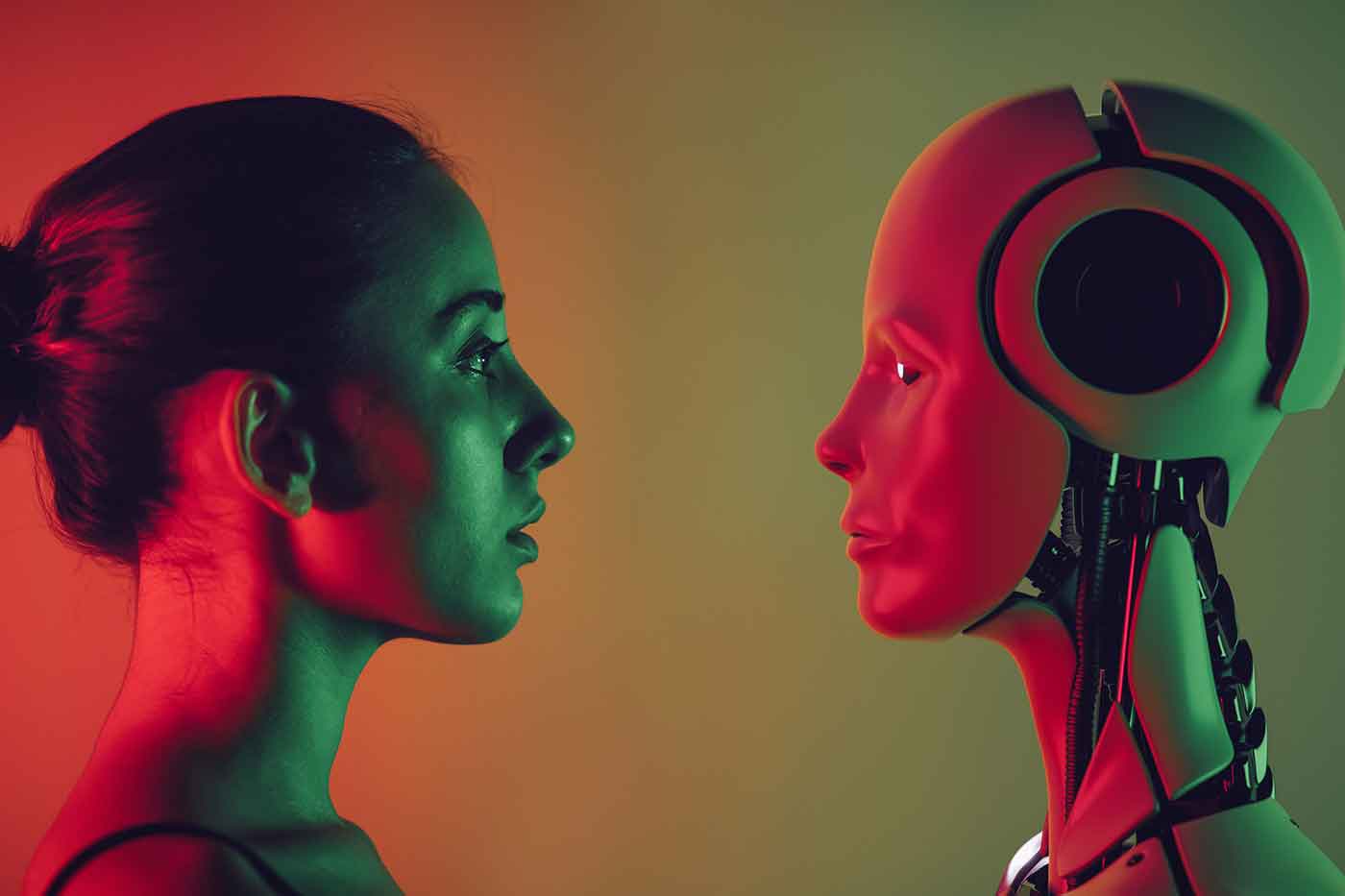

Artificial intelligence (AI) has been transforming our lives for decades through automation and mechanization. From personalized ads to algorithms on platforms like Netflix, this technology is already part of our daily lives. However, generative AI has brought about a paradigm shift by being able to create content on its own, sparking a revolution in the creative and cultural industries, especially in the audiovisual sector.
The Impact of Generative AI on Film
The film industry, as an industry based on intellectual property, faces significant challenges posed by generative AI—challenges that experts have not yet been able to resolve.
Some argue that creations produced by this technology are not eligible for protection, since the regulations require human intervention for intellectual property to be protected. Others, however, maintain that the author is the person who provides the prompt. Nevertheless, under current regulations, the person who formulates an idea is not considered its author; therefore,this debate over authorship remains open and has profound implications for the future of the industry.
Adaptation and Response of Film Professionals to Artificial Intelligence
Faced with uncertainty, film professionals have chosen two main paths:
- Restriction and oversight: Some prefer to limit the use of generative AI until clearer regulatory frameworks are established.
- Experimentation and Change: Others see AI as an opportunity to push the boundaries of creativity and explore new forms of production.
Generative AI, a Global Phenomenon
The recent entry into force of the European Artificial Intelligence Regulation raises questions about how this issue is regulated in other key markets, such as the United States, the mecca of cinema. Although the differences are minimal, the EU focuses on protecting privacy and preventing intrusiveness, reflecting a concern shared globally.
The film industry, as a globally oriented sector, cannot ignore the impact of generative AI. Major platforms are already promoting local productions with a global reach, demonstrating that these technologies have the potential to transform current dynamics.
The Democratization of Audiovisual Creation
One of the most promising aspects of generative AI is its ability to democratize content creation. Now, individual creators can also access advanced tools, lowering the technical and financial barriers that previously limited high-quality production.
Professionals in technical fields are exploring these tools in pre-production and post-production, achieving surprising results. However, this raises new questions about intellectual property rights in an environment where human-machine collaboration is redefining the boundaries of creativity.
Legal Aspects of Generative AI in Entertainment
The relationship between generative AI and intellectual property is particularly sensitive in the audiovisual sector. For example, some actors are including clauses in their contracts to prohibit the use of their likeness in AI training or the generation of content without their authorization.
In this regard, many platforms are already includingrestrictions in their contracts, adopting a cautious stance as the law evolves.
Toward a Regulated and Sustainable Future for Generative AI
The development of a balanced regulatory framework will be key to ensuring the sustainability of the audiovisual sector. Such regulation should take into account the interests of creators, companies, and viewers, allowing this technological revolution to foster creativity without jeopardizing the industry’s economic viability.
The combination of human talent and generative AI tools can lead to an unprecedented explosion of creativity, provided that legal and ethical challenges are addressed responsibly.
Mabel Klimt, managing partner at Elzaburu