

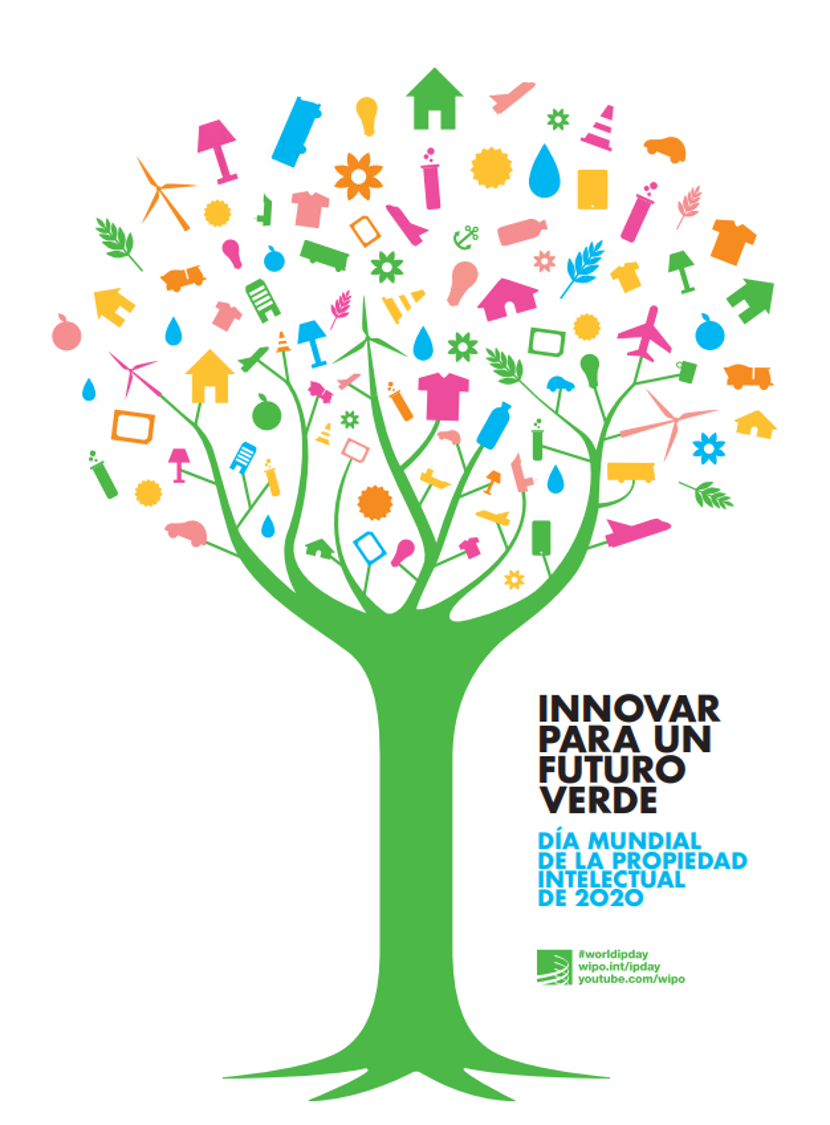
In 2020, World Intellectual Property Day was celebrated under the theme“Innovate for a Green Future.”
This is not the first time that WIPO has taken advantage of this special date to highlight the role that intellectual property must play in the so-called ecological transition. As early as 2009, under the theme “Promoting eco-innovation as an essential element for securing the future,” WIPO devoted part of its special issue to analyzing which intellectual property mechanisms and strategies could foster sustainable technological innovation.
At that time, the Eco-Patent Commons initiative—backed by major companies such as IBM and Nokia—was beginning to gain traction. The goal was to provide free access to any user worldwide to a set of patents for which the participating companies committed not to enforce their rights, provided that those patents were used to innovate and implement industrial processes in the field of sustainability. Despite the initiative’s ambitious nature, the most recent studies on the subject suggest that its practical impact on the dissemination of green technologies was modest, due in part to issues stemming from the organization’s structure, a lack of monitoring regarding the use of the contributed patents, and the absence of mechanisms to enable effective technology transfer—which is especially important in the case of complex patents.
However, the discontinuation of Eco-Patent Commons in 2016 should not be viewed as a failure. On the one hand, it serves as a learning experience upon which to build similar projects in the future. On the other hand, Eco-Patent Commons has made a significant contribution to fostering debate on the applicability of open intellectual property strategies to the field of sustainable technological innovations, particularly by questioning whether open-source-based strategies can replicate the success achieved in the world of software.
One of the most talked-about examples of an open intellectual property strategy regarding patents with environmental applications is Tesla. In 2014, the company surprised everyone when its CEO, Elon Musk, announced that Tesla would no longer take legal action against those who, in good faith, used its technology. Although Tesla cited the desire to follow the spirit of the open-source movement—to promote the development of electric cars in order to curb climate change—as the main reason for this decision, it is clear that this move has significant strategic implications. Allowing other manufacturers to use Tesla’s innovations lowers the barriers for new companies to enter the electric vehicle market, which will eventually strengthen the ecosystem in which Tesla operates (by improving the network of suppliers, charging stations, etc.). This, in turn, will increase demand for electric vehicles, from which Tesla stands to benefit.
Tesla's case is just one example of how closed or protectionist intellectual property strategies are not always the solution. In the field of sustainable innovation, moreover, the choice between protectionist strategies and open or collaborative ones can be particularly influenced by CSR, reputational, and regulatory considerations.
From a regulatory standpoint, various proposals have been put forward, some of which aim to promote investment in green technologies (through tax incentives for licensing or the implementation of expedited procedures for patent applications), while others are designed to increase access to patented technologies (for example, by limiting the ability to grant exclusive licenses or by creating funds to acquire patents and make them available to the public at a lower cost).
Meanwhile, in 2013, WIPO launched WIPO Green, an online platform that seeks to promote the dissemination of green technologies by facilitating contact between providers of such technologies and organizations interested in using them. In this case, the platform serves as a connecting point but does not impose any conditions on the type of collaboration that will be established between the parties.
Beyond the discussion on intellectual property strategies, the advance of digitization presents other types of opportunities and challenges from the perspective of sustainability. Specifically, one expanding field that will need to take environmental considerations into account in its development over the coming years is the data economy. Recently, the European Commission, in its Communication on A European Data Strategy, emphasized that the European data strategy must be geared not only toward increasing the productivity and competitiveness of markets but also toward benefiting society in terms of health, transparency, public services, and the environment. In this regard, the proper use of data can contribute to areas such as promoting the circular economy, improving sustainability in transportation, and enhancing the environmental performance of the agricultural sector.
Closely linked to data, artificial intelligence has great potential to help achieve the goals of the European Green Deal. In the White Paper on Artificial Intelligence—A European Approach for Excellence and Trust, published in February of this year, the Commission once again highlights the environmental implications of these types of technologies, noting their ability to critically analyze resource use and energy consumption, as well as to favor alternatives that are more environmentally friendly in decision-making.
Alongside these benefits, however, there is the significant ecological footprint associated with data centers and cloud services. For this reason, the Commission notes, the European Digital Strategy includes measures for the ecological transformation of the ICT sector.
There are undoubtedly many unknowns regarding the most appropriate mechanisms—both from a business strategy perspective and a regulatory perspective—for promoting innovation and the widespread adoption of green technologies. Equally numerous are the questions raised by the quest to strike a balance between the benefits and the environmental impact of digitalization. What does seem clear is that , a decade later , WIPO has sought to remind us that intellectual property—far from being an outside player—will play a decisive and facilitating role in successfully navigating the ecological transition.
Authors: Cristina Espín and Marina Manzanares