
July 27 marked the 40th anniversary of the Regulation on the Protection of the Rights of Plant Variety Breeders, a system administered by the Community Plant Variety Office (CPVO), a European Union agency with its own legal personality.
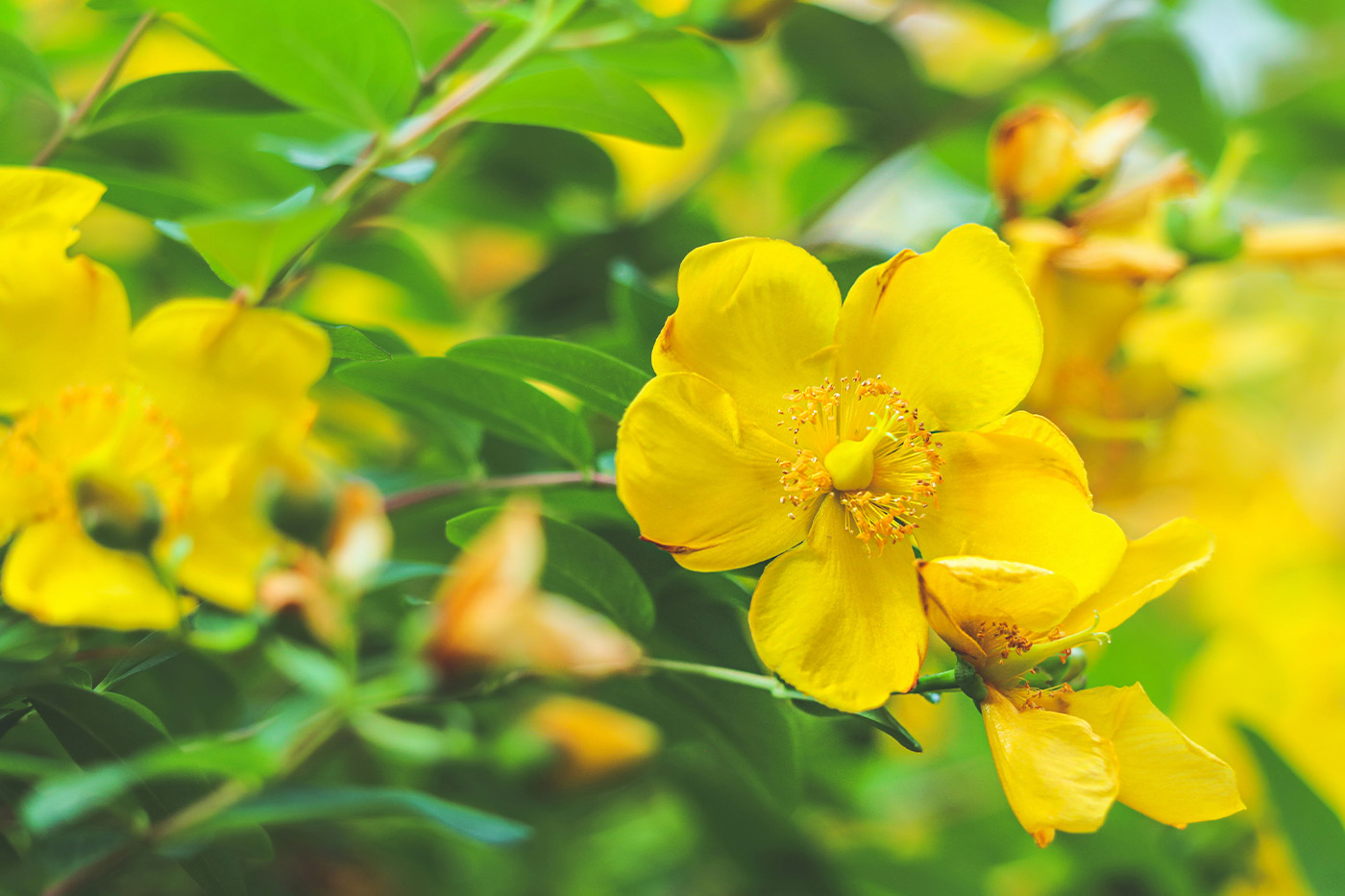
And to celebrate this anniversary, let’s take a moment to remember a unique plant with countless healing properties. I’m referring to the plant known as “wound herb,” “soldier’s herb,” “devil’s bane,” or, more commonly, St. John’s Wort—a shrub with yellow, golden-colored flowers native to Europe and the most abundant species in the Hypericaceae family (a genus comprising nearly 500 species worldwide).
A plant variety with medicinal properties
This bitter-tasting species is important to the industry because it has a high content of compounds with primarily medicinal properties: it has antidepressant, anxiolytic, anti-inflammatory, wound-healing, antibacterial, and antiviral effects.
There are also several publications that point to its potential usefulness in the diagnosis and treatment of cancer; although this is a promising application, it is still far from becoming a reality in the short term. There are even studies that mention its use as an alternative therapy for AIDS.
The most notable and extensively studied active ingredients in this plant are hypericin and hyperforin, although it contains many others that, while not as thoroughly researched, have also been shown to have potentially useful pharmacological effects, such as flavonoids and rutin.
St. John's Wort and Other Medicinal Plant Derivatives: A Booming Business
The current trend toward a healthier lifestyle has made St. John's wort-based products—such as tablets, capsules, herbal teas, and cosmetics—a booming business, along with other medicinal plants like valerian, chamomile, eucalyptus, and horsetail. All of these products account for more than 36% of the over-the-counter medication market (representing a 4% increase compared to last year).
In this shift toward natural products, research in this sector and its protection through industrial property rights are key factors.
More than 7,000 patent applications and about 1,000 related registrations
In the field of industrial property, there are more than 7,000 patent applications related to the Hypericum genus, focusing primarily on anticancer activities and central nervous system disorders such as Alzheimer's disease.
Another form of industrial property related to plants is plant variety protection, which is defined as a group of plants selected from within a species that share a set of common characteristics.
There are nearly 1,000 records related to the genus Hypericum (including plant breeders’ rights registered with various plant variety offices around the world, entries in national registries, and plant patents, as in the case of the United States). The new plant varieties submitted for this genus are intended for ornamental purposes, featuring uniform flowering, a high density of large, glossy fruits, and a long post-harvest shelf life.
In this field, the Netherlands and Germany stand out as the leading importers. Many of these varieties have spectacular bright yellow flowers, a long blooming period, and glossy brown or red berries that are widely used for ornamental purposes in parks and gardens.
The plant variety Hypericum perforatum has 3,400 patent applications
When conducting the technical examination of the variety, it is necessary to verify that the material of the applied-for variety is distinct, stable, and uniform. To this end, applications for varieties of the genus Hypericum will be examined in comparison with the other varieties in the reference collection, some of which have such evocative names as Flamingo Fantasy, Autumn Blaze, Excellent Flair, Magical Green, and Extreme Illusion.
Focusing on the patents for our St. John’s Wort, Hypericum perforatum, there are nearly 3,400 patent applications related to this herb, with the two leading applicants being Kimberly Clark Corp. (which produces hygiene products and markets such well-known brands in Spain as Scottex, Kleenex, and Huggies) and L’Oréal S.A., with its range of skin and hair care products.
As for plant varieties, there are about 100 entries related to Hypericum perforatum.
In short, it is a fact that medicinal plants are becoming increasingly popular and that natural products are gaining a foothold in pharmacies as an alternative to many conventional medications. Therefore, those of us in the industrial property sector must closely monitor these developments and encourage those working in this sector to adequately protect these valuable intangible assets.
Marina Reig, Attorneys in the Patent Practice Group at ELZABURU