Somalia & Somaliland: Trademark Law in the Heart of the Horn of Africa
Nearly 33 years after the closure of Somalia’s Intellectual Property Office—a consequence of the devastating civil war and the collapse of one of the world’s most unstable states—the Somalia Intellectual Property Office (hereinafter SIPO) has resumed operations in Mogadishu as a result of a slow but essential reconstruction process.
The Long Road to Reviving Trademark Protection in Somalia
For years of inaction and lack of protection in intellectual property matters, African experts advised against devoting resources and financial investment to the protection of trademark rights in this country, as there was a complete lack of security and guarantees of any kind.
In the absence of reliable and effective legal options, some stakeholders published precautionary notices in English- and Somali-language newspapers—an informal preventive measure of limited effectiveness in a context as extremely complex and adverse as that of the country. And that brings us to the million-dollar question: Why? To what end? Is the intention, perhaps, to litigate in Somalia to defend trademark rights?
This, I think, remains the big unknown.
Asia's Interest in Africa and the Role of East Africa in International Trade
However, the world is changing dramatically. Africa is changing as well. Today, Asia’s importance in international trade and its interest in the African continent are indisputable, particularly on the part of China and India (which has dominated trade along the eastern coast for centuries). China dominates infrastructure construction and civil engineering in East Africa, while India dominates trade.
Goods from Asia are virtually dependent on maritime transit through the Horn of Africa, just as the Silk Road has been for centuries. Asia knows how strategic this is.
So, what are the prospects for trademark protection in Somalia?
Despite the SIPO’s efforts, there are still some reservations regarding the legal foundations and framework of the Somali trademark system. Furthermore, just as a small glimmer of hope was beginning to emerge on the global stage, a new climate of global crisis has taken hold, one that tends to have a negative impact on places where instability and fragility prevail. We’ll see.
Despite the challenges, experts are now more inclined to consider this jurisdiction as another option in the continent’s internationalization processes, with all the caveats that the context requires.
It is claimed that there has been positive progress, that—little by little—a certain stability and recognition of the pre-federal constitution are beginning to take hold, and that SIPO has defined objectives. Everything points to the possibility of a new intellectual property law in the not-too-distant future.
Regardless of the foregoing, there are many factors to consider, and each interested party will need to evaluate them when the time comes. However, it should be noted that any trademark protection obtained in Somalia will have no effect and will not be recognized in the Republic of Somaliland.
Somaliland: A Region with Its Own Intellectual Property Framework
As if it were the indomitable Gaulish village from our beloved Asterix and Obelix, perched atop the Horn of Africa, we find the separatist and independent neighbor Somaliland. Paradoxically stable—at least until the very recent Memorandum of Understanding, signed with Ethiopia earlier this year, which has reignited tensions in the region—it is geographically hemmed in between Djibouti, Ethiopia, and Somalia itself.
This small, little-known country (with limited international recognition) does not have an intellectual property registry or a trademark law, but it does have a system for preventing infringements through precautionary notices in newspapers—as its neighbor used to do—until, as this article began, its Intellectual Property Office was reactivated.
Cristina Arroyo, Director of the International Brands Division at ELZABURU
Does your company operate in Guernsey? Find out how to protect your trademarks in this jurisdiction
Almost inevitably, following our article on trademark protection in Jersey, we felt compelled to write a few lines about its neighbor, the Bailiwick of Guernsey.
If you conduct business or provide services in this jurisdiction, this post may be of interest to you, and you might even consider how to protect your trademarks there as well.
Guernsey: An Independent Jurisdiction from a Trademark Perspective
The place where the famous Victor Hugo went into exile; it is said that the French writer wrote his novel *Les Misérables* from his home in Hauteville, Guernsey.
So, just as if we were Jean Valjean himself, let’s protect our brands—which, after all, are our creations, our values, and our assets—just as he protects the innocent and vulnerable Cosette.
But where do we protect them? It’s not France. It’s not the United Kingdom. So what is it? It’s the Bailiwick of Guernsey, an independent jurisdiction, though held by the British Crown and therefore under its authority for certain matters.
National Registration: The Natural and Direct Path to Trademark Protection in Guernsey
The standard procedure for registering a trademark in Guernsey is the direct national registration process, which has been available since 2016—prior to that date, a prior British registration was required—with the Intellectual Property Office (hereinafter “IPO”) located in St. Peter Port.
Its system allows for the protection of one or more classes of goods and/or services in a single application. The IPO applies the Nice International Classification of Goods and Services. Interestingly, in this small jurisdiction, a prior art search must be conducted before filing. Otherwise, the procedure is straightforward, relatively informal, and not overly expensive.
Guernsey in Relevant International Treaties
In 2020, the United Kingdom’s Foreign and Commonwealth Office extended its ratification of the Protocol Relating to the Madrid Agreement to the territories of the Bailiwick of Guernsey and Gibraltar (Gibraltar requires a separate discussion due to its complexity).
Thus, as of January 1, 2021, a trademark owner may apply for international trademarks or subsequent designations in Guernsey through WIPO, the Madrid Protocol, and the Madrid System for the registration of international trademarks, even though Guernsey is not, per se, a party to the International Treaty.
Similarly, a trademark owner based in Guernsey can use the international registration system to protect their trademark in other countries.
The moral of the story is that Guernsey is not a signatory to the Protocol, but it might as well be.
In addition, the United Kingdom clarified the extension of the Paris Union Convention to Guernsey, which allows for the assertion of Union priority and such essential principles as national treatment.
In conclusion, if you have a business presence in Guernsey or plans to expand into this jurisdiction, it is essential to include Guernsey in your trademark protection strategy.
Cristina Arroyo, Director of the International Brands Division at ELZABURU
20 Years of the EU Trademark and Design Court: Its Evolution and Subsequent Expansion
In light of the recent anniversary of the EU Trademark and Design Court, in this first installment we explore how the decision to establish this court in Alicante came about.
In this second installment, we will analyze the many changes the Court has undergone during its 20 years of existence. We will examine how it has evolved in terms of both its structure and its jurisdiction, and how it has established itself as a leading authority in the protection of industrial property rights in Europe.
Changes to the Court's Name and Structure: A Continuous Evolution
Over the past twenty years, the Alicante court specializing in trademarks and designs has undergone continuous evolution, evident in three key areas.
First, its name has changed several times. Initially known as the Community Trademark Court, it was renamed the European Union Trademark and Design Court, and more recently, the term “European Union Trademark Court of First Instance” has come into use.
These are not merely cosmetic changes; the latter name suggests a collegial approach by the courts with jurisdiction over the matter, similar to the Barcelona Patent Court of First Instance.
The Expansion of the Court: Creation of New Specialized Bodies
Another significant development is the expansion of the court system. While initially only Commercial Court No. 1 in Alicante had jurisdiction over disputes involving European Union trademarks and designs, Commercial Court No. 2 soon assumed these functions, and more recently, the newly created Commercial Court No. 4, also in Alicante. Only Commercial Court No. 3, located in Elche, has been excluded from this specialized jurisdiction.
This proliferation of courts may require a certain degree of collegial or coordinated action to prevent inconsistencies—both procedural and substantive—despite how unusual this may seem in the organization of the trial courts.
Expansion of Jurisdiction: New Frontiers in Jurisdiction
Jurisdiction has been the third area in which the Court has shown significant evolution. Since its inception, one of the most significant debates in litigation practice has been the scope of the jurisdiction of the European Union Trademark and Design Court. Originally limited to actions for infringement of European Union trademarks or designs, this restrictive approach was soon replaced by the application of the procedural principle of vis atractiva. This allowed the Court to hear actions for the invalidation of corporate names, infringement of national trademarks in conjunction with European Union trademarks, and copyright actions related to European Union trademarks.
This interpretation was subsequently endorsed by the legislature, which transformed what were initially jurisprudential criteria into statutory criteria. An example of this is the recent Organic Law 7/2022, which amended Article 86 quinquies of the LOPJ. This development has allowed the court to focus on what is truly essential: the development of a solid body of judicial doctrine.
In our next installment, we'll take a closer look at the achievements made possible by this specialization.
Ana Sanz, Associate Partner in the Litigation Practice Group at ELZABURU
Qatar: New Accession to the Madrid Protocol for the International Registration of Trademarks
Qatar, the Pearl of the Gulf
As Ignacio Álvarez-Ossorio and Ignacio Gutiérrez de Terán—two renowned experts on the Middle East—note in the title of one of their latest works , *Qatar, the Pearl of the Gulf*, Qatar —or *Catar*, as recommended by the RAE—is undoubtedly one of them, which is why it is becoming increasingly attractive to our companies and more familiar to us.
On August 3, 2024, the Madrid Protocol entered into force in Qatar, which has thus joined the 130 countries that already make up the Madrid System for the international registration of trademarks.
For those unfamiliar with the international trademark registration system, a country’s accession to the Madrid Protocol paves the way for more effective management of intellectual property portfolios, particularly for those with a significant international presence.
The Madrid Protocol for Optimizing the Management of Trademark Portfolios
The Madrid System allows for the streamlining and centralization of certain formal and administrative procedures for obtaining trademark registrations. However, it is important to remember that the sign to be protected must comply with the laws and legal and administrative practices of each country in which trademark protection is sought. Ultimately, the national provisions of the country chosen for protection will determine the success of the desired protection.
Undoubtedly, the most significant advantage lies in the maintenance of rights because, given large portfolios, the renewal of all protections is handled through a single point of contact—WIPO—resulting in a very significant reduction in costs. Therefore, although initially the international route presents some drawbacks stemming from the need to adapt to the international procedure—which is somewhat unnatural, forced, and archaic—the investment in efficiency and cost savings pays off over a 10-year period, when it comes time to maintain the rights under a single registration, through a single procedure, and before a single agency.
Some advantages of Qatar's accession to the Madrid System
Qatar's accession to the Madrid System allows the international option to be used in both directions—for foreigners seeking protection in Qatar and for Qataris seeking protection abroad—with the ultimate goal of promoting economic development and the flow of international business.
The member countries of the GulfCooperation Council (GCC)—currently Bahrain, Kuwait, Oman, Saudi Arabia, the United Arab Emirates, and Qatar—have been making significant efforts for years to harmonize and modernize their trademark systems. Accession to the Protocol is undoubtedly part of that process, as Bahrain, Oman, and, most recently, the United Arab Emirates have already done.
In Qatar, certain issues must not be overlooked, even though we now have the option of seeking protection through international channels. It is worth noting in particular that it is impossible, by any means, to protect products or services prohibited by the country’s laws. Likewise, local practices must be followed when making claims regarding products and services, especially for trademarks originating in foreign countries that designate Qatar.
On the other hand, the law in Qatar, like that of other countries in the region, is quite formalistic compared to European and Anglo-Saxon legal systems; thus, the international route avoids the need to comply with certain preliminary formalities—including, among others, the legalization of required documents at consular offices and their translation into Arabic—at least as long as the proceedings take place in an international forum.
We wanted to take advantage of this recent addition to the Protocol to provide a brief overview of Qatar’s trademark practices. In closing, we recommend to our readers the book by Ignacio Álvarez-Ossorio and Ignacio Gutiérrez de Terán , *Qatar, the Pearl of the Gulf*, which will undoubtedly shed light on the culture and geopolitical situation of this Gulf state.
Cristina Arroyo, Director of the International Brands Division at ELZABURU
Registering Soccer Celebrations: A Strategic Move in Industrial Property
With the start of the 2024-2025 La Liga season in Spain, soccer fans are eagerly awaiting what stars like Kylian Mbappé will bring to the field.
But beyond the goals and plays, there is a growing phenomenon in the world of soccer that is attracting the attention not only of fans but also of attorneys specializing in intellectual property: the trend among soccer players to register their iconic celebrations as trademarks.
Why are soccer players recording their celebrations?
In the world of sports, especially in soccer, goal celebrations have become a personal trademark for many players.
Not only do these serve to express emotion, but they have also become distinctive features that fans immediately associate with a particular player.
Kylian Mbappé, for example, has applied to register his famous goal celebration as a trademark, obtaining several registrations both in his home country, France, and throughout the European Union through the EUIPO.

Kylian Mbappé Figurative Mark 017157355 (EUIPO)

Kylian Mbappé's French brand 4978108
The interest in registering celebrations as trademarks stems from the ability to protect and monetize these unique expressions. A registered trademark grants the owner the exclusive right to use that celebration in commercial products, licenses, and other forms of economic exploitation.
This becomes a valuable asset for soccer players, who can diversify their income beyond their athletic careers.
Requirements for Registering a Celebration as a Trademark
The process of registering a celebration as a trademark is not much different from registering any other distinctive sign.
Under current regulations, trademarks may include words, designs, letters, numbers, colors, the shape of a product or its packaging, or sounds, provided that they serve to distinguish a company’s goods or services from those of others.
For a celebration to be registered as a trademark, it must meet certain requirements.
1. Be graphically representable
First, it must be graphically representable. This means that the celebration can be a figurative mark (a static image), a dynamic mark (an animation), or even multimedia, such as a combination of video and sound.
Some notable examples outside of soccer include the famous image of Michael Jordan known as “Jumpman,” which is a registered trademark of Nike, or, outside of sports, the motion trademark registered by Twitter featuring moving hearts.

Michael Jordan's figurative trademark known as "Jumpman," registered by Nike under number 000277913 (EUIPO)
2. Meet the criteria for trademark registrability
Although these registrations demonstrate that it is possible to protect gestures, movements, and multimedia combinations, we must not forget that they must also meet the criteria for registrability (distinctiveness, not being contrary to public policy, not causing confusion, etc.)
What are the legal implications?
Registering a celebration as a trademark grants the owner exclusive rights to its use in the commercial sphere. This means that, in theory, a soccer player could prevent other players from using his registered celebration on products or services without his consent.
However, it is important to note that these rights apply only in the economic sphere, not in the sporting sphere. In other words, if another player performs the same celebration during a game, he would not be infringing on the trademark.
On the other hand, although a celebration can be registered as a trademark, it does not necessarily meet the originality requirements set forth in the Consolidated Text of the Intellectual Property Law to be considered a work protected by copyright.
This is because intellectual creations require a significant degree of originality, which can be difficult to demonstrate in the case of repetitive gestures or movements.
However, even if a soccer player has not registered a trademark, he or she could still argue that his or her intellectual property rights have been infringed if someone uses his or her gesture in an unauthorized and profit-making manner.
In some cases, there may also be a claim for violation of the right to honor, personal and family privacy, or one’s own image, as established by Organic Law 1/1982.
Ultimately, registering nicknames as trademarks is just one of the many strategies that athletes and clubs use to protect and capitalize on their image and reputation. Soccer players often register their signature, name, or initials as trademarks in order to secure their legacy and maximize their earnings in an increasingly competitive environment. But we’ll discuss that in another article…
Luis Baz, Director of the Brand Divisionat ELZABURU
This month, let's talk about trademark protection in Jersey
Does your trademark in the EU provide protection on the island of Jersey? The answer is no. According to our expert partners in the region, Jersey has not been protected by the EU trademark system since April 2009. Why? Because Jersey’s new Trademark Act of 2000 did not incorporate the European regulation that ensured the continuity of EU trademark protection in Jersey.
So, this month, let’s talk about Jersey.
Jersey: A Country to Remember in Trademark Protection
Located west of Normandy, in the English Channel, Jersey is a small British Crown Dependency with an area of just120 km². It has a gross national income that ranks among the highest in the world, and it is well known that it is home to one of the most important financial and legal centers on the planet.
Trademark Protection After Brexit
Well, now that the UK is completely out of the EU, it’s important to remember that it’s not enough to protect a trademark in the EU —and, obviously and most importantly, in the United Kingdom. We must also keep in mind other countries, dependent territories, and overseas territories where it’s equally important to protect intellectual property and where, furthermore, we can extend the rights already obtained—in this case, in the United Kingdom.
A trademark in the United Kingdom provides protection in Great Britain, Northern Ireland, the British Indian Ocean Territory, the Falkland Islands, the Isle of Man, South Georgia, and the Sandwich Islands. It also paves the way for obtaining protection in many other countries, such as Gibraltar, the Bahamas, Bermuda, Guyana, Fiji, the Gambia, Sierra Leone, and Jersey—the focus of our article.
So, how do I protect my trademark in Jersey?
At present, in Jersey, trademark protection is obtained solely through the extension of a British registration or through the Madrid Protocol. To this end, we have a network of trusted partners, both in Jersey and in the United Kingdom, complemented by our extensive experience in processing Madrid Protocol applications and managing intellectual property abroad.
Trademark registration in Jersey is simple, quite affordable, and fast—it’s automatic when a British designation is made through the Madrid Protocol—so it’s worth considering as part of a comprehensive trademark strategy in Europe. It is expected that in the near future, Jersey will have an independent registry to administer its trademark rights. When that happens, we will publish a new article to familiarize our clients and readers with this new avenue for trademark protection.
We don’t want to conclude without noting that this situation is not unique to islands like Jersey. Countries such as Switzerland, Iceland, Norway, Liechtenstein, Monaco, and our neighbor in the Pyrenees, Andorra—which, due to their geographic location in the heart of Europe, might lead one to believe they are part of the EU trademark system—do not participate in this trademark protection. And they are highly significant from an economic and even strategic standpoint, which makes it highly advisable to take steps to protect the most important trademarks in these regions.
Cristina Arroyo, Director of the International Brands Division at ELZABURU
Industrial Property in Spain: SPTO Report Highlights Increase in Patents and Industrial Designs
The Spanish Patent and Trademark Office (OEPM) has published its annual report, “The OEPM in Figures 2023,” providing a detailed overview of activities related to the protection of industrial property in Spain.
This report reflects significant growth in industrial property in Spain, highlighting a 10.4% increase in patent applications. There was also a 6.5% rise in utility models and an impressive 33.6% increase in industrial designs. Women inventors have a significant presence, particularly in the biotech sector.
These figures highlight the country's robust innovation activity and the growing importance of protecting intellectual property.
Inventions: Patents and Utility Models
Patents
In 2023, 1,455 patents were filed with the OEPM, a 10.4% increase compared to 2022. This increase is primarily due to the growth in the number of PCT applications in the national phase, which accounted for 18.2% of the total, compared to an average of 4.5% in previous years.
Patent applications include both national applications and those resulting from the entry into the national phase of a PCT application originating from WIPO.
Among the top 20 patent applicants, 17 are public institutions or universities, with the Spanish National Research Council (CSIC) once again leading the list with 50 applications.
The autonomous communities with the highest number of patent applications filed by residents were the Community of Madrid (24.7%), the Valencian Community (16.6%), and Catalonia (13.4%).
In terms of technology sectors, medical technology led the way, although the number of applications fell by 23.2%. Other notable sectors included furniture, gaming, and civil engineering, with a significant increase in engines, pumps, and turbines (55.6%).
The report includes gender-specific data, showing that 25.5% of patent applications are filed by female inventors, and that 63.5% of the patents filed had at least one female inventor. Female researchers are more prevalent in the biotech sector.
Utility Models
As for utility models, in 2023, 2,807 utility model applications were filed, a 6.5% increase compared to 2022, returning to levels seen before 2020 and 2021. Catalonia led with 17.7% of the applications, followed by the Community of Madrid (16.3%) and the Valencian Community (15.2%).
The sectors with the highest number of applications were Furniture and Games and Civil Engineering, with increases of 12.1% and 18.4%, respectively. The percentage of female inventors was 16.9%, which was lower than for patents, and 29.8% of the utility models filed had at least one female inventor.
Distinctive Signs: Trademarks and Trade Names
Brands
In 2023, 48,773 national trademark applications were filed (1,495 of which were filed by non-residents of Spain).
Among the top applicants, the Spanish Radio and Television Corporation stood out with 116 applications, followed by the Madrid City Council (63) and the Complutense University (49).
As in previous years, the largest number of trademark applications was filed under the class “Advertising; Commercial and Administrative Management” of the Nice Classification.
Trade Names
In 2023, 15,124 business names were registered, a 21.5% increase from 2022 and the highest number on record.
The Community of Madrid is where the most distinctive marks have been applied for.
Industrial Design
A total of 14,590 industrial designs were filed in 2023, a 33.6% increase from the previous year—a figure that stands out from the rest.
The regions with the most applications were Catalonia (22.4%) and the Valencian Community (19.8%).
The most active classes in the Locarno Classification were Clothing and Haberdashery, Graphic Symbols, and Ornaments.
This report highlights the importance of registering intangible assets and reflects the vitality and diversity of the industrial property sector in Spain.
Good news for Skechers on appeal, as the EUIPO grants the trademark consisting of a figure behind a general prohibition sign
- The examiner rejected the application on the grounds that the trademark lacked distinctiveness, finding, in particular, that the message it conveyed was informative.
- On appeal, Skechers argued, among other things, that there is no connection between “footwear” and the mark.
- The Board of Appeals recognized the distinctiveness of the sign, finding that it did not represent the goods for which protection was sought.
In Case R 2246/2023 4, the Fourth Board of Appeal of EUIPO held that a trademark has a sufficient degree of distinctiveness when the message it conveys is not basic, common, or universal, and will not be interpreted as such.
Background
On February 17, 2023, Skechers filed an application for a European Union trademark for the figurative mark shown below, seeking protection for goods in Class 25 (footwear):

On March 3, 2023, the examiner rejected the application on the grounds that the mark consisted of a figure behind a general prohibition sign, which would be perceived by the relevant public as a pictogram rather than as a mark identifying the commercial origin of the goods, in accordance with Article 7(1)(b) of Regulation (EU) 2017/1001 on the European Union trademark.
On June 29, 2023, Skechers filed its response, rejecting the argument that the trademark applied for consisted of a pictogram that immediately conveyed information about the characteristics of the goods and services in question.
On September 29, 2023, the examiner denied the application, insisting that the message conveyed by the mark was informational.
On November 10, 2023, Skechers filed an appeal against the decision. In a decision dated April 5, 2024, the Fourth Board of Appeals upheld the appeal.
Resolution
In the examiner’s opinion, the consumer did not have to engage in any mental process when perceiving the mark, which would be perceived as a mere instruction for use: it would be seen as an indication that the user does not need to bend down to put on the footwear because the shoes are designed to be slipped on. Therefore, the examiner found that the mark applied for lacked distinctiveness.
These arguments were rejected by the Board of Appeal, since the trademark applied for did not depict the footwear for which protection was sought. Therefore, it was unclear how the figure could be interpreted as bending down to put on the footwear, given that one arm, shaped like a cane, was positioned behind the figure and the other forearm was facing forward.
As the examiner stated in the notice explaining the grounds for denying the application:
“The trademark application conveys the message that users will not need to bend down to put on their shoes because they are designed to be slipped on. Therefore, there is no need to tie the laces… etc.”
However, both the Board of Appeal and Skechers agreed that this interpretation went too far.
Furthermore, the Board found that the message which the examiner attributed solely to the design required additional steps or some inventiveness in the context of the goods (footwear). As Skechers noted in its reply, a minimum degree of distinctiveness is sufficient to overcome the absolute ground for refusal set forth in Article 7(1)(b).
Comments
This decision sheds light on the factors that must be considered when evaluating the elements of a trademark to determine whether there is a minimum level of distinctiveness sufficient for consumers to perceive the commercial origin of the goods in question.
Furthermore, the ruling states that no additional steps or inventions may be required in the context of the goods when assessing the distinctiveness of the sign. The relevant consideration is whether the message conveyed is not basic, common, or universal and will not be interpreted as such.
Any interpretation that remains within the realm of subjectivity and cannot be justified by the existence of a direct and clear link between the mark and the claimed product or service shall not be taken into account in rejecting a trademark application.
Paloma Querol, Associate at ELZABURU
10 Strategic Keys to Internationalizing a Brand
In an increasingly globalized world, any brand that is successful in its home country may seek to grow by applying its business model to other markets. In such cases, it is very important to develop an effective strategy for internationalization, protection—and, in some cases, exploitation—of the brand, or even for defending it against third parties.
However, building a global brand is much more than simply exporting a business model—one that has been proven and is likely successful in its home country—to other countries. A brand is no longer just a symbol, a name, a slogan, or a logo; it has become an organization’s value proposition.
Today, brands are not merely necessary elements for distinguishing one company’s products or services from those of others in the market or for identifying their corporate origin; rather, some of them are transformative forces for our collective well-being and drivers of social progress.
You don't mess with brand value
In this context, the decision to internationalize a brand is a delicate matter that must be approached with the utmost care to ensure its successful development.
In certain sectors, this decision is particularly important, because the brand can become a company’s primary and most valuable asset. Consider some well-known brands in sectors such as the biomedical and pharmaceutical industries, the luxury sector, fashion and perfumery, the technology industry, engineering, and the hospitality and food industries.
When it comes to the legal decisions that need to be made, there are a number of factors that cannot be overlooked when internationalizing a brand:
- The most obvious and immediate step is to seek expert advice on international branding and overseas markets.
- The first step in this process would be to file an application for protection. The initial trademark application is generally filed in the country where the business is established and where the first products and/or services bearing the chosen trademark are introduced to the market.
- Based on that initial application, we will be able to extend the trademark to other countries, seeking the most efficient approaches that align with the company’s strategic plan, the intended use of the trademark, and the laws of the selected country or countries.
- It is necessary to confirm that the trademark strategy does not conflict with other rights and respects the protection strategies for other intangible assets (patents, designs) whose protection may overlap with that of the trademark for the same product or service.
The 10 Essential Steps to Successful Internationalization
Although strategies will vary depending on each company's needs, there are 10 essential steps to ensure the successful internationalization of a brand:
- The first—and perhaps most important—step is to choose the trademark that will be used to identify the products and/or services, as well as its purpose. It is essential to maintain consistency from both a business and legal perspective.
- Determine the markets in which a company operates or plans to operate—that is, the priority markets and those of primary interest. In these markets, a series of decisions will need to be made to protect trademark rights.
- It will be crucial to verify whether the trademark is available in all the markets where the product or service will be offered.
- In addition to other business considerations, such as marketing objectives, the obstacles identified in a given country will determine whether a homogeneous branding strategy or, conversely, a heterogeneous branding strategy—one that is well-suited to the markets and business needs—will be adopted.
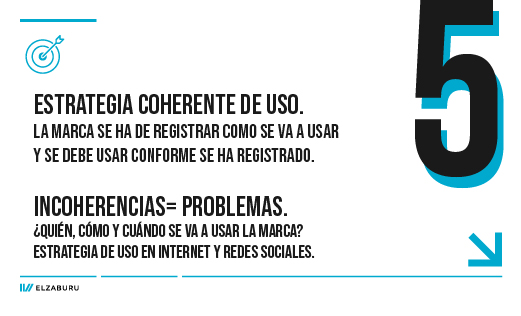
- Usage Strategy. The trademark must be registered in a manner consistent with how it will be presented in the market, and vice versa. Inconsistencies create conflicts and lead to problems, to the point that a decision that is inconsistent between use and registration can result in the loss of a right. It is also important to consider who will use the trademark, how it will be used, and when it will be used.
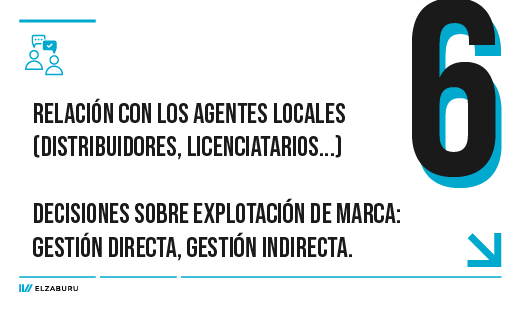
- Decide whether brand management will be direct or indirect. If the brand is strong and third parties other than the owner can also use it—from which royalties can be collected—it will be necessary to establish relationships with local agents (distributors, licensees, assignees, etc.) and develop a solid contractual plan.
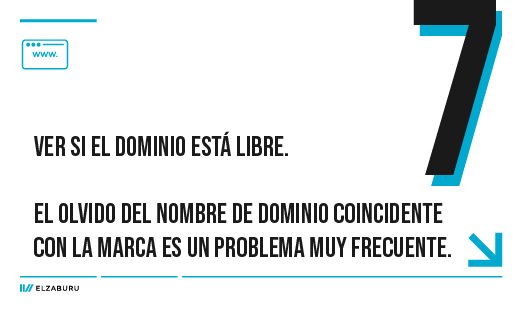
- Oversights can be costly: If you protect your brand but fail to register the domain name—or vice versa—you’ll face a serious problem. A sound international strategy cannot overlook either of these aspects in a world where an easily findable online presence is practically mandatory.
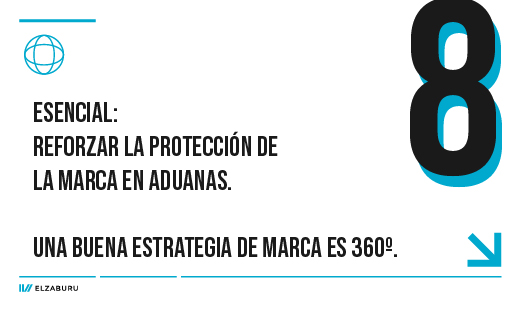
- If a trademark is vulnerable to infringement, protection through registration alone may not be sufficient. Therefore, it is important to develop a robust plan for defending and protecting the trademark that also includes effective measures at borders and customs. A good trademark strategy must be comprehensive.
- In today's world, with the widespread use of the Internet, social media, the metaverse, and so on, it is advisable to hire a service to detect illegal activities and develop a plan to prosecute and prevent them, especially in certain sectors that are more vulnerable to counterfeiting or trademark infringement.
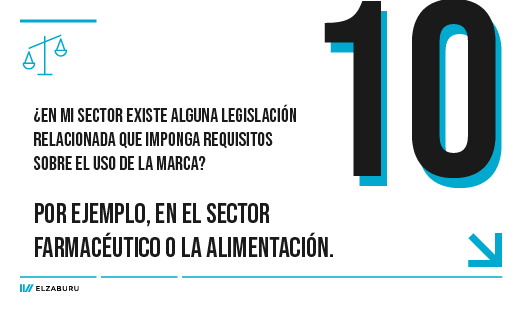
- Confirm that all industry regulations are being followed. A good branding strategy is useless if the rules for bringing a product or service to market are not followed. Pharmaceutical branding is a prime example of this.
Therefore, before internationalizing a brand, it is essential to lay a solid foundation in order to achieve promising growth for one of a company’s greatest assets. It is important to have a clear vision, proceed cautiously, and follow these steps. In any case, it is advisable to work with accredited experts in the field.
Cristina Arroyo, Director of the International Brands Division at ELZABURU





Trademark Registration in South Sudan.
South Sudan, with its capital in Juba, seceded from Sudan (with its capital in Khartoum) on December 5, 2005. However, official independence did not come until January 2011, when South Sudan became the world’s youngest country to date—and also one of the most fragile and unstable, following a seemingly endless civil war that lasted nearly a decade.
In this slow but long-awaited awakening of the African continent—a continent brimming with opportunities and riches that have been thwarted by countless circumstances—South Sudan is extremely rich in oil and could one day leave its underdeveloped status behind and become a land of great opportunities for its citizens and foreign investors. Let’s hope so! There is so much to rebuild and construct, and so many challenges to overcome.
Amid a sense of hope, we continue to wait indefinitely for the enactment of a Trademark Law that was first announced in 2015 and has been delayed for nearly ten years.
A few weeks ago, we learned from our trusted local colleagues that the trademark registration process had been reopened in this East African country. It is important to note that the Trademark Law has not yet been enacted and that a previous attempt to open the process in 2017 was ultimately put on hold due to numerous challenges.
However, as of today, for those owners who can demonstrate that they acted in good faith, the opportunity to file a trademark reservation with the Ministry of Justice and Foreign Affairs has arisen once again. The procedure is relatively straightforward and does not differ significantly from what would be required for a trademark application in other countries. It is necessary to prove good faith by demonstrating the owner’s standing and the existence of registrations in other countries, which involves submitting various types of documents and incurring associated costs. The validity of such a filing will depend on the enactment of the Trademark Law when it eventually takes effect, provided circumstances and events do not change.
Cristina Arroyo, Director of International Brands.