Labor Reform and the Unique Situation of Artists.
The unique nature of the services provided by artists has meant that—for as long as anyone can remember—their employment has been subject to special rules. Specifically, the classification of this activity as a special type of employment relationship is included in Article 2 of the Workers’ Statute, along with, among others, senior management and domestic workers.
The Origin of the Regulation
This activity, which referred exclusively to “artists in public performances,” was regulated by Royal Decree 1435/1985, dated August 1, which for decades governed the circumstances of this group. First, it included the only (admittedly very brief) legal reference in Spanish law that permitted minors to engage in artistic activities. Second, it expanded its scope to include all artistic activities in general—in a much broader sense than mere live performances—since Article 2.2 of the Royal Decree covered“…all relationships established for the performance of artistic activities, …, carried out directly before an audience or intended for recording of any kind for dissemination to the public, in venues such as theaters, movie theaters, radio stations, television stations, bullrings, sports facilities, circuses, nightclubs, discos, and, in general, any venue habitually or occasionally used for public performances or artistic or exhibition-type acts.”
The Reforms
The regulation underwent changes over time—notably two—that substantially altered its content and had long made a significant regulatory reform necessary:
On the one hand, the incorporation into Spanish law of Royal Decree 2064/1995, dated December 22—the General Regulation on Contributions and Settlement of Other Social Security Obligations—consolidated what had until then been the building blocks of a special social security system; however, its adoption laid the groundwork for the scandal: the new system did, indeed, incorporate specific contribution guidelines for “artists in public performances” subject to a special employment relationship, but it also added two sections listing specific professional categories—not all of which were as closely linked to the artist community as one might think. Among them: directors, assistant directors, or production secretaries; directors of photography; set designers; editors; technical supervisors; technical assistants; production assistants; sound supervisors; production secretaries; etc. Although the issue was noticed almost immediately and resolved in the following year’s reform with an additional clause specifying that it applied to“artists in public performances, as well as to the technical and support staff listed in section 3. II of this same article,” not all technicians and support staff were included in Section 3.II, nor did that clause resolve the issue, which the industry had to live with for many years. And, of course, it was an endless source of debate within the sector’s collective bargaining agreements, in fruitless (because legally impossible) attempts to resolve the fact that, arbitrarily, some technicians were included in the special regime and others were not, with no justification other than their inclusion on this list.
On the other hand, the successive labor reforms and their impact on the original legal text at hand. Specifically, the consequences of the 2015 labor reform with regard to Article 5 of the Royal Decree, concerning the duration of the employment contract. The aforementioned Article 5 of Royal Decree 1435/1985 referred, with regard to permanent intermittent contracts, to the provisions of the Workers’ Statute; and the 2015 labor reform incorporated general regulations to govern this type of employment, which, therefore, undeniably applied to this group as well from that point forward. Consequently, an obvious contradiction arose in the legal text, which was based on the premise that the employment relationship was of a temporary nature, and the rules arising from this latest regulatory change.
It fell to the courts to clarify this situation as much as possible. Thus, the Supreme Court, in its ruling of May 17, 2005 (appeal No. 2700/2004), established that this“…dual provision of the collective bargaining agreement—which accepts temporary employment as the general rule and allows for the possibility of permanent intermittent artists by referring to statutory regulations—requires a coordinated interpretation based on the purpose and nature of each of these provisions. This leads to the conclusion that the general rule of temporary employment set forth in Article 5.1 is justified by the unique characteristics of artists’ work, both with regard to the artist as an individual—who must possess special skills and qualifications that are constantly evolving—and with regard to the activity itself and the context in which it takes place —which are subject to constant changes and innovations—and which would render the rule of permanent employment dysfunctional. Meanwhile, the acceptance of “discontinuous permanence” is justified by the existence of seasonal work that recurs intermittently or cyclically in its nature (see, among others, the rulings of July 7, 2003 (Case No. 4185/00) and March 22, 2004 (Case No. 349/02)). It might seem that the two contractual modalities provided for in Article 5 are mutually exclusive, since if artists’ work is recognized as temporary due to its changing nature, and discontinuous permanence is achieved through the repetition of the same or a homogeneous activity, the logical conclusion would be that there can be no permanence in the employment relationship of artists. However, what the legislature has not wished to rule out is that (Art. 5.2) there are artists who are hired for a repeated and unchanging artistic activity; yet this is a scenario that, as an exception to the general rule of 5.1, must be interpreted restrictively.”
Despite the reforms, the text remained largely intact and continued to fulfill its original purpose—something absolutely essential to the group’s survival. However, it emerges quite clearly from the analysis that, from the very beginning, it was neither a legal text nor one that was correctly drafted or perfectly interpreted.
The Artist's Statute
Sometimes, it’s the silliest issue that ends up bringing down the house of cards. Just like what happened to Al Capone, the bomb went off because of taxes. In this case, a writer publicly denounced the tax authorities for penalizing him because, as a retiree, he continued his literary work. Added to this was the issue of the cultural VAT, and from there, one after another, the shortcomings of the previously analyzed regulations and the need for comprehensive reform became apparent.
There was talk of passing a so-called “artists’ statute,” akin to a Roman codex. A parliamentary subcommittee was created with participation from all political groups represented in the Congress of Deputies—a truly unique and commendable initiative—which drafted a thorough report containing a long list of recommendations for reforming Royal Decree 1435/1985 back in June 2018[1]. The goal: to provide the artistic community with a stable legal framework tailored to its specific needs.
It is in this context—following several regulations with limited scope[2], numerous court rulings[3], and the ongoing pandemic—that Royal Decree-Law 5/2022, dated March 22, has finally been enacted, adapting the special employment regime for individuals engaged in artistic activities, as well as the technical and auxiliary activities necessary for their performance, and improving working conditions in the sector (Official State Gazette [BOE] of March 23, 2022).
To begin with, and as with everything, the regulatory reform has its strengths and areas for improvement, but it is by no means a “Roman Codex.” Among other reasons, this is because the grand ambition of consolidating all sector-specific regulations into a single regulatory text would be a task bordering on the impossible, given the immense scope of regulations of varying significance that this would entail.
The reform is, therefore, modest, in that it does not involve the creation of any new legislation, but rather a specific—and, it must be said, thorough—amendment to existing laws.
On the contrary, the legal reform was absolutely essential. Essential for survival, we might even say, considering that it is a response to Royal Decree-Law 32/2021, dated December 28, on urgent measures for labor reform, the guarantee of job stability, and the transformation of the labor market, which was set to take effect in its entirety just a few days later.
The New Regulations
The first change concerns the very basis of these new regulations. Article 2(e) of the Workers’ Statute has been reworded and, at long last, expands its scope of application beyond performers in public shows. Specifically, the special regime now applies to “…artists who work in the performing, audiovisual, and musical arts, as well as individuals who perform technical or auxiliary activities necessary for the carrying out of such work.”
As for Royal Decree 1435/1985, it is not entirely clear why a comprehensive revision of the legal text was not undertaken. Since it is being revised anyway, the new regulations even change its name, although they retain its numbering.
However, the new regulations leave many tasks and practical matters to be addressed in subsequent implementing regulations, which we sincerely hope will be adopted shortly.
Expanding the scope of application is, of course, essential, but the text does not define what constitutes the “…technical or auxiliary activities necessary for the performance of said activity.” Does this mean that, despite all efforts, there will continue to be technicians and auxiliary staff who will randomly fall within or outside the system? A definition of what is considered necessary for the performance of the activity, at this point, would be greatly appreciated. Especially since the second paragraph of Section 3 of Article 1 of the Royal Decree no longer refers to them as“necessary”but rather considers them“essential for its execution”—which, of course, is not the same thing.
Article 1, paragraph 2, of the new regulation provides a definition of what the regulation means by “special relationship,” identifying not only the worker—as Article 2(e) of the Workers’ Statute does—but also defining the conditions of the employer, apparently equating it with the status of a production or development company. In my humble opinion, this regulation violates the principle of the hierarchy of laws, in that the Royal Decree imposes a requirement that the underlying law (the aforementioned Article 2(e)) does not require. Furthermore, does this mean that all companies in technical industries that provide special services to producers and developers are automatically excluded from the regulation?
Article 5, Section 2, second paragraph of the new text also includes a new provision. It eliminates, in one fell swoop, the very premise on which the special regime operates: its temporary nature. Temporariness as a premise—and without justification—disappears from the regulation; a justifiable cause is now required for its application, which must be specified “…precisely in the contract, ” including “…the grounds for the temporary contract, the specific circumstances justifying it, and its connection to the anticipated duration.”
The economic model of companies in this sector is intrinsically linked to a production budget, with productions varying in content, quality, and duration based on factors entirely external to the organizing company itself—factors typically tied to the project’s success (public reception). Although there are a few privileged companies that do manage to string together productions with enough regularity to remain active year-round, this is by no means the general rule. Even in the case of the most active employers, the type of production significantly determines the type of professional needed in each case; hence, the foundation of the system is—and must be—the intermittent nature of the activity. Was a change that would turn the tables really necessary, when the system has been functioning smoothly—specifically in this regard—for the past 17 years?
In short, we trust that the heads of the Ministry of Labor and Social Economy and the Ministry of Inclusion, Social Security, and Migration will wisely exercise the regulatory authority granted to them by the fifth final provision of the approved law, in order to issue implementing regulations that will fully pave the way and establish “the stable legal framework tailored to their specific circumstances” that the parliamentary subcommittee deemed this group deserved when it raised the need for the Artists’ Statute. May it be so.
- [1]https://www.congreso.es/backoffice_doc/prensa/notas_prensa/61825_1536230939806.pdf
- [2] https://elpais.com/cultura/2019/04/26/actualidad/1556277965_430302.html
- [3] https://www.elindependiente.com/tendencias/cultura/2019/02/26/javier-reverte-gana-juicio-seguridad-social-cobrara-derechos-autor-pension/
By: Mabel Klimt
Spain signs an agreement with the Dominican Republic on film and audiovisual coproduction.
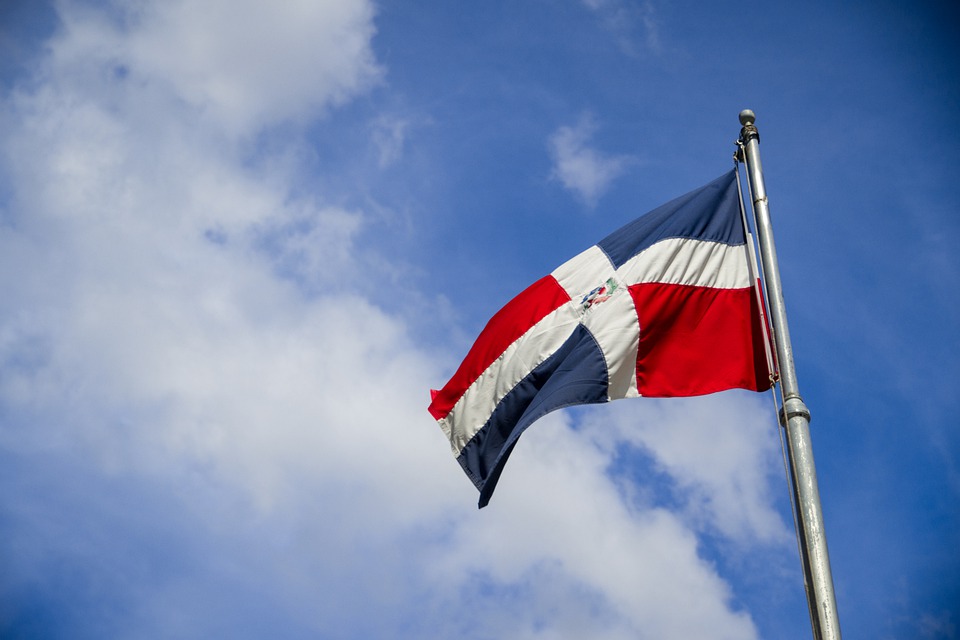
On September 29, the Kingdom of Spain and the Dominican Republic signed an international administrative agreement to regulate and promote film and audiovisual co-productions between the two countries.
Under the agreement, co-productions of audiovisual works between these two countries must be approved by the competent authorities of both countries: the Institute of Cinematography and Audiovisual Arts on the Spanish side, and the General Directorate of Cinema on the Dominican Republic side, in accordance with the regulations in force in each country. Such approval shall be irrevocable, except in cases where the commitments initially undertaken by the co-producers are not honored. Works that receive approval from both institutions shall be considered national productions in both countries.
Works produced as co-productions under this agreement shall be eligible for the advantages and benefits granted by each country, and only the co-producer from the country granting such benefits may be the beneficiary. In all cases, such works must be exhibited and marketed under the designation “Dominican-Spanish Co-production” or “Hispanic-Dominican Co-production.”
The proportion of each co-producer’s respective contribution to the work may range from 20% to 80%. Financial co-productions are permitted; however, works produced under this arrangement must have a budget of at least one million euros, and the percentage of the production company whose participation is exclusively financial must be no less than 10% and no more than 20%. An annual limit of six works under the financial co-production regime is established.
The distribution of the profits generated must be proportional to each producer’s contribution, unless otherwise approved by the competent authority.
The actual participation of creative, technical, and artistic personnel who meet the requirements for the granting of citizenship must be proportional to each co-producer’s financial contribution. In addition, the contribution of the minority co-producer must include, at a minimum, the participation of one writer, two actors or actresses, and one technical creative professional.
Both production and post-production work must be carried out either in Spain or in the Dominican Republic, unless the competent authorities authorize otherwise due to script requirements or technical impossibility.
In addition, the agreement includes measures designed to facilitate the entry of film crews and equipment, as well as monetary transactions and the export of film and audiovisual works.
The agreement, which has been in effect since last September, will remain in force for a period of five years and will be automatically renewed for successive periods unless either country terminates it.
Author: Clara Collado Carbonell
The door is now open for video games to be subject to legal deposit
We live in a society that is constantly changing and evolving, and as such, on December 29, 2021, the Council of Ministers approved the preliminary draft bill amending Law 23/2011, of June 29, on legal deposit, to enable more effective preservation of national publications and optimize the management of preservation centers.

Before we begin, it is important to note that the Legal Deposit system is the regulation that requires copies of all types of published works—whether in physical or online format—to be submitted to the preservation centers of the Autonomous Communities and to the National Library of Spain. Both of these institutions are responsible for preserving Spain’s bibliographic and documentary heritage, as well as its digital heritage, including online publications, websites, and electronic books and journals.
The draft bill includes the following new provisions: First, publishers will be able to submit digital files prior to digitization, in addition to or in lieu of printed files, provided that the materials in question are books, newspapers, and/or magazines. This is intended to facilitate the preservation of and access to these documents, thereby avoiding the need to digitize these copies in the future.
In addition, the possibility of requesting prints on demand—a service that was previously unavailable—has been added, and both the Spanish Film Archive and the film archives of the autonomous communities are now recognized as centers for the preservation of Spain’s film heritage, with the objectives of recovering, researching, and preserving Spain’s film heritage, as well as promoting it.
Similarly, new types of documents are included, such as video games, commercial catalogs from bookstores, publishers, and auction houses, as well as bookmarks, among others. With regard to video games, it is worth noting that this represents a major change, since under the previous legislation they were classified as audiovisual documents, whereas now they will have their own section to ensure the deposit of the complete edition of this type of document.
Finally, among the amendments is the elimination of microforms—which are no longer published—as well as all types of advertising publications, which, as noted in the preliminary draft, lack heritage value. Additionally, the responsibility for high-level inspection—which, in accordance with the doctrine of the Constitutional Court, had previously fallen to the National Library of Spain— is also eliminated.
This text also incorporates the changes resulting from Royal Decree 635/2015, dated July 10, which regulates the legal deposit of online publications and facilitates the preservation of digital heritage.
Finally, it should be noted that this project was developed in collaboration with the autonomous communities, the Federation of Spanish Publishers’ Associations, the Spanish Video Game Association (AEVI), and the Spanish Reproduction Rights Center (CEDRO), with the aim of adapting to changes in the publishing sector, as well as enabling more effective compliance with the preservation of the national publishing heritage and the optimization of the management of preservation centers.
Authors: Mabel Klimt and Paula Bellés
Copyright Infringement in Works of Applied Art in China
(Supreme Court Landmark Case No. 157)
On June 30, 2021, the Supreme People’s Court of the People’s Republic of China issued the 28th batch of guiding cases, of which Case No. 157 concerned the protection of applied artworks.
Highlights of the ruling
For a work of applied art to be protected under copyright law, it must be original, possess a certain artistic value, and that artistic value must be clearly distinguishable from its practical function. Furthermore, intellectual property law protects only the aesthetic character of the work, not its technical utility.
Background
In 2009, Crosplus Home Furnishings (Shanghai) Co., Ltd. (hereinafter “Crosplus”) designed a traditional Chinese-style cabinet that it named the “Tang Yun Cabinet.” Between September and October 2011, it was displayed on a third-party website, and on December 10, 2013, Crosplus registered the copyright for the “three-dimensional design of the Tang Yun combination cabinet” through the China Copyright Protection Center.

In 2013, Crosplus discovered that Mengyang Furniture Sales Center (hereinafter “Mengyang”), a distributor of Beijing Zhongrong Hengsheng Wood Co., Ltd. (hereinafter “Hengsheng”), was selling a cabinet manufactured by Hengsheng that was substantially similar in appearance to “Tang Yun.” Crosplus then sued the Mengyang Sales Center and Hengsheng for copyright infringement of its work of applied art, the “Tang Yun Cabinet.”
The court rejected the plaintiff's claims, and the decision was overturned by the appellate court.
Conclusion
The appellate court reviewed the case in two steps:
- Was the “Tang Yun Cabinet” a work protected under the Intellectual Property Law?
Article 2 of the Implementing Regulations of the Copyright Law of the People’s Republic of China provides that “the term ‘work’ as referred to in the Copyright Law means original intellectual creations in the literary, artistic, or scientific fields, provided that they can be reproduced in tangible form.”
Article 4, paragraph 8, of the Implementing Regulations stipulates that “’works of art’ are two-dimensional or three-dimensional works of the visual arts created through lines, colors, or other means that produce an aesthetic effect, such as paintings, calligraphic works, and sculptures.”
Therefore, any original intellectual work that can be reproduced in tangible form is protected by the Copyright Act as a “work.”
Although China’s Copyright Law does not explicitly mention “works of applied art,” in practice they are generally protected as works of art. For an industrial product to be considered a “work of applied art,” it must—in addition to meeting the general requirements for a work (independent creation and creative expression)—have an aesthetic effect. Furthermore, the scope of protection under the Copyright Law is limited to the author’s expression and does not protect technical utility. Therefore, the protection of a work of applied art under the Copyright Law also requires that its artistic and functional aspects be clearly distinguished.
In this case, the plaintiff’s cabinet met both aesthetic and functional requirements. On the one hand, the plaintiff’s creative work is reflected in the choice of materials, patterns, and the specific placement of the accessories. The color of the furniture panels is not the natural wood grain itself, but rather imitates the color and elements of traditional Chinese furniture reimagined using abstract techniques; furthermore, the front cabinet doors, drawer handles, and drawers feature handcrafted solid brass hardware, among other characteristics.
On the other hand, the artistic nature of the closet can be clearly distinguished from its practicality, since modifying its artistic elements would not affect the closet’s practical function, which is the storage and display of clothing.
Based on the foregoing, it was confirmed that the plaintiff’s wardrobe can be considered a work of art eligible for protection under the Copyright Act.
- Does the manufacture and sale of a product that is substantially similar in appearance to a work of applied art infringe the copyright of the latter?
To determine whether a product infringes the copyright of a protected work, the court must examine and decide whether that product is “substantially similar” to the protected work and whether the infringer had “access” to it.
As noted above, the Copyright Act protects only the artistic nature of works of applied art; therefore, the comparison between the infringing product and the protected work must be limited to the “artistic aspect.”
After comparing the two works, the court found that their creative elements were substantially similar, based, among other things, on the cabinet’s overall L-shape, the similar arrangement of the doors, the decorative accents, the pattern of the panels, and the overall shape.
Given that the defendant did not provide evidence to show when the design of the infringing products was completed, nor did it provide information about the designers—coupled with the fact that the defendant and the plaintiff were competitors in the same industry—the court found that there were grounds to believe that the defendant had “access” to the plaintiff’s works.
Based on the foregoing analysis, the court ultimately ruled that the products in question infringed the copyright in the work protected by the plaintiff.
Author: Dan Liu
To what extent can the director of a play edit his or her work without infringing on the artists' related rights?
On August 25, 2021, the Court of Justice of the Andean Community (hereinafter “TJCA”) ruled on the authority of the director of a motion picture to edit, cut , or delete previously filmed scenes and analyzed how that authority interferes with the related rights of performers.
The Court first refers to the grounds on which a cinematographic work is protected by copyright, citing Articles 3 and 4 of Decision 351 ofthe Common Regime on Copyright and Related Rights (hereinafter “Decision 351”), which provide that an audiovisual work is protected by copyright provided that it is original, meaning that the work includes“the personal imprint, uniqueness, or distinctiveness of the author or authors.”
To understand the above, it is important to distinguish between the author of a cinematographic work and the artist who participates in it. The former is the individual who creates the intellectual work, while the latter is the person who acts, sings, reads, recites, performs, or otherwise brings a work to life. In this sense, the creator of the work—who, in the case of audiovisual works, is the director—holds the moral and copyright in the work, while the artist is the one who brings a character to life in a unique and singular way, following the requirements of a script. It is because of this uniqueness in the artist’s performance that Chapter X of Decision 351 grants related rights to artists, including the right to“object to any distortion, mutilation, or any other infringement upon their performance or rendition that may harm their reputation.”
This latter right granted to artists should not be confused with the economic right of adaptation held by the author over the work. What is granted to artists is the right, in certain cases, to“seek protection of their moral right of integrity when distortion, mutilation, or any other infringement upon their interpretation or performance could harm their prestige or reputation.”
For their part, directors, insofar as they are the authors of a cinematographic work, have the right to edit the work, including the option to cut or remove previously filmed scenes, as well as to authorize its adaptation. This is why the rights held by directors may, on certain occasions, conflict with the related rights of performers.
In light of the foregoing, the question is to what extent the director may edit the work he or she has created without infringing on the artists’ related rights. The Court notes that the author of the audiovisual work—that is, the director—may edit or even remove an artist’s performance, for example by cutting a scene, subject to no limitation other than that such removal must not be intended to intentionally harm the performer’s prestige or reputation.
Furthermore, when analyzing the infringement of artists’ rights resulting from the removal of scenes in which their performances appear, the Court distinguishes between different types of actors (leading actors, supporting actors, etc.) in terms of protecting their performances. Thus, the level of protection afforded to an actor will vary depending on their role in the audiovisual work; consequently, a lead actor will enjoy greater protection than a supporting actor, and extras or background actors—since they are not considered artists or performers—will not be entitled to any protection in cases where scenes in which they appear are removed.
Based on all of the foregoing , we can conclude that the director of an audiovisual work will not infringe upon an artist’s related rights, and therefore the artist may not object to the removal of scenes in which he or she appears, provided that such removal is not done with the intent to damage the artist’s prestige or reputation. In order to file an objection, the artist, performer, or actor must be able to duly prove that the director’s removal was carried out with the aforementioned harmful intent.
Author: Claudia Pérez Moneu
Preliminary Bill Amending Law 23/2011 on Legal Deposit
In a country like Spain, known for its mix of cultures throughout history, it is vitally important—in order to foster interest in culture, research, and information—to have an institution whose purpose is to preserve the country’s bibliographic, audio, visual, audiovisual, and digital cultural heritage at every stage of history.
This institution is based on the legal deposit system. The legal deposit system enables the General State Administration and the Autonomous Communities to fulfill their duty to preserve and collect copies of all types of publications reproduced in any medium and intended, by any means, for distribution, public communication, rental, or sale.

In a world where technology advances day by day, it is essential to adapt to these advances as quickly as possible and not fall behind; that is why the Council of Ministers recently approved moving forward with the preliminary draft bill that amends Law 23/2011 on Legal Deposit.
This decision is based primarily on the need to adapt to the changes that have taken place in the publishing sector in recent years. That is why the new law will enable a more effective role in the preservation of national publications and will optimize the management of preservation centers by improving and refining the collection of publications, which—to better adapt to today’s world—will involve the gradual incorporation of digital media into the publishing landscape.
However, this new law also entails a series of significant changes for the Spanish audiovisual sector; specifically, the Spanish Film Archive will be recognized as a conservation center,andthe role of the producer will implicitly be given greater importance.
Regarding the importance of the producer’s role, we will see that the new law will require regulated entities applying for a legal deposit number to include not only the distributor but also the producer. Furthermore, with the passage of the new law, legal deposit will require the inclusion of original materials related to any motion picture produced by a producer who has a domicile, residence, or permanent establishment in Spanish territory.
However, we will not only discuss the legal deposit of “cinematographic films”; we will also include the concept of “other audiovisual works,” which refers to audiovisual works that are not intended solely for exhibition in movie theaters, but rather to audiovisual works that reach the public through other media.
At this time, the draft bill has been submitted for public comment, so we will still have to wait to learn about the new regulations that will apply to legal deposit in Spain.
Author: Claudia Pérez Moneu
Freedom of Information vs. the Right to Reputation: The Fariña Case
Earlier this year, the Supreme Court issued a ruling in the Fariña case, involving a well-known book that chronicles the history of drug trafficking in Galicia, which had been withdrawn from sale for a time as a precautionary measure following a lawsuit filed for libel and slander.

That book mentions, on several occasions, Mr. Bernabe’s involvement in drug trafficking, which, in the plaintiff’s view, violated his right to a good reputation.
To understand the case at hand, it is important to note that Mr. Bernabe has been prosecuted twice for drug-trafficking-related crimes and that in both cases he was found not guilty of the charges against him.
The main issue at issue in this case concerns the conflict between two fundamental rights: freedom of information and the right to reputation
The Court affirms that what is required of a journalist is to act reasonably in verifying the facts so as not to undermine everyone’s right to receive accurate information, which is considered accurate if it is based on objective and reliable sources that are clearly identified and verifiable, so that the conclusions reached by the reporter based on the verified data resulting from those sources are conclusions that the average reader or viewer would have reached as well with the same data.
Finally, the Court dismisses the appeals against the author of the book.
Summary of the commentary published in Kluwer IP Law Copyright Cases
Author: Inés de Casas
Has Banksy really lost his copyright?
Traditionally, news articles tend to grab readers’ attention with sensational headlines that do not always reflect the reality of the story they cover. In recent days, many media outlets have reported on the alleged“loss of the legal battle”by the famous street artist Banksy to“retain his copyright”over the iconic graffiti piece“The Flower Thrower.”
It is said that a“court” issued a“ruling”in which the“judges”“denied”this artist’s copyright in“a lawsuit”against a company that sells postcards—all because Banksy chose to remain anonymous. Perhaps it is worth trying to put things in their proper context.

The“ruling” is actually a decision dated September 14, 2020, issued by the Cancellation Division of the EUIPO—that is, the European Union’s trademark and design registration authority; the“lawsuit”is in fact an“administrative”action for trademark invalidation filed against a figurative trademark registration that reproduces the image of Banksy’s work for various goods listed in the International Classification.
The trademark is owned by Pest Control Office Limited, whose connection to Banksy is accepted by the EUIPO without going into too much detail; and the party seeking the declaration of invalidity is Full Colour Black Limited, which is seeking to have the registration canceled so it can sell postcards featuring the image of the famous graffiti.
The action for invalidation is based on the prohibition, contained in the European Union Trademark Regulation, against the registration of signs applied for “in bad faith.” In the case of the trademark that is the subject of the action, bad faith is justified by the fact that the trademark owner, Pest Control Office Limited, never intended to use the trademark in the marketplace to market products, but rather applied for it to prevent others from doing so. This intent is contrary to the essential function of a trademark.
It is true that, in reaching this conclusion, the EUIPO’s decision analyzes artist Banksy’s choice to remain anonymous and the explicit authorizations granted by the trademark owner to reproduce the work“The Flower Thrower”provided it is not for commercial purposes. However, the copyright considerations contained in this decision are merely“obiter dictum” statements by an administrative authority that invalidated a trademark registration because the owner had no intention of using it at the time of application.
More importantly, the fact that Pest Control Office Limited has lost the right to exclusively use Banksy’s work as a trademark for certain products—as a result of the cancellation of the registration—does not mean that Banksy has lost his copyright in this work or the right to take legal action for infringement against anyone who attempts to make commercial use of it.
In light of this“administrative” precedent set by the EUIPO, it is worth recalling that our country has a“judicial” precedent that is much more in line with the orthodox continental conception of copyright, in a case involving another internationally renowned street artist.

I am referring to the ruling by the Madrid Provincial Court on November 2, 2018, which recognized Keith Haring’s intellectual property rights over his iconic work “Rampant Heart” and found a company liable for infringement for having launched a large number of merchandise items featuring a logo very similar to Haring’s, with the addition of the word “Madrid.”
The fact is that art, when it has the power to move people, does not depend on where it is exhibited—whether on a wall in Jerusalem, in a gallery, or online; nor does it even depend on the artist’s attitude, whether they embrace anonymity or flaunt their authorship. Art does not deserve to be exploited for lucrative marketing purposes beyond the control of its creator. And in Europe today, it’s reasonable to assume that such practices are not immune to this trend.
Author: Antonio Castán
Previously published in Expansión
What if we stopped paying artists from outside the EU?
On September 8, 2020, the Court of Justice of the European Union (CJEU) issued a ruling in Case C-265/19, involving the Irish collecting societies RAAP and PPI, the former representing artists and the latter representing producers.
The two entities had reached an agreement whereby PPI would be responsible for collecting and subsequently distributing the amounts obtained from the public communication of phonograms via wireless broadcasting, remuneration that is based on Article 8(2) of Directive 2006/115/EC on rental and lending rights (the “Directive”).

The dispute arises from PPI’s refusal to pay RAAP its share of this remuneration, on the grounds that Irish copyright law (CRRA) excludes from this remuneration artists who are neither nationals nor residents of the European Economic Area (EEA) and whose performances “do not originate from a sound recording made in the EEA.” PPI argues that paying artists from certain countries would violate the principle of reciprocity established in the CRRA—in particular, paying U.S. artists, since the United States only partially recognizes this right to remuneration for Irish artists.
Of course, RAAP objected to this interpretation, arguing that the artist’s nationality and place of residence are irrelevant when it comes to the distribution of these amounts, since Article 8.2 of the Directive contains no specific provisions in this regard.
In this context, the CJEU ruled on four preliminary rulings.
The CJEU combines the first two questions and reformulates them by asking whether Article 8(2) of the Directive, in light of the Rome Convention or the World Intellectual Property Organization (WIPO) on Performances and Phonograms (WPPT), precludes a Member State from excluding artists who are not nationals or residents of a Member State from the remuneration described above.
The Court first notes that Article 8(2) of the Directive does not establish any limitation in that regard, adding that it follows from recitals 5 through 7 of the same text that these provisions must be interpreted “in accordance with applicable international conventions.” This requires interpreting the provision in accordance with the WPPT, which obligates signatory states to remunerate national artists and producers from any of the contracting parties; therefore, the CJEU concludes that the right to equitable and one-time remuneration cannot be reserved by the national legislature solely for nationals of EEA Member States, thereby disadvantaging nationals of third countries.
The court then proceeds to rule on the third preliminary question, which asks whether reservations made by third countries that affect the rights of nationals of a Member State permit the exclusion of nationals of those third countries from the rights recognized in Article 8(2) of the Directive.
The CJEU acknowledges that these reservations may affect the position of artists and producers from Member States vis-à-vis those from third countries, raising the possibility of applying the principle of reciprocity established in international treaties, since “preserving equitable conditions for participation in the trade in recorded music constitutes an objective of general interest that may justify a limitation on the right related to copyright.”
However, while acknowledging that this is reasonable, the CJEU notes that these limitations cannot be established by the Member States, but rather by the EU, pursuant to Article 52(1) of the Charter of Fundamental Rights of the European Union.
Thus, a Member State may not limit the right to fair compensation even if third countries have reservations in this regard, as the Union legislature is the only body authorized to make such a decision.
The fourth preliminary ruling asks whether Article 8(2) of the Directive precludes equitable remuneration from being limited solely to the producer, to the exclusion of the artist. The court briefly addresses this issue, stating that this provision does indeed preclude such a limitation.
In my opinion, this ruling yields some important conclusions. First, the existence of a provision such as the articles of the Irish CRRA at issue in this dispute reveals the limited harmonization of European intellectual property laws, since only in an environment with little standardization can there be provisions so diametrically opposed to a provision of a directive.
Second, it highlights some of the causes of inequality in the recorded music market. Although the CJEU’s interpretation does not appear to be open to debate, it is difficult to imagine that the European legislature will undertake a legislative reform that would impose limitations on the remuneration of third-country nationals such as those discussed here. If this continues, the EU will remain in an asymmetrical position relative to countries such as the United States in this area. While it is true that in a global market such as the music industry, these types of restrictions may be questionable, the application of the principle of reciprocity could serve as a temporary solution to this inequality.
Author: Martín Bello
Previously published in Economist & Jurist
Is a folding bicycle a work of intellectual property protected by copyright?
Following the CJEU’s June 11, 2020, ruling in Case C-833/18 Brompton, the answer—as the song goes—is blowing in the wind. And it’s not surprising that this is the case.
Let’s review the case: Brompton is a British company that markets a folding bicycle, which has been sold in its current form since 1987 and was protected by a patent due to its technical features: the Brompton bicycle can assume three different positions (folded, unfolded, and an intermediate position), allowing it to remain balanced on the ground.


With the patent rights having expired, Brompton is suing Get2Get on the grounds of copyright infringement for marketing a bicycle whose appearance is very similar to that of the Brompton bicycle and which can be adjusted to the three positions mentioned in the previous section.
The question is clear: Can an object that is defined by its technical characteristics to the extent that it has been protected by a patent constitute an intellectual work? The CJEU refers the matter back to the national court, but not before reiterating certain criteria.
The Court finds that it is true that the design of the bicycle in question is necessary to achieve a specific technical result, namely, the bicycle’s ability to assume three positions, one of which allows it to remain balanced on the ground. However, the national court must determine whether, despite that circumstance, the bicycle constitutes an original work resulting from intellectual creation.
In this regard, the ruling notes that this is not the case when the creation of an object has been determined by technical considerations, rules, or other requirements that have left no room for the exercise of creative freedom or have left such a limited scope that the idea and its expression become indistinguishable. If the form of a product is dictated solely by its technical function, that product is not eligible for copyright protection.
To make this determination, the national authority must assess whether, through the choice of the product’s form, its creator has expressed his or her creative ability in an original manner by making free and creative decisions and has shaped the product so that it reflects his or her personality.
At this point, the Court adds that the existence of other possible ways to achieve the same technical result is not decisive in assessing the factors that guided the creator’s decision. Similarly, the intent of the alleged infringer is irrelevant in the context of that assessment.
With regard to the existence of a prior patent—which had already expired at the time of the main proceedings—and the effectiveness of the form in achieving the same technical result, these factors need only be taken into account if they shed light on the considerations that underlay the choice of the form of the product in question.
The Court concludes that Articles 2 through 5 of Directive 2001/29 must be interpreted to mean that the copyright protection they provide applies to a product whose form is, at least in part, necessary to achieve a technical result when that product constitutes an original work resulting from intellectual creation, since, through that form, its author expresses his or her creative ability in an original manner by making free and creative choices, such that the form in question reflects his or her personality—a matter which it is for the national court to determine, taking into account all the relevant elements of the main proceedings.
In short, it seems clear that the boundaries separating intellectual property from other industrial property rights (patents, designs, trademarks) remain unclear, and that in practice , national courts still have a great deal of discretion despite (or perhaps because of) the criteria—as precise as they are ambiguous—established by the CJEU.
Author: Antonio Castán