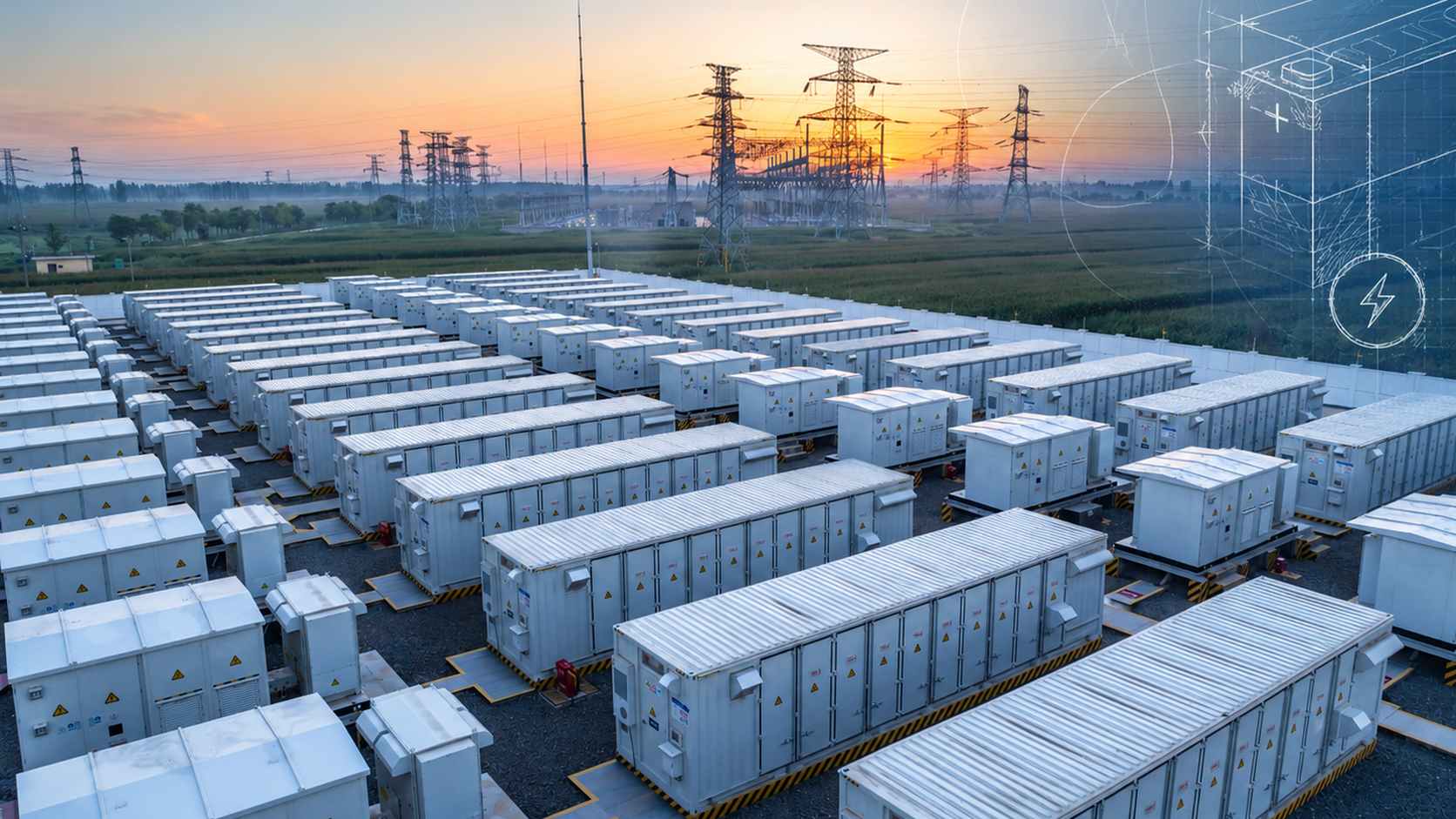

The energy transition has become one of the major drivers of technological innovation on a global scale. For decades, the debate centered on how to generate energy more cleanly. Today, the focus has shifted to an equally critical issue: how to store, manage, and transport that energy efficiently.
In this new landscape, batteries have taken center stage. Data from the latest State of Energy Innovation report by the International Energy Agency (IEA) clearly illustrates this trend: about 40% of energy-related patents are linked to storage technologies.
From the perspective of industrial property, this data reflects an increasingly evident reality: energy storage has become one of the most competitive fields in today's technology landscape.
Energy Storage as the Cornerstone of Innovation
The growth in demand in areas such as electricity generation, new materials, and power electronics—but especially in energy storage—is no coincidence. It is driven by the convergence of several structural factors that are transforming the global energy system:
- Progressive electrification of transportation.
- Expansion of renewable energy.
- The need for more flexible and resilient power grids.
As a result, in the field of storage, innovation is shifting toward solutions capable of:
- Improve energy density.
- Reduce loading times.
- Extend the service life of the batteries.
New Materials for More Efficient Batteries
Much of today's innovation in energy storage focuses on the development of advanced materials. The goal is to improve three key variables:
- energy density (greater storage capacity),
- the loading speed,
- and battery life.
Although lithium remains the predominant material in many current solutions, research is focused on new chemical compositions, alloys, and advanced materials capable of offering better performance without compromising the safety or stability of the system.
In this context, elements such as so-called rare earths and other critical materials are taking on increasing strategic importance. Their role is not limited to the electrical or magnetic properties they provide, but also extends to their impact on global supply chains and the geopolitics of technological resources.
The Rise in Patents for Storage Technologies
From the perspective of industrial property, advancements in battery technology are reflected in sustained growth in patent applications related to energy storage.
This increase is not limited to a single area of technology. On the contrary, innovation spans various complementary fields:
- conductive materials with lower electrical losses,
- more efficient generator designs based on permanent magnets,
- battery architectures that optimize energy transfer and storage.
This multidisciplinary nature explains why inventions in this sector combine chemistry, electronics, and software.
For patent professionals, this development poses new challenges, both in assessing the patentability of inventions and in the strategic management of increasingly complex portfolios of intellectual property rights.
Electric Vehicles and Batteries: An Inseparable Relationship
One of the sectors where advances in battery technology are most evident is the automotive industry.
The range of electric vehicles and charging times depend directly on technological advances in energy storage. Every improvement in energy density or charging efficiency has an immediate impact on the commercial viability of these technologies.
As a result, the automotive industry has become one of the most active players in the race to file patents related to batteries. Major manufacturers, technology companies, and research centers are competing to develop solutions that will increase the number of kilowatt-hours that can be stored and optimize energy efficiency.
In this context, patent protection becomes a key factor in securing competitive advantages in a highly innovative market.
Innovation in Electric Grids and Energy Transmission
The energy transition does not depend solely on the development of new batteries. It also requires significant advances in the transmission and distribution of electricity.
Reducing losses in power grids is a priority from both an economic and an environmental standpoint. For this reason, a significant portion of current research is focused on developing new conductive materials capable of minimizing energy loss in high-voltage cables.
Although these innovations receive less media attention than other emerging technologies, their impact on the overall efficiency of the energy system is crucial.
Industrial Property as an Indicator of Technological Competitiveness
Trends in patent applications offer a unique perspective for understanding the direction of innovation.
In the energy sector, the growing number of patents related to energy storage reflects intense technological competition among companies, research centers, and countries. Industrial property rights not only protect inventions but also serve as a strategic tool for consolidating positions in global markets.
In industries where innovation cycles are accelerating, an effective protection strategy is essential for transforming scientific advances into real competitive advantages.
Batteries as a Strategic Asset in the Energy Transition
Recent developments in the energy sector show that the transition to a more sustainable model is not limited to wind farms and solar power plants.
Much of this transformation is taking place in laboratories and research centers where new materials, storage architectures, and energy management technologies are being developed.
In this context, batteries have evolved from being just another technical component to becoming a strategic asset that will shape innovation, investment, and industrial policies in the coming years.
Understanding these dynamics is essential for technology companies, investors, government agencies, and intellectual property professionals involved in the development of these technologies.
Bosco de la Vega, European Patent Agent at Elzaburu.