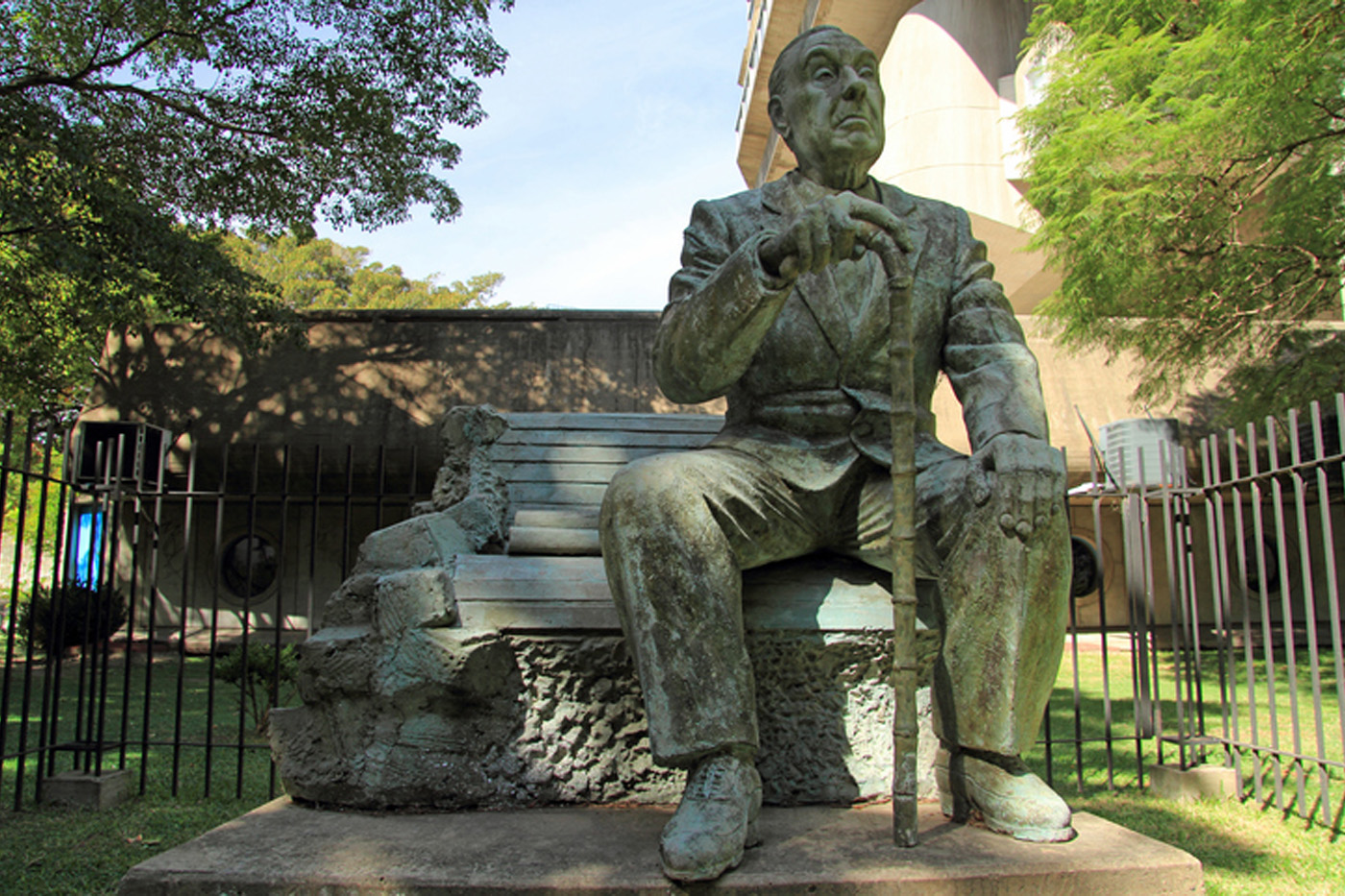

Around this time, about a hundred years ago, Jorge Luis Borges published his first book, *Fervor de Buenos Aires*. It is no ordinary work. Borges himself would say decades later that *Fervor de Buenos Aires*“foreshadows everything he would go on to do.” But almost all of his later books—without meaning to contradict the Argentine genius—surpass it. In fact, Borges would revise the work years later,“correcting its baroque excesses and smoothing out its rough edges.” After all, the right to the integrity of a work does not seem to apply against the author himself when he decides to correct his own work. At the end of the day, repentance is also one of the rights that make up moral rights.
In the Preface to the work, written years later, Borges emphasizes an idea that touches on thevery essence of copyright: the requirement of originality in a work. Among the goals he set for himself in that early collection of poems, he tells us, was“to discover the metaphors that Lugones had already discovered.” Since metaphor is an essential element of poetic creation, the Cervantes Prize winner acknowledges, with his proverbial humility, that his discoveries were nothing more than echoes of those made by one of his mentors, the Argentine poet Leopoldo Lugones.
In fact, in quite a few interviews throughout his life, whenever the interviewer quoted one of his poetic discoveries, Borges would often reply, “Yes, I must have plagiarized it.”
This display of self-criticism—and a sense of humor—does not detract from the originality of Borges’s work. Many years later, in that beautiful poem titled“Fame,”our author would authoritatively clarify the earlier idea about metaphors. The poet lists a series of things that, taken together, might have earned him a recognition“he does not quite understand.” Among them:“having organized, in the dialect of our time, the five or six metaphors.”
Of course, metaphors (just like themes, ideas, and plots) may all have already been invented, but each generation, each writer of genius, can express them in their own language, in their own way, and that is where originality emerges.
There is another aspect of *Fervor de Buenos Aires* that is undeniably relevant today. A posthumous lesson from Borges that is worth revisiting. In an interview summarized by Mario Vargas Llosa in his recent book *Half a Century with Borges*, the poet recounts an anecdote that serves as a life lesson for some writers of our time who seem to judge the measure of their talent by the number of followers they have on social media.
Borges said that only 37 copies of one of his first books had been sold in a year. Far from embarrassing him, this fact delighted him, since thirty-seven buyers“are imaginable—they are people with personal traits, a life story, an address, and a marital status”—and he could reach out to each one to personally thank them for their gesture “or offer my apologies.” And he added:“On the other hand, if one manages to sell a thousand or two thousand copies, that figure is so abstract that it’s as if one hadn’t sold any at all.”
In another of his delightful poems, “My Books,” Borges said that the essential words that expressed him were found on the pages of the books he had read,“not in those I have written.” On this centennial of Borges’s birth as an author, allow us this slight disagreement: the books written by Borges—without disregarding the validity of his copyright—are part of humanity’s shared heritage, and, to paraphrase the final line of that same poem, they contain voices“that will speak to him forever.”
Antonio Castán, Honorary Partner of ELZABURU.