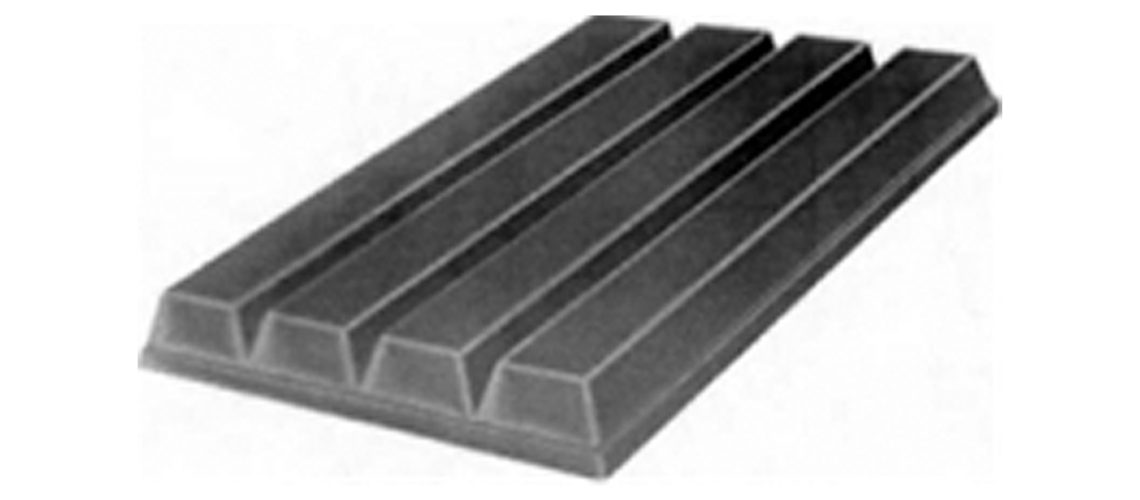

The long-running dispute between Nestlé and Cadbury (now Mondelez) over the trademark registration of the distinctive shape of Kit Kat chocolates continues to give rise to interesting court rulings regarding the acquisition of distinctiveness by a trademark through use.
As you may recall, it was first the refusal to register the trademark in the United Kingdom that led to a request for a preliminary ruling, which was resolved by the judgment of the Court of Justice of the European Union on September 16, 2015 (Case C-215/14). Contrary to what many expected, that decision did not lead the British High Court of Justice to rule in favor of registering Nestlé’s trademark. Instead, in his judgment of January 20, 2016, Judge Arnold interpreted that the CJEU had held that the association—by a large majority of respondents—between the bar’s shape and Kit Kat chocolate was not sufficient to conclude that that shape had acquired distinctiveness as a trademark.
In his opinion, it would have been necessary to demonstrate that consumers perceived the product as coming from a specific business as a result of the sign in question considered in isolation, without taking into account other trademarks that might also be present. Thus, the refusal of the British trademark was upheld.
However, Nestlé had succeeded in registering the shape of the Kit Kat chocolate bar as a European Union trademark (three-dimensional) in 2006. The following year, Cadbury filed an application with the EUIPO to invalidate the registration on the grounds that the sign lacked distinctiveness. The EUIPO Board of Appeal held that, although the mark originally lacked distinctiveness, Nestlé had proven that it had acquired distinctiveness through use. This decision was set aside by the General Court in a judgment dated December 15, 2016, due to the Board of Appeal’s failure to rule on the trademark’s acquisition of distinctiveness in part of the European Union (specifically, in Belgium, Ireland, Greece, and Portugal).
The disputed issue essentially concerned the geographic scope of the test for the acquisition of distinctiveness through use. While Nestlé and the EUIPO argued that it should be sufficient to prove that the trademark had acquired distinctiveness in a significant part of the Union, the General Court held that this must be proven throughout the entire territory of the European Union, and not merely in a substantial part or the majority of the territory.
Well, after the General Court’s judgment was appealed to the Court of Justice, the Court of Justice upheld the General Court’s decision in its judgment of July 25, 2018 (joined cases C-84/17 P, C-85/17 P, and C-95/17 P). Indeed, the Court of Justice holds that Article 7(3) of the European Union Trademark Regulation requires proof of the acquisition of distinctiveness in that part of the Union where the trademark did not enjoy distinctiveness ab initio. If this situation occurred throughout the European Union, the evidence must cover its entire territory; proof limited to a substantial part of it is not sufficient.
The judgment clarifies, however, that it is not necessary to submit separate evidence for each Member State; rather, evidence may be submitted that collectively covers several States. But such evidence—whether individual or collective—must cover the entire territory of the Union. Consequently, by failing to rule on whether Nestlé’s trademark had acquired distinctiveness in Belgium, Ireland, Greece, and Portugal, the Board of Appeal’s decision constituted an error of law.
The Court of Justice sets a high standard of proof. Note that in this case, both the EUIPO and the General Court had found that Nestlé had proven the acquisition of distinctiveness in 10 EU countries, including those with the largest populations (Germany, Spain, France, Italy, and the United Kingdom). It therefore appears that owners of European Union trademarks who seek to rely on distinctiveness acquired through use to defend the validity of their registrations must be prepared to face difficult and costly litigation in the event of a challenge.
Author: Carlos Morán