Mahou Beats Heineken in the Battle Over “Radler Cinco Estrellas”
The court dismissed Heineken's claim and found no evidence of misleading advertising or unfair competition in the advertising for the Spanish brand represented by ELZABURU.
Judgment No. 9/2021, dated January 18, issued by Section 28 of the Provincial Court of Madrid, has upheld the dismissal of the unfair competition lawsuit filed by Heineken against its competitor Mahou in connection with the advertising campaign for the launch of Mahou Cinco Estrellas Radler in the summer of 2018.
The advertisements released as part of that campaign to launch the new product included the slogans“The First Cinco Estrellas Radler”and“The First Cinco Estrellas Radler with Natural Lemon Juice,”along with an image of the bottle or can of the beer in question.

Heineken argued in its complaint that the words “the first” in that advertising slogan could only be interpreted in two ways: in a chronological sense, as the first Radler-style beer to appear on the market; or in a sense of preeminence in terms of quality, above all other Radler-style beers. Since, according to Heineken, neither of these two interpretations was true, the advertisement constituted misleading advertising with an exclusionary tone, prohibited by Articles 5 and 7 of the Unfair Competition Act.
The message conveyed by the controversial advertisement, however, differed from the only two interpretations put forward by the plaintiff. The prominent image of the Mahou beer bottle or can, with its famous “Mahou Cinco Estrellas” brand in the foreground, informed the viewer that this was the brand’s first “Radler”-style beer—or beer with lemon—to appear on the market. The advertisement therefore had a chronological significance, though not an absolute one, and specifically referred to Mahou’s well-known Cinco Estrellas beer.
This was the understanding of both the Madrid Commercial Court No. 12, at the first instance, and the Provincial Court of Appeal. Both courts applied the legal doctrine according to which advertisements must be considered as a whole to assess whether they are misleading.
The analysis proposed by Heineken, which excluded the advertisement’s main graphic element—the image of the beer being advertised—was flawed and led to a misinterpretation of the message conveyed.
The court’s ruling was further supported by a market study submitted by Mahou as part of the proceedings, in which only 3% of respondents spontaneously interpreted the advertisement in any of the ways argued by Heineken, compared to more than 20% who understood it as an advertisement for the first “Radler”-style beer from the Mahou brand.
Access to the article published in Expansión Jurídico.
Author: Carlos Morán
Spain has been removed from the U.S. government's "Notorious Markets List 2020" on counterfeiting
For the first time since 2017, Spain has been removed from the “Notorious Markets List 2020,” a blacklist compiled annually by the Office of the United States Trade Representative (USTR) that highlights online and physical markets that allegedly engage in or facilitate significant trademark counterfeiting and copyright piracy.
After three consecutive years of including the “La Jonquera” market in Girona on the blacklist for selling counterfeit goods, Spain is no longer on the counterfeit blacklist. However, U.S. authorities emphasize that such activities have declined in many physical markets due to the lack of tourism and other circumstances caused by the pandemic; therefore, they will continue to monitor these markets and may reassess them should such infringing activities resurface.
In the previous report from 2019, the U.S. government called on Spain to commit to adopting a comprehensive approach to addressing the situation in the Els Límits area, in the Girona municipality of La Jonquera, where foreign nationals were flocking in large numbers to buy counterfeit goods.
Thanks to the joint efforts of the various agencies involved in combating the sale and distribution of counterfeit goods in Spain (the Customs Surveillance Agency, the National Police, and, in particular, the Civil Guard), Spain has been removed from this shameful list. Congratulations to all of them for their ongoing efforts in the fight against counterfeiting!
Removing Spain from the counterfeit blacklist will prevent Spain's trade interests with the United States from being affected.
Access the 2020 Report on Markets Notorious for Counterfeiting and Piracy [in English]
Author: Juan José Caselles
New Fund for SMEs: Ideas Powered for Business
The European Union Intellectual Property Office (EUIPO) and the European Commission (EC), with the aim of boosting the competitiveness of SMEs in the current context of the COVID-19 pandemic, have created the Ideas Powered for Business Fund. This is a grant program with a budget of up to 20 million euros, created to help SMEs obtain and develop their intellectual property rights.
This program will provide coverage at the national level (national offices), the regional level (Benelux Office), and the EU level (EUIPO).

Purpose of the grants:
The SME fund will co-finance two types of services:
- Intellectual Property Pre-Assessment Service (known as “IP Scan”)
- Basic Application Fees for Trademarks and Designs.
Amount of the grants:
The maximum grant amount will be 1,500 euros per SME, and the co-financing percentages will be as follows:
| Type of action | Service Limits for SMEs | Co-financing Limit per Action | Maximum Grant Per SME |
| Service 1: Pre-diagnostic Service for IP | 1 pre-diagnostic service for IP | 75 % | 1.500 EUR |
| Service 2: DPI | 1 application for one or more trademarks and designs | 50 % |
Deadlines for submitting grant applications: The call for proposals will be open during different application periods, with the provisional schedule as follows:
| Deadline 1 | Deadline 2 | Deadline 3 | Round 4 | Deadline 5 | |
| Budget Available by Term | 4.000.000 | 4.000.000 | 4.000.000 | 4.000.000 | 4.000.000 |
| Start of the application period | January 11, 2021 | March 1, 2021 | May 1, 2021 | July 1, 2021 | September 1, 2021 |
| Deadline for submitting applications | January 31, 2021 | March 31, 2021 | May 31, 2021 | July 31, 2021 | September 30, 2021 |
| Applicants will receive written notification of the results and notification of grant decisions if awarded a grant | Feb. – Mar. 2021 | Apr. – May 2021 | June–July 2021 | Aug. – Sept. 2021 | Oct. – Nov. 2021 |
Applications received first will be given priority for the awarding of grants.
Eligible Recipients: To be eligible, applicants must be small and medium-sized enterprises (SMEs), as defined in EU Recommendation 2003/361, established in EU Member States.
Application Process: There are 3 steps to follow to complete the application:
- Submit the online application form along with the required documentation to verify your SME status and determine whether your application can proceed. You will receive an email acknowledging receipt of your application. If the application is approved, you will receive a favorable grant decision signed by the Office. Unsuccessful applicants will be informed of the reasons for the denial.
- Submit your application and pay for your IP pre-screening service (IP scan) or for the registration of a trademark, design, or model within 30 days of receiving the grant award decision. Trademarks, designs, and models may be applied for at one of the national offices, at the Benelux Office for Intellectual Property, or at the EUIPO.
- Finally, once the SME has paid for the services (IP Scan or trademark, design, or model application), it submits its reimbursement request using the link provided in the grant award decision.
Once submitted, you will receive an email confirming receipt of the payment request. The payment, subject to approval of the information and documentation submitted, will be made within one month, and beneficiaries will receive the corresponding notification by email.
This aid is incompatible with any other aid that may have been requested at the national or EU level for the same purpose.
Author: Manuel Mínguez
Find information about this and other grants on our website.
The Commission welcomes the political agreement on Horizon Europe
The Commission welcomes the political agreement reached between the European Parliament and the Council on Horizon Europe, the European Union's next research and innovation program.
Despite the uncertainty we have faced throughout the year that is about to end, it appears that the European Union’s commitment to promoting industrial leadership in Europe remains unchanged.
As we mentioned in the article we published on this topic, coinciding with the conclusion of the Horizon 2020 program, the European Commission is working on the launch of the Horizon Europe program with the same objective as its predecessor: to support innovation in Europe and strengthen scientific excellence. To this end, it has a budget of 95.5 billion euros for the 2021–2027 period, making it the largest transnational program ever undertaken to support research and innovation.
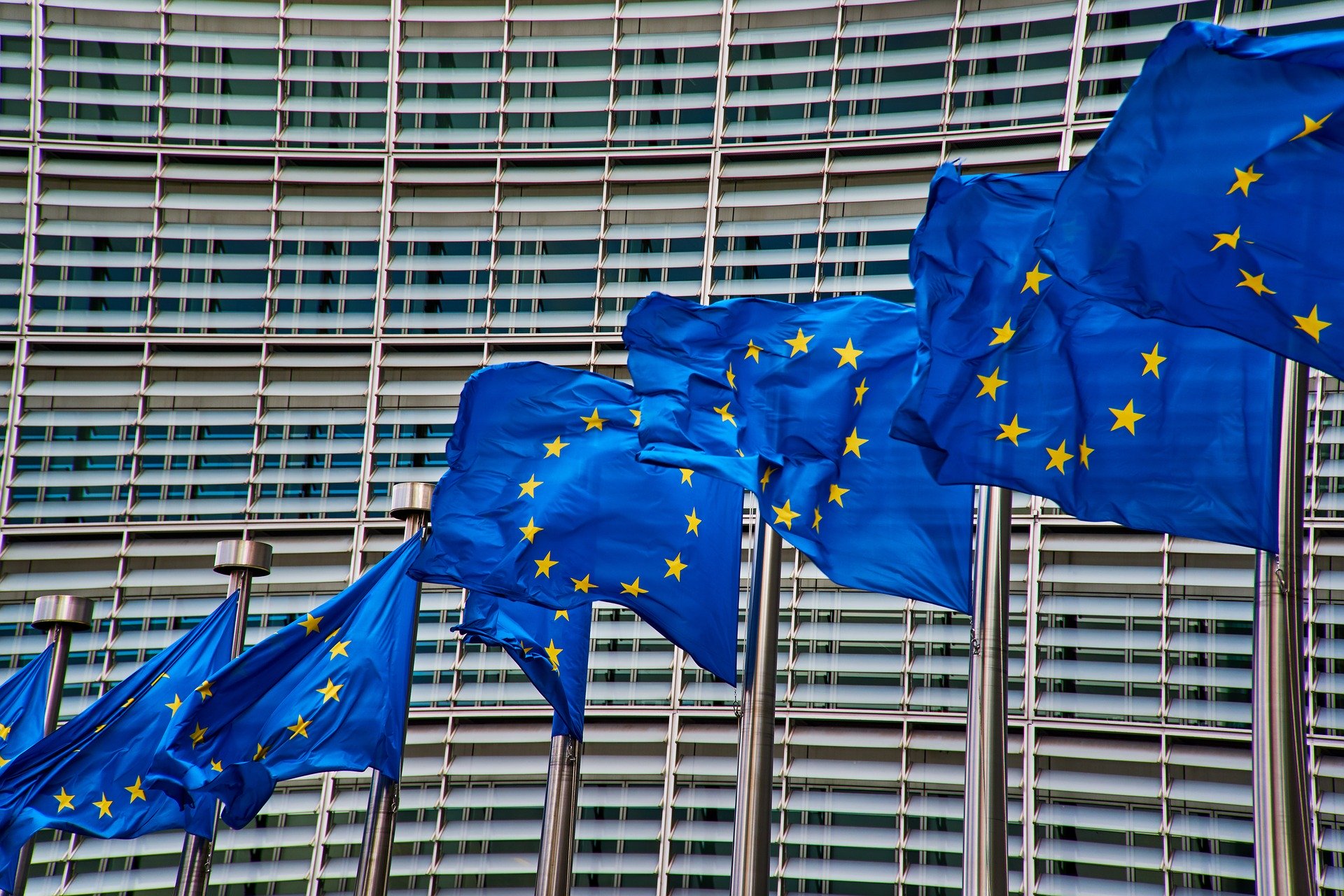
After several months of negotiations, on December 11, 2020, the European Union institutions reached a political agreement on the Horizon Europe program. Although the agreement is still pending formal approval by the European Parliament and the Council, the Commission has been preparing for its implementation so that the program can begin as soon as possible following the publication of the provisional agreement in March and April 2019.
According to the information included in the provisional agreement signed in March, Horizon Europe is based on three fundamental pillars: promoting scientific excellence, supporting projects aimed at developing technological solutions to challenges in critical areas such as health, climate change, and mobility, and fostering innovation activities across all European Union countries. With the agreement set to be formally approved, the measures established by Horizon Europe to drive progress have been finalized:
- The creation of the European Innovation Council (EIC), a one-stop shop for developing the most promising ideas and supporting the most innovative SMEs, which is currently in a pilot phase and will complement the European Institute of Innovation and Technology (EIT).
- The implementation of EU missions, aimed at addressing the issues that affect our daily lives—from the fight against cancer to adapting to climate change and protecting the environment.
- A more streamlined approach to European partnerships, while encouraging broad participation by partners from the public and private sectors.
- Strengthen international cooperation by enabling collaboration with non-EU countries (third countries) that have strong capabilities in science, technology, and innovation.
- Promote open science by making access to research publications and data mandatory.
- Promote participation and narrow the innovation gap in Europe by adopting a wide range of measures aimed at supporting countries with lower innovation performance, in order to build centers of excellence and facilitate collaborative partnerships.
- Increase the impact of R&D&I by creating synergies with other European Union programs and policies, such as InvestEU, Erasmus+, EU Cohesion Policy, Digital Europe, and the European Structural and Investment Funds, among others.
- To increase legal certainty and reduce the administrative burden on program beneficiaries and administrators.
According to the press kit published by the European Commission, the implementation of these measures is expected to create 300,000 jobs by 2040—40% of which will be highly skilled—and generate up to 11 euros of GDP for every euro invested in R&D over a 25-year period. In addition, it is estimated that more than 35% of Horizon Europe’s spending will be allocated to supporting climate goals.
Notwithstanding the measures that are ultimately adopted and the formalization of the agreement, there is no doubt that this new program—which is even more ambitious than its predecessor— will help consolidate an innovative ecosystem in Europe, one that Spanish companies investing in R&D&I should take advantage of.
In this regard, it is essential to approach the calls for proposals published under the Horizon Europe program with careful planning and expert assistance that ensures companies are eligible for these types of opportunities. As part of our mission to support Spanish companies and institutions in their innovation efforts, we will stay up to date on the latest developments regarding Horizon Europe, as well as the first calls for proposals launched under the program.
You can find additional information of interest below:
- Press release issued by the European Commission on December 10, 2020.
- Press release issued by the European Commission on March 20, 2019, regarding the provisional agreement on the Horizon Europe program.
Authors: Alba Mª López and Marina Martínez
The European Commission is preparing Horizon Europe: the EU's future framework program for research, development, and innovation
The Horizon 2020 (H2020) Program is the program that funds research and innovation projects in the European Union for the 2014–2020 period. As the H2020 program comes to a close—and with the same goal for which it was launched—to promote industrial leadership in Europe and strengthen scientific excellence—the European Commission is now working on its successor, Horizon Europe. This new program will cover the period 2021–2027 and promises to be the largest research, development, and innovation funding program to date.
What is Horizon Europe?
Horizon Europe is a funding program designed to support research, development, and innovation projects that advance a set of objectives common to the entire European Union. These objectives are based on the three pillars of the Horizon Europe program, which are as follows:
-
- Scientific Excellence: On the one hand, the program seeks to promote “open science” by offering support to researchers through grants and by funding projects defined and led by the researchers themselves through the European Research Council and the Marie Skłodowska-Curie Actions (MSCA).
-
- Global Challenges and European Industrial Competitiveness: Furthermore, the program aims to promote, through the Joint Research Center (JRC), projects that develop technological solutions to challenges in critical areas such as health, climate change, mobility, food and natural resources, energy, civil security, the digital world, industry, and space, among others. This means that not only will the excellence of the projects be evaluated, but the development projects submitted in response to the calls for proposals must also have a clear social impact.
-
- Innovative Europe: Finally, the goal is to promote and support innovation activities involving businesses, research, and higher education through the European Innovation Council (EIC) and the European Institute of Innovation and Technology (EIT). These innovation activities will be implemented through so-called “missions,” which are broad global challenges (for example: cancer; soil health and food; smart and climate-neutral cities; the health of oceans, seas, and coastal and inland waters; and adaptation to climate change). In this way, funding will be provided for projects that have a broad impact on any of these areas.
Clickheretoaccess the full document on the Horizon Europe Program 2021–2027.
Authors: Alba Mª López and Marina Martínez
EU Proposal for the Digital Services Act Published
Finally, yesterday, December 15, the European Commission published the previously announced proposal for the Digital Services Act, as well as the proposal on digital markets (link to related article).
These new regulations:
- better protect consumers and their fundamental rights online;
- establish a strong framework for transparency and accountability for online platforms; and
- They promote innovation, growth, and competitiveness within the single market.

According to the published press release, the Digital Services Act will introduce a series of new, EU-wide harmonized obligations applicable to digital services, carefully scaled according to the size and impact of those services, such as:
- rules regarding the removal of illegal goods, services, or content online;
- safeguards for users whose content has been mistakenly removed by the platforms;
- new requirements for platforms to adopt risk-based measures to prevent abuse of their systems;
- far-reaching transparency measures, including those related to online advertising and the algorithms used to recommend content to users;
- new powers to oversee the operation of platforms, for example, by facilitating researchers' access to key data from those platforms;
- new rules on the traceability of businesses in online markets, to help identify sellers of illegal goods or services;
- an innovative cooperation process among public authorities to ensure effective enforcement throughout the single market.
Platforms that reach more than 10% of the EU population (45 million users) will be considered systemic and will be subject not only to specific obligations to manage their own risks but also to a new supervisory framework. This new accountability framework will consist of a council of national digital services coordinators, with special powers granted by the Commission regarding the supervision of very large platforms, including the power to impose sanctions directly on them.
The European Parliament and the member states will now discuss these Commission proposals under the ordinary legislative procedure. Once these rules are adopted, they will be binding throughout the EU. We will need to keep an eye on any changes that may be made during the legislative process. In any case, the effort to bring some order to the digital world could not be more appropriate.
Author: Juan José Caselles
Upcoming Publication of the EU's “Digital Services Act”
Online platforms (such as search engines, social media, and e-commerce platforms) are playing an increasingly important role in our daily lives. However, current EU rules for digital services have remained largely unchanged since the adoption of the E-Commerce Directive in 2000, and there are significant discrepancies in how that Directive has been implemented across the EU.

The Commission announced a review of the internal market rules for digital services in its 2019 communication ,“Shaping Europe’s Digital Future.” Two public consultations were conducted, both of which concluded on September 8, 2020, with the following structure:
- Evaluation of the E-Commerce Directive and clarification of liability rules for digital services, and
- Possible introduction of an ex-ante regulatory instrument to monitor the practices of dominant platforms that have significant network effects and act as“gatekeepers.”
In October 2020, the study assessing the added value of the Digital Services Act for the EU was presented, and the European Parliament adopted a resolution on October 20, 2020, regarding the Digital Services Act and the issues raised concerning fundamental rights.
The next step will be the publication of the Digital Services Act, scheduled for December 9, 2020. We will need to pay close attention to its final text, particularly regarding the possible creation of national authorities empowered to take action against illegal content. What does seem clear is that freedom of expression cannot be used to sell counterfeit-branded products online.
Author: Juan José Caselles
European Union Public License: A Great Option for Open-Source Projects Developed in the EU
The European Union Public License (hereinafter “EUPL”) is an open-source license approved by the European Commission in 2007, which was specifically designed to be adapted to the European Union’s regulatory framework.
Why was it necessary?
Free software/open-source licenses originated in the United States; therefore, common law has influenced the drafting of the earliest open-source licenses and those that were subsequently developed. As a result, the interpretation and application of the provisions of these licenses under continental European copyright law can be problematic in some cases.
For example, one of the most significant differences between these two systems is that U.S. copyright law provides for the transfer of all rights held by the owner of a work to a third party, whereas continental copyright law does not allow for the transfer of moral rights in the work, which are inherent to the author and inalienable.
In late 2004, the European Commission issued a study on open-source licenses for software developed by the Commission itself, in which it noted that the licenses in place at that time did not meet certain requirements mandated for European institutions. Specifically, the contentious issues related to: a lack of specification regarding applicable law and jurisdiction; warranties and limitations of liability; terminology regarding copyright that was not adapted to European practice; and legal validity in different languages.
That is why, despite the large number of open-source licenses available (more than 300), the European Commission could not find a license that perfectly suited the projects it wanted to carry out and decided to draft the EUPL. The first version was published in 2007, and in 2009 the Open Source Initiative (OSI) certified it as an “open source” license for complying with its principles.
The latest version of the EUPL, version 1.2, was updated by Commission Implementing Decision (EU) 2017/863 of May 18, 2017, which is available via this link.
Clickheretoview the full document on the open-source license.
Author: Agustín Alguacil
According to the CJEU, Amazon does not infringe third-party trademarks by storing products offered and sold by third parties
In December 2017, the Court of Justice of the European Union ruled that, from the perspective of competition law, the ban imposed by Coty Germany on members of its selective distribution network from offering its luxury perfumes through Amazon’s e-commerce platform was lawful.

Well, on April 2, the CJEU ruled on a new preliminary ruling (Case C-567/18) concerning the sale of Coty perfumes through that platform. On this occasion, however, Coty had directed its claim directly against Amazon, and the decision went against its interests.
In fact, Coty Germany had sued Amazon in German courts, alleging that Amazon was infringing its trademark rights by storing Davidoff-branded perfumes for which its trademark rights had not been exhausted. The storage in question was part of the service provided by Amazon to third-party sellers offering products for sale in the “Amazon Marketplace” section of Amazon’s website in Germany.
The claim was dismissed, and when Coty filed an appeal against the decision, the German Supreme Court (Bundesgerichtshof) referred a question to the CJEU for a preliminary ruling to clarify whether such storage constituted use of the trademark within the meaning of Article 9 of the European Union Trademark Regulation. Specifically, the question was whether this fell under the type of use mentioned in Article 9(3)(b) of Regulation 2017/1001, which allows third parties to be prohibited from “offering the goods for sale, putting them on the market, or stocking them for those purposes.”
To resolve the issue, the Court of Justice first recalls its previous case law, according to which, on e-commerce platforms, it is the sellers of the products who use third-party trademarks, not the operators of those platforms (judgment of July 12, 2011, L’Oreal, C-324/09).
With regard to the warehousing service provided by Amazon to third parties that sell products through its platform, the Court notes that, according to the information provided by the referring court, Amazon did not itself offer or market those products; rather, they were offered and marketed by third-party sellers. From this fact, the Court concludes that Amazon does not use the trademarks in the context of its own commercial communications. Therefore, Article 9 of the Regulation does not apply to it.
Finally, the CJEU clarifies that the foregoing does not preclude the platform operator’s conduct with respect to third-party trademarks from being examined under other provisions, specifically Article 14(1) of Directive 2000/31 on information society services or Article 11 of Directive 2004/48 on enforcement. However, since this issue had not been raised by the referring court in this case, the Court of Justice refrains from conducting such an examination, despite Coty’s request to that effect.
In short, the Court of Justice rejects the notion that Amazon can be held directly liable for trademark infringements committed by sellers using its online sales platform, even when it is responsible for storing the infringing goods. However, it does not rule out the possibility that owners of infringed trademarks may seek remedies against Amazon through the application of the provisions of the aforementioned directives. In this regard, reference should be made to the precedent set by the aforementioned judgment of July 12, 2011, which did examine this issue in relation to the eBay platform.
Author: Carlos Morán
Counterfeit Medicines: A Serious Threat Amid the COVID-19 Crisis
The European Union Intellectual Property Office (EUIPO) and the Organization for Economic Cooperation and Development (OECD) have published a report on counterfeit pharmaceuticals worldwide.
This report is based on an analysis conducted in 2019—which found that imports of counterfeit and pirated goods totaled $509 billion in 2016, or about 3.3% of global trade—but focuses on the pharmaceutical sector.

In 2016, international trade in counterfeit pharmaceutical products totaled $4.4 billion, representing 0.84% of global trade in pharmaceutical products.
Counterfeit medicines pose not only potential economic harm to this sector but also significant health risks, as counterfeit medicines are often not properly formulated and may contain dangerous ingredients.
This report, which covers the period from 2014 to 2016, shows that the counterfeit drugs seized included medications for serious illnesses, including malaria, HIV/AIDS, and cancer. They also included antibiotics, lifestyle-related treatments, pain relievers, diabetes medications, and central nervous system drugs.
India remains the leading source of counterfeit pharmaceutical products, accounting for 53% of the total value of counterfeit pharmaceuticals and medicines seized worldwide in 2016. Following India are China (30%) and the United Arab Emirates (4%).
Among the countries most affected by the trade in counterfeit pharmaceutical products are the United States, the United Kingdom, France, Austria, Germany, and Switzerland. Specifically, with regard to counterfeit pharmaceutical products shipped to the European Union, India remains the primary source economy, accounting for 47% of the total value of counterfeit pharmaceutical products and medicines seized by EU customs authorities, followed by China, with 37%.
With regard to modes of transport, between 2014 and 2016, courier, postal, and express services were the primary modes of transport for counterfeit pharmaceuticals and medicines exported to EU economies, both in terms of value and volume.
Among the factors driving the trade in counterfeit medicines and pharmaceutical products are profitability—in some cases, the profit margin reaches 7,900%—; the low risk of detection, due to the difficulty customs officials face in accessing simple field tests to help them classify suspicious products; low risk of prosecution, since most counterfeits are only detected once they reach retailers or patients, and it is often difficult to trace them through complex supply chains or to prove where the criminal activity took place; and lenient penalties—the global average prison sentence for trademark counterfeiting is 6 years.
Regarding the impact of counterfeit medicines, the report reveals the serious consequences that can result from the use of counterfeit medicines.
One of the sources consulted, the World Health Organization, indicated that counterfeit and substandard antimalarial drugs may be responsible for the deaths of 116,000 people in sub-Saharan Africa.
Counterfeit medicines not only affect individuals on a personal level, but also directly impact legitimate drug manufacturers, who suffer consequences such as loss of revenue, damage to their brand, and increased costs for security measures.
In an effort to combat counterfeit drugs, governments and the industry have worked hand in hand to combat substandard and counterfeit pharmaceutical products. It is worth noting, for example, that in 2016 the MEDICRIME Convention—drafted by the Council of Europe—was launched, providing countries with a model legal framework to address counterfeit medicines and other types of pharmaceutical crimes that threaten public health.
This treaty calls for multilateral collaboration among nations, disciplines, and sectors, and lays the groundwork for cooperation with and among international organizations such as INTERPOL, Europol, UNODC, the World Customs Organization, and the WHO, in order to put an end to this international threat to public health.
In short, the fight against counterfeit medicines is always an urgent, ongoing, and unavoidable necessity for society as a whole. The current global COVID-19 crisis will serve as a tragic reminder of the serious harm caused by the sale of counterfeit pharmaceutical products and of the urgency of putting an end to such practices worldwide.
Author: Alberto Gallo