The Origins of Patents in Spain: 500 Years of Protecting Inventions
From the Privileges and the Royal Conservatory of Arts and Crafts to the OEPM
The history of invention registration in Spain is a fascinating account of our country’s development, dating back more than 500 years: as early as 1478, so-called“invention privileges”were granted—titles bestowed by the King, who was advised in this matter by the Royal Council, a body composed of prominent members of the Court who possessed scientific or technical knowledge.
However, it was not until the 19th century that the two pillars underpinning our current protection system were established: a body that grants titles and a set of protection regulations.
The first foundations of our current Patent and Trademark Office were laid with the creation, in 1810, of the Royal Conservatory of Arts and Crafts, which, among other functions, was responsible for granting privileges and patents, just as was the case in revolutionary France. That Conservatory would undergo many changes and name changes until, in 1902, the Industrial Property Registry was established, followed in 1992 by the Spanish Patent and Trademark Office (OEPM).

First preserved privilege of invention, granted by Isabella the Catholic
The First Patent Protection Law: Royal Decree of 1826
On the other hand, with regard to legislation, although there are precedents in a Royal Decree from 1811, and even though the Constitution of 1812, “la Pepa,” recognized the protection of inventors in one of its articles, it was not until 1826 that the Royal Decree on Exclusive Privileges for Invention and Introduction was enacted, which is considered the first effective law in the field of patents in Spain.
In fact, the numbering of the patents currently held in the SPTO’s archives begins on that date, with the patent granted to the Frenchman Jean-Marie La Perriere on March 27, 1826, for a hand-powered mill.

First applicant at the OEPM: Jean-Marie La Perriere with a hand-powered mill (1826)
ELZABURU, Spain's oldest industrial property firm, is founded
In 1865, Julio Vizcarrondo opened an industrial property office in Madrid—one of the first of its kind in the country and, if we are not mistaken, the only one still in operation today. Years later, he would partner with his nephew, Francisco de Elzaburu Vizcarrondo, to lay the foundation for what is now ELZABURU.
With the new Patent Act, enacted on July 30, 1878, “invention privileges” were renamed “patents,” a term we still use today.
The Industrial Property Registry Is Here: A New Era in the Protection of Inventions
With the creation of the Industrial Property Registry in 1902 and the implementation of new regulations allowing for the registration of industrial designs, a new era in the protection of intellectual property began in Spain.
ELZABURU has continued to evolve and play a leading role in this field, consolidating its position as the country's leading firm in the protection of inventions.
All images were taken from the OEPM Historical Archive: http://historico.oepm.es/buscador.php
Elisa Prieto, Head of Knowledge Management at ELZABURU
The New Conditions for De Minimis Aid
State funding that meets the criteria specified in Article 107(1) of the Treaty on the Functioning of the European Union constitutes state aid and must be notified to the European Commission in accordance with Article 108(3) of the Treaty. However, pursuant to Article 109 of the Treaty, the Council may determine the categories of aid that are exempt from this notification requirement. Pursuant to Article 108(4) of the Treaty, the Commission may adopt regulations concerning such categories of state aid. In Regulation (EU) 2015/1588, the Council decided, in accordance with Article 109 of the Treaty, that de minimis aid (i.e., aid granted to the same undertaking over a given period that does not exceed a certain fixed amount) could constitute one of these categories. On this basis, de minimis aid is considered not to meet all the criteria set out in Article 107(1) of the Treaty and is therefore not subject to the notification procedure.
On December 13, 2023, Commission Regulation (EU) 2023/2831 of December 13, 2023, was published, concerning the application of Articles 107 and 108 of the Treaty on the Functioning of the European Union to de minimis aid (“Regulation (EU) 2023/2831”), which entered into force on January 1, 2024.
This Regulation (EU) 2023/2831 shall apply to aid granted prior to its entry into force if such aid meets all the conditions set forth therein. Any individual de minimis aid granted between January 1, 2014, and December 31, 2023, that meets the conditions set forth in the Regulation (EU) No. 1407/2013 does not meet all the criteria of Article 107(1) of the Treaty and, therefore, shall be exempt from the notification requirement under Article 108(3) of the Treaty.
The entry into force of Regulation (EU) 2023/2831 introduces the following changes:
- It raises the maximum limit on the amount of de minimis aid that a single company may receive per Member State over any three-year period from 200,000 to 300,000 euros.
- Effective January 1, 2026, Member States shall enter information on de minimis aid granted into a central register at the national or European Union level within 20 business days of the aid being granted. The information entered in the central register shall include the beneficiary’s identification details, the amount of the aid, the date of granting, the granting authority, the aid instrument, and the sector to which it relates, based on the European Union’s statistical classification of economic activities (“NACE classification”). The central register shall be established in a manner that facilitates public access to the information, while ensuring compliance with Union data protection rules, including through the pseudonymization of specific entries where necessary.
- In order for the State to ensure that information on de minimis aid is recorded in a register, financial intermediaries that administer de minimis aid schemes must report the total amount of de minimis aid received to the Member State on a quarterly basis, within ten days of the end of the relevant quarter. The date of granting shall be deemed to be the last day of the quarter.
Regulation (EU) 2023/2831 will initially remain in effect until December 31, 2030.
Claudia Fernández, Attorney at ELZABURU
World Anti-Counterfeiting Day.
Today, as on every June 8, we celebrate World Anti-Counterfeiting Day—the perfect occasion to discuss the harm caused by this scourge.
In Spain, there is a tendency to think that counterfeits are always associated with luxury products from large global companies, but the reality is quite different. The sale of counterfeit goods poses a serious socioeconomic risk worldwide. As shown in the latest report published by the EUIPO and the OECD in January of this year, titled“Risks of Illicit Trade in Counterfeit Goods for Small and Medium-Sized Enterprises,” SMEs whose intellectual property is infringed are 34% less likely to survive after five years.
Product counterfeiting threatens a large number of industries. Counterfeit goods can be found in everyday consumer products, such as clothing, as well as in luxury items. In addition to economic damage, counterfeit goods often pose a serious risk to consumer health—as is the case with counterfeit medicines, food, cosmetics, etc.—because while legitimate suppliers are subject to strict regulations that ensure their products do not harm consumers, counterfeiters do not comply with these standards.
According to the Spanish Food Code, any food product shall be considered counterfeit if any of the following circumstances apply: a) it has been prepared or labeled to imitate a well-known product; b) its actual composition does not match the composition declared and advertised; and c) any other circumstance capable of misleading the consumer.
Among the most commonly seized counterfeit food products in recent years are olive oil—more than 60,000 liters of which have been seized—and wine. In 2021, the Mossos d’Esquadra seized 750,000 bottles of wine and 3.2 million counterfeit quality seals.
Other counterfeit products that pose a serious threat to people’s health and safety include vehicle parts and accessories, tobacco—11 illegal factories were shut down last year—and face masks; between 2020 and 2021, at the height of the pandemic, 60% of the face masks purchased were counterfeit.
A RECENT CASE
A few days ago, details emerged of a large-scale operation led by the National Police in various European countries, in collaboration with agencies such as the EUIPO and EUROPOL, in which approximately 2 million counterfeit products were seized and more than 370 people were arrested.
More than 3,900 seizures were carried out in 17 countries, resulting in the removal from the market of products affecting 258 brands and valued at 85.8 million euros. During the operations, it was determined that most of the seized products originated in China, Hong Kong, Turkey, and Vietnam.
Alberto Gallo, junior associate at ELZABURU
Grant Program to Promote Patent Applications.
In the development of any business today, it is essential to incorporate an appropriate strategy for protecting a company’s intangible assets into its strategic plan. This not only provides protection in the marketplace against potential attempts by third parties to copy the company’s assets but also facilitates access to financing from investment funds that may be interested in investing in a particular project.
Intangible assets are protected through the various existing forms of industrial property protection, depending on the nature of the intangible asset to be protected.
In the case of technology, these intangible assets are often protected through the legal mechanisms of patents and utility models (in jurisdictions where the latter exists).
For any company considering a growth strategy and potential international expansion, protecting its technology through patents or utility models is crucial, and obtaining this protection in different jurisdictions requires a significant outlay on official fees payable to the various agencies responsible for processing and granting the corresponding titles.
To facilitate companies’ access to patent and utility model protection and to promote the positioning of Spanish industry in various markets, the Spanish Patent and Trademark Office (OEPM) has once again launched its grant program to facilitate access to protection for technological developments, both in Spain and in other countries.
In Spain, a subsidy program is available for small and medium-sized enterprises (SMEs) and individuals, covering up to 90% of the official fees paid to the Spanish Patent and Trademark Office (OEPM) for patent or utility model applications published in the Official Industrial Property Bulletin (BOPI) in any of the years 2020, 2021, or 2022.
For protection outside of Spain, subsidies of up to 80% (up to 90% for small and medium-sized enterprises and individuals) are available for fees paid in 2022 for European patent applications, international patent applications (PCT applications), or direct patent (or utility model) applications filed in other countries with the respective national patent offices.
The deadline for applying for these grants is May 25, 2023.
Applications can be submitted through the OEPM's online portal (https://sede.oepm.gob.es/).
We thank the OEPM for announcing its grant program once again this year, and we wish every success to all patent and utility model holders who wish to participate.
Bosco de la Vega, Patent Practice Associate
Jorge Luis Borges: A Fervent Centennial
Around this time, about a hundred years ago, Jorge Luis Borges published his first book, *Fervor de Buenos Aires*. It is no ordinary work. Borges himself would say decades later that *Fervor de Buenos Aires*“foreshadows everything he would go on to do.” But almost all of his later books—without meaning to contradict the Argentine genius—surpass it. In fact, Borges would revise the work years later,“correcting its baroque excesses and smoothing out its rough edges.” After all, the right to the integrity of a work does not seem to apply against the author himself when he decides to correct his own work. At the end of the day, repentance is also one of the rights that make up moral rights.
In the Preface to the work, written years later, Borges emphasizes an idea that touches on thevery essence of copyright: the requirement of originality in a work. Among the goals he set for himself in that early collection of poems, he tells us, was“to discover the metaphors that Lugones had already discovered.” Since metaphor is an essential element of poetic creation, the Cervantes Prize winner acknowledges, with his proverbial humility, that his discoveries were nothing more than echoes of those made by one of his mentors, the Argentine poet Leopoldo Lugones.
In fact, in quite a few interviews throughout his life, whenever the interviewer quoted one of his poetic discoveries, Borges would often reply, “Yes, I must have plagiarized it.”
This display of self-criticism—and a sense of humor—does not detract from the originality of Borges’s work. Many years later, in that beautiful poem titled“Fame,”our author would authoritatively clarify the earlier idea about metaphors. The poet lists a series of things that, taken together, might have earned him a recognition“he does not quite understand.” Among them:“having organized, in the dialect of our time, the five or six metaphors.”
Of course, metaphors (just like themes, ideas, and plots) may all have already been invented, but each generation, each writer of genius, can express them in their own language, in their own way, and that is where originality emerges.
There is another aspect of *Fervor de Buenos Aires* that is undeniably relevant today. A posthumous lesson from Borges that is worth revisiting. In an interview summarized by Mario Vargas Llosa in his recent book *Half a Century with Borges*, the poet recounts an anecdote that serves as a life lesson for some writers of our time who seem to judge the measure of their talent by the number of followers they have on social media.
Borges said that only 37 copies of one of his first books had been sold in a year. Far from embarrassing him, this fact delighted him, since thirty-seven buyers“are imaginable—they are people with personal traits, a life story, an address, and a marital status”—and he could reach out to each one to personally thank them for their gesture “or offer my apologies.” And he added:“On the other hand, if one manages to sell a thousand or two thousand copies, that figure is so abstract that it’s as if one hadn’t sold any at all.”
In another of his delightful poems, “My Books,” Borges said that the essential words that expressed him were found on the pages of the books he had read,“not in those I have written.” On this centennial of Borges’s birth as an author, allow us this slight disagreement: the books written by Borges—without disregarding the validity of his copyright—are part of humanity’s shared heritage, and, to paraphrase the final line of that same poem, they contain voices“that will speak to him forever.”
Antonio Castán, Honorary Partner of ELZABURU.
MARY’S MEALS, a simple and effective solution to hunger
Mary’s Meals is a charitable foundation founded by Magnus MacFarlane-Barrow that provides meals to more than 2 million children while they are at school in the world’s poorest regions.
That changes the lives of these children. Not only because it combats hunger in a simple and effective way, but also because it motivates them to attend school regularly, which opens up new opportunities for them in life.
Magnus traveled to Bosnia with his brother in 1983, and the experience left an indelible impression on him. Years later, in 1992, after watching a television report on the atrocities of the war in that country, he decided to get off the couch, roll up his sleeves, and go help. He traveled to Bosnia in the midst of the war with the goal of providing food to children who were going days without eating.
The spark that ignited a great cause
Great achievements sometimes stem from a personal need to do something small that later—as in the case of Mary’s Meals—grows into a major global project: Magnus quit his job, sold his house, and took a sabbatical so he could deliver humanitarian aid.
Over the next ten years, his organization expanded: he began establishing homes for abandoned children in Romania and Liberia, and funded projects in Croatia and other countries.
One day, while in Malawi, Magnus met Emma, a girl who was dying of AIDS. At her bedside was her brother Edward, a 14-year-old boy who, when asked about his dream in life, replied,“I’d like to have enough food and someday be able to go to school.”
This inspired Magnus to found Mary's Meals. Today, this organization operates in 20 countries around the world and provides a nutritious meal at its educational centers to more than 2 million children across several continents.
For the price of a daily set meal in Spain, a child can eat for an entire year
In Liberia, as in Malawi and many other countries, the cost of feeding a child for an entire school year is just €18.30— roughly the price of a single meal per person per day in the developed world.
Eating is undoubtedly a basic need for these children, but this great initiative sets in motion other important actions as a result of them receiving their daily meals.
Magnus's NGO has managed to significantly increase these children's school attendance rate, since they receive a meal and go to school happily.
There is a beautiful and insightful documentary in which actor Gerard Butler vividly describes what this organization does on the ground, and in which we see the children’s grateful smiles—smiles that reach right through the screen.
By providing them with daily meals and a reason to live, the children want to give back all the good they have received to their community, which will then prosper and pass on the help it has received within the community. This creates a productive chain that, in the short and medium term, revives the economies of depressed countries.
At ELZABURU, we wanted to get involved in this project: we have joined the effort in Malawi by sponsoring daily meals for more than 733 children at Kapotera Primary School. The meals, prepared by mothers on a volunteer basis using local food and resources, are guaranteed for every child on every school day throughout the upcoming school year.
ELZABURU has completed the first year of the project for the 2022-2023 school year, and we have now launched the second year, which is open to participation: for just over 18 euros, a child can eat for an entire year.
Helping others is helping ourselves—it’s a true privilege, and there are a thousand ways to do it.
Mary’s Meals is a project that will endure and outlive its founders, improving the lives of people in many countries. Would you like to help? You can make a donation here.
ELZABURU opens its new headquarters in Torre Juana Ost (Alicante) and joins the 1,070 Km Hub
At ELZABURU, we have opened an office in Torre Juana OST (Alicante) and joined 1070 Km Hub, the platform dedicated to connecting the innovative Southern Mediterranean.
1,070 Km. Hub is an initiative designed to promote the competitive advantages of major digital players in the Mediterranean region by creating synergies and internationalizing the participants’ activities. The platform has nodes specializing in digitalization in seven Mediterranean provinces: Mallorca, Castellón, Valencia, Málaga, Murcia, Ceuta, and Alicante—a node that ELZABURU has joined with the aim of participating in relevant projects related to intellectual property and legislation on data management and protection, among other topics.
In fact, coinciding with its launch on this platform, ELZABURU has opened its new office in Torre Juana Ost, a collaborative space open to talent that also serves as the headquarters for 1,070 Km Hub and 1 Million Bot, a company specializing in Artificial Intelligence (AI) that operates in the field of chatbots and related data.

Representing the firm at the opening ceremony were Mabel Klimt, Managing Partner of ELZABURU and head of the Media & Entertainment Practice; Javier Fernández-Lasquetty, partner in the Legal, Business, and Contracts Practice; Manuel Mínguez, head of the Valencia office; and Manuel Desantes, Of Counsel to the firm. Representing Torre Juana and 1 Million Bot were their founder and president, Andrés Pedreño, as well as other executives from the group.
1 Million Bot and ELZABURU have previously collaborated on the development of ElzaBot, one of the first legal chatbots created in Spain, which is considered a benchmark in artificial intelligence applications for the legal sector.
Mabel Klimt, Managing Partner at ELZABURU, commented on this alliance:“With the opening of this office and the support of these prestigious partners, we intend to continue collaborating on joint DATA projects and exploring the possibilities offered by AI and process automation in the legal sector, as well as protecting the results of our research and new business developments in these areas.”
Antonio Tavira, the new President of ELZABURU
ELZABURU is entering a new phase in which it has the resources to maintain its leadership in IP
Antonio Tavira has been appointed Chairman of ELZABURU, a position he will hold in addition to his role as CEO, a position he has held since 2009. The position became vacant following the death of Alberto Elzaburu last April.
A lawyer with a diploma in business administration from ICADE, he holds an EMBA from IESE and I, among other positions in organizations and associations in the legal and intellectual property fields, such as the EUIPO, ASIPI, ECTA, AIPPI, etc.

Tavira knows ELZABURU well—the firm where he began working in 1998 and where he has built a brilliant professional career and led the transformation of a family-owned business with more than 155 years of history into a modern firm specializing in intellectual and industrial property and information technology law. “ELZABURU is evolving from a family-owned firm structure toward a ‘partnership’ model, and this evolution has been driven at every step by the support and guidance of a truly legendary figure—our late Alberto de Elzaburu—who played a pivotal role in the history of industrial property in Spain and around the world.”
The firm, founded in 1865, has revamped its corporate image this year and adopted a new identity that symbolizes the company’s commitment to adapting to the new demands of a market undergoing constant technological and social change. “We have moved beyond our image as a trademark and patent agency to expand our services into a wide range of fields—including artificial intelligence, data protection and trade secret protection, the fight against piracy, the valuation of intangible assets, and audiovisual project management—and we have introduced new technological tools.”
And thanks to this technological upgrade, the company has been able to respond very effectively to the turbulent situation caused by the pandemic: “Technologically, we are at the forefront of legaltech with tools such as ‘Elzacloud,’ a platform that allows our clients to manage their portfolios online and that has played a very important role during these months of lockdown and ‘remote work’; we also have our own ‘chatbot,’ which answers many questions and helps filter initial inquiries from visitors to our website.”
How has this situation caused by the coronavirus affected the firm, and what will this fiscal year look like in terms of results?
Fortunately, our firm was very well prepared, and thanks to Elzacloud and other technological tools, our more than 160 professionals have been able to continue working at full capacity from the very first day of the state of emergency without any impact on our service. However, we have been following with understandable concern the difficult situation many of our clients are facing across a wide range of sectors: tourism, restaurants, retail, audiovisual production, manufacturing, and more. It is inevitable that this economic crisis will also affect law firms; although we have continued to maintain a high level of business activity, we will naturally see the impact on our revenue at the end of the fiscal year.
It’s too early to know how this year will turn out in terms of results, but there’s no doubt that we’ll all have to tighten our belts. However, our business is highly diversified in terms of clients: in fact, we work for one out of every three companies on the IBEX, and a significant portion of our revenue comes from international operations, so we hope to close out a difficult but respectable fiscal year.
What are Elzaburu's clients currently seeking in terms of trademark protection amid the coronavirus pandemic?
On the one hand, we must ensure maximum protection for portfolios by adapting them to economic realities, which requires us to be extremely efficient while providing a high level of advice. It is essential to have a deep understanding of our clients, who are at the heart of our business.
On the other hand, one of the trends we’ve been seeing most in recent months is everything related to cybersecurity; these months of lockdown have led to a rise in online intellectual property infringements. That is why we have expanded our monitoring services with a technology platform that, through big data and machine learning processes—as well as agreements with Google and social media platforms—allows us to immediately detect and remove counterfeits and misuse of trademarks, thereby better protecting our clients’ intangible assets.
Given the current situation, how do you see the future economic outlook?
It is clear that we must strengthen our financial structures to address all the contingencies that the pandemic will continue to bring; furthermore, we all have to adapt to a new office model in which remote work is set to play a decisive role. Cost containment and the savings we can generate will be essential. These are not times for celebration, and our goal is to have sufficient financial strength to weather these times.
As companies, we must act responsibly, knowing that society needs our help. That is why CSR will play a very important role in this new world that is taking shape. Only socially responsible companies will be able to survive: companies that show solidarity and empathize with their customers; companies that contribute to society to help overcome this crisis… We have long been aware that we must all work together to create a more sustainable world. I recently signed, along with 1,000 other CEOs from around the world, a declaration of renewed cooperation with the UN Global Compact to help institutions ensure peace and eradicate inequality.
I believe that difficult times lie ahead and that we will suffer, but I am certain that if businesses and institutions act in a socially responsible manner, we will be able to overcome this crisis and create a better world for everyone.
ELZABURU has signed the UN Global Compact's Declaration on Renewed Cooperation
ELZABURU is one of the 1,000 companies that have signed the Declaration on Renewed Cooperation of the UN Global Compact.
This is a statement of support for inclusive multilateralism so that, in these times of disruption and uncertainty, the world’s leading companies can support institutions in ensuring peace, justice, and good governance; eradicating inequality; and helping to create a better and more sustainable world.

According to Antonio Tavira,“Our firm, with more than 155 years of history and a long track record of international engagement, has a responsibility to align itself with this campaign promoted by the UN Global Compact and to reaffirm our commitment to promoting good corporate governance so that this renewed cooperation transcends borders, industries, and generations and helps us overcome the situation caused by the pandemic.”
ELZABURU is a socially responsible company that promotes the sustainable development of its business and has integrated social, economic, and environmental policies into its management to help achieve the Sustainable Development Goals promoted by the UN through the Global Compact, which was launched in 2000.
This statement in support of renewed global cooperation has been signed by the CEOs of 1,000 of the world’s leading companies, including 183 Spanish companies, which account for 17% of the total. The initiative coincides with the 75th anniversary of the United Nations, which is being celebrated at a time of unprecedented global transformation and called for a mobilization to demonstrate that public and private institutions are united in their goal of supporting the United Nations and inclusive multilateralism.
Other links of interest:
Visit our website
How Open Intellectual Property Helps Drive the Green Transition
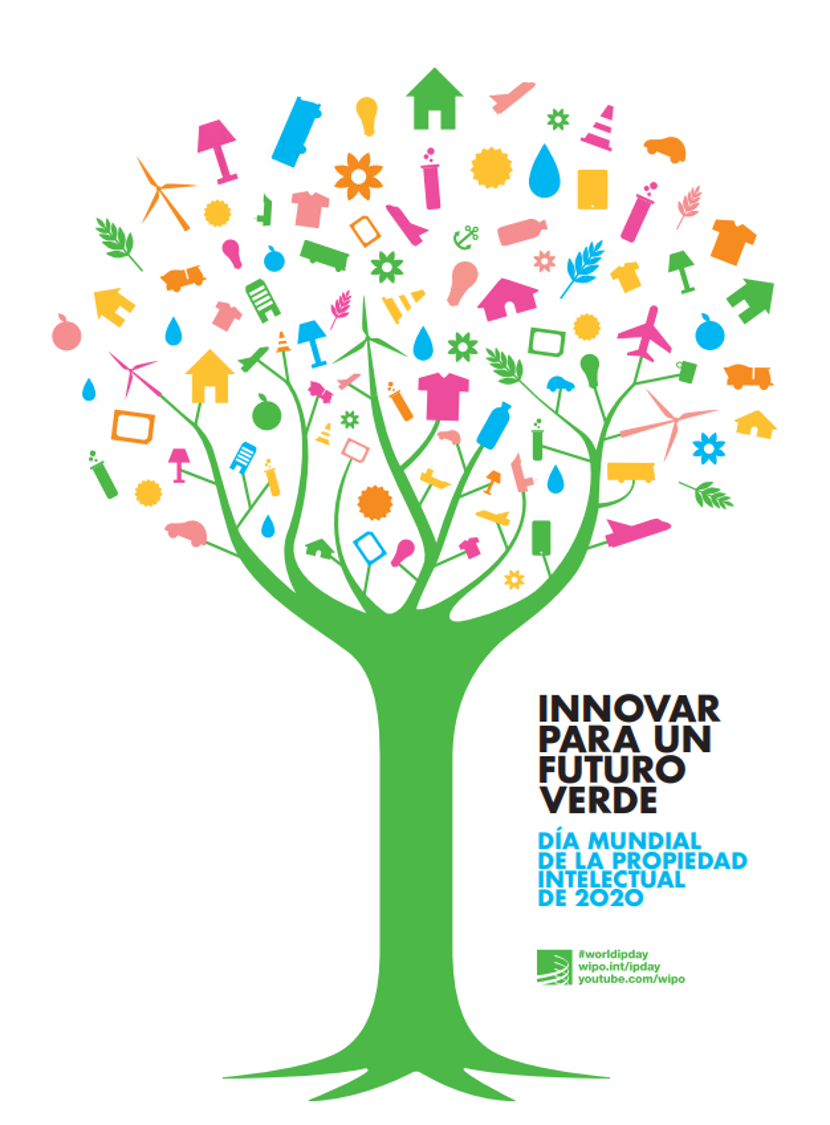
In 2020, World Intellectual Property Day was celebrated under the theme“Innovate for a Green Future.”
This is not the first time that WIPO has taken advantage of this special date to highlight the role that intellectual property must play in the so-called ecological transition. As early as 2009, under the theme “Promoting eco-innovation as an essential element for securing the future,” WIPO devoted part of its special issue to analyzing which intellectual property mechanisms and strategies could foster sustainable technological innovation.
At that time, the Eco-Patent Commons initiative—backed by major companies such as IBM and Nokia—was beginning to gain traction. The goal was to provide free access to any user worldwide to a set of patents for which the participating companies committed not to enforce their rights, provided that those patents were used to innovate and implement industrial processes in the field of sustainability. Despite the initiative’s ambitious nature, the most recent studies on the subject suggest that its practical impact on the dissemination of green technologies was modest, due in part to issues stemming from the organization’s structure, a lack of monitoring regarding the use of the contributed patents, and the absence of mechanisms to enable effective technology transfer—which is especially important in the case of complex patents.
However, the discontinuation of Eco-Patent Commons in 2016 should not be viewed as a failure. On the one hand, it serves as a learning experience upon which to build similar projects in the future. On the other hand, Eco-Patent Commons has made a significant contribution to fostering debate on the applicability of open intellectual property strategies to the field of sustainable technological innovations, particularly by questioning whether open-source-based strategies can replicate the success achieved in the world of software.
One of the most talked-about examples of an open intellectual property strategy regarding patents with environmental applications is Tesla. In 2014, the company surprised everyone when its CEO, Elon Musk, announced that Tesla would no longer take legal action against those who, in good faith, used its technology. Although Tesla cited the desire to follow the spirit of the open-source movement—to promote the development of electric cars in order to curb climate change—as the main reason for this decision, it is clear that this move has significant strategic implications. Allowing other manufacturers to use Tesla’s innovations lowers the barriers for new companies to enter the electric vehicle market, which will eventually strengthen the ecosystem in which Tesla operates (by improving the network of suppliers, charging stations, etc.). This, in turn, will increase demand for electric vehicles, from which Tesla stands to benefit.
Tesla's case is just one example of how closed or protectionist intellectual property strategies are not always the solution. In the field of sustainable innovation, moreover, the choice between protectionist strategies and open or collaborative ones can be particularly influenced by CSR, reputational, and regulatory considerations.
From a regulatory standpoint, various proposals have been put forward, some of which aim to promote investment in green technologies (through tax incentives for licensing or the implementation of expedited procedures for patent applications), while others are designed to increase access to patented technologies (for example, by limiting the ability to grant exclusive licenses or by creating funds to acquire patents and make them available to the public at a lower cost).
Meanwhile, in 2013, WIPO launched WIPO Green, an online platform that seeks to promote the dissemination of green technologies by facilitating contact between providers of such technologies and organizations interested in using them. In this case, the platform serves as a connecting point but does not impose any conditions on the type of collaboration that will be established between the parties.
Beyond the discussion on intellectual property strategies, the advance of digitization presents other types of opportunities and challenges from the perspective of sustainability. Specifically, one expanding field that will need to take environmental considerations into account in its development over the coming years is the data economy. Recently, the European Commission, in its Communication on A European Data Strategy, emphasized that the European data strategy must be geared not only toward increasing the productivity and competitiveness of markets but also toward benefiting society in terms of health, transparency, public services, and the environment. In this regard, the proper use of data can contribute to areas such as promoting the circular economy, improving sustainability in transportation, and enhancing the environmental performance of the agricultural sector.
Closely linked to data, artificial intelligence has great potential to help achieve the goals of the European Green Deal. In the White Paper on Artificial Intelligence—A European Approach for Excellence and Trust, published in February of this year, the Commission once again highlights the environmental implications of these types of technologies, noting their ability to critically analyze resource use and energy consumption, as well as to favor alternatives that are more environmentally friendly in decision-making.
Alongside these benefits, however, there is the significant ecological footprint associated with data centers and cloud services. For this reason, the Commission notes, the European Digital Strategy includes measures for the ecological transformation of the ICT sector.
There are undoubtedly many unknowns regarding the most appropriate mechanisms—both from a business strategy perspective and a regulatory perspective—for promoting innovation and the widespread adoption of green technologies. Equally numerous are the questions raised by the quest to strike a balance between the benefits and the environmental impact of digitalization. What does seem clear is that , a decade later , WIPO has sought to remind us that intellectual property—far from being an outside player—will play a decisive and facilitating role in successfully navigating the ecological transition.
Authors: Cristina Espín and Marina Manzanares